
The Arabs and the Scramble for Africa
by John C. Wilkinson

Hardback (Published)
(October 2014)
ISBN: 9781781790687
155.98 x 233.98 inches
Price: $115.00
In stock
This book examines the history of the European Scramble for Africa from the perspective of the Omanis and other Arabs in East Africa. It will be of interest not only to African specialists, but also those working on the Middle East, where awareness is now emerging that the history of those settled on the southern peripheries of Arabia has been intimately entwined with Indian Ocean maritime activities since pre-Islamic times.
This book examines the history of the European Scramble for Africa from the perspective of the Omanis and other Arabs in East Africa. It will be of interest not only to African specialists, but also those working on the Middle East, where awareness is now emerging that the history of those settled on the southern peripheries of Arabia has been intimately entwined with Indian Ocean maritime activities since pre-Islamic times. The nineteenth century, however, saw these maritime borderlands being increasingly drawn into a new world economy, one of whose effects was the development of an ivory front in the interior of the continent that, by the 1850s, led the Omanis and Swahili to establish themselves on the Upper Congo. A reconstruction of their history and their interaction with Europeans is a major theme of this book. European colonial rivalries in Africa is not a subject in vogue today, while the Arabs are still largely viewed as invaders and slavers. The fact that the British separated the Sultanates of Muscat and Zanzibar is reflected in European research so that historians have little grasp of the geographic, tribal and religious continuum that persisted between overseas empire and the Omani homeland. Ibadism is regarded as irrelevant to the mainstream of Islamic religious protest whereas, during the lead up to establishing direct colonial rule, its ideology played a significant role; even the final rally against the Belgians in the Congo was conducted in the name of an Imam al-Muslimin. Back home, the fallout from the British massacre that crushed the last Arab attempt to reassert independence in Zanzibar was an important contributory cause towards the re-founding of an Imamate that survived until the mid-1950s.
- By (author) John C. Wilkinson
"Overall this is a comprehensive narration of forgotten histories of imperialism in Africa and will be indispensable for specialists in the field of nineteenth century East Africa. It is an invaluable companion to classic work on the subject from Abdul Sheriff, Fred Cooper and Jon Glassman. . . . Wilkinson believes that the Omanis, like the British and the French, have to come to terms with their colonial past (p. 444).According to Wilkinson, this will involve measuring the impact of this more recent colonial past with a more ancient past where Omanis became African locals, part of the broader Swahili community. His work contributes to a nuanced understanding of Omanis in Africa as both colonized and colonizer, both local and foreign." --Nathaniel Matthews, SUNY-Binghamton, Journal of World History, June 2019 "This is an almost overwhelmingly dense and richly detailed investigation into what is probably little known to most of the Western world: the movement of the Omani people into Africa in the 19th century and the subsequent interaction, competition, and conflict that emerged there between them and the European powers that were also "scrambling" into Africa for colonial power, glory, and wealth. More than that, the work also represents an almost sociological passion for the Omani people: their traditions, beliefs, movements, and internal attributes. Thus the work operates incredibly well on the historical and sociological level for all those interested in this time period, this geographical region, this aspect of international dispute and engagement, and, finally, this particular people. Given that these are the long-standing intents and goals of Wilkinson (emer. fellow, St. Hugh's College, Oxford Univ.), it is hard to find fault with the book. A work such as this begs for others to utilize it as a foundation for future work on how the Arab peninsula and Africa interact today-mixing cultures, religion, conflict, and cooperation-and is clearly crucial for international affairs, politics, intelligence, and diplomacy. Summing up: Highly recommended. All readership levels." --M.D. Crosston, CHOICE, August 2015, Vol. 52 No. 12
—
Other Titles in this Series


 Orientalists, Islamists and the Global Public Sphere
A Genealogy of the Modern Essentialist Image of Islam


Similar Books


 Cities through Time
Glimpses into Urbanity and Community in Mediaeval to Modern West Asia and Egypt
Volume 1
 Cuneiform Artefacts from Archaeological Contexts: New Research on Ancient Iraq
Proceedings of a Conference Held at the Bavarian Academy of Sciences and Humanities, July 4–5, 2024
Volume 2
 Global Gulf
Geo-Economic, Geo-Political, and Geo-Technological Transformation in Saudi Arabia, the United Arab Emirates, and Qatar
 Ismail Hakki Bursevi’s translation of and commentary on Fusus al-Hikam By Muhyiddin Ibn ‘Arabi
Volumes 1-4

 Monastic Manuscripts from the Eastern Mediterranean (Sinai, Jerusalem, Antioch)
Production, Use, and Contexts
 Music and Colonialism in Fascist Italy
Identity, Propaganda, and Ethnographic Representation
Volume 13

 Qatar’s Societal Security
Towards the Inclusive National Concept of ‘Baladna’ Identity, Migration and External Threats Since 2017

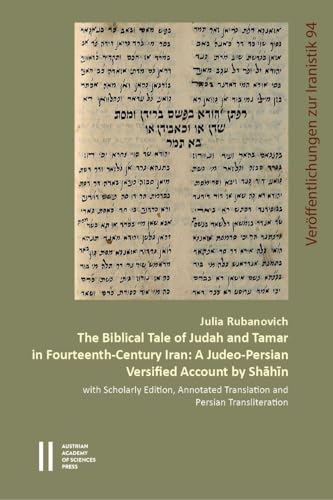 The Biblical Tale of Judah and Tamar in Fourteenth-Century Iran
A Judeo-Persian Versified Account by Shāhīn with Scholarly Edition, Annotated Translation and Persian Transliteration
Volume 94, 951
 The Discourse of Rites
Shaping and Reshaping the (Counter-)Priestly Rituals Conducted Outside the Tabernacle


 Writing of Women as Cultural Resistance
Deconstructing Memory Legacies in the Afro-Luso-Brazilian Atlantic

 »Ein elend-schönes Land«
Gattung und Gedächtnis in Lea Goldbergs hebräischer Literatur. Aus dem Hebräischen von Rainer Wenzel
 Meine arabischen Freunde
Geschichten aus dem Maghreb für Aufklärung - gegen Islamismus und Unfreiheit

 Networking through Biography
Constructing Intellectual Junctions in Antiquity, the Renaissance and the Arabo-Islamic World
Volume 19


 Beiträge zur Islamischen Kunst und Archäologie
The Arts and Archaeology of Funerary Cultures in Islam
Volume 10.0
 Boğazköy Tablets in the Museum of Anatolian Civilisations (Bo 95–Bo 3993)
Anadolu Medeniyetleri Müzesinde Bulunan Boğazköy Tabletleri (Bo 95–Bo 3993)
Volume 3


 Discerning Religious Truth
A Didactic Exposition of the Logic and Epistemology of the Islamic Sciences
Volume 1


 Explorations in Islamic Archaeology
Material Culture, Settlements, and Landscapes from the Mediterranean to Western Asia
Volume 7


 Life on the Farm in Late Medieval Jerusalem
The Village of Beit Mazmil, its Occupants and their Industry over Five Centuries