
Dating Urban Classical Deposits: Approaches and Problems in Using Finds to Date Strata
By (author) Guido Furlan

Paperback (Published)
(October 2019)
ISBN: 9781789692525
8.07 x 11.46 inches
Price: $95.00
In stock
This book considers the dating of archaeological strata on the basis of the assemblages recovered from them. It reviews the present state of archaeological practice and follows this with a theoretical discussion of the key concepts involved in the issue of dating deposits.
Dating Urban Classical Deposits: Approaches and problems in using finds to date strata considers the issues surrounding the dating of archaeological strata on the basis of the assemblages recovered from them. This process is one of the most common processes in archaeology, yet it is still poorly structured theoretically, methodologically and operatively. No manuals specifically tackle the issue as a whole and consideration of useful theoretical and methodological tools is fragmentary. This book has been developed to try to correct this failing; it is based on the idea that for dating a given layer through the materials recovered from it, the embedding process of the materials must be modelled. The book reviews the present state of archaeological practice and follows this with a theoretical discussion of the key concepts involved in the issue of dating deposits; the main methodological tools which can be employed (quantitative, qualitative and comparative) are then discussed in detail. The text presents a problem-oriented taxonomy of deposits, with depositional models for assessing how different assemblages can be analysed for dating; each type of deposit is accompanied by case studies where the methodological tools used are explained. Finally, a structured working method is proposed. The topic of dating deposits crosses the chronological and spatial borders of many archaeologies, but the book focusses on Classical cities (particularly Roman), as they present specific traits (continuous occupation, high rates of residuality, high impact architecture, waste management etc.) making them unique fields for study.
Preface (Prof. J. Bonetto, UNIPD) Part I Introducing the topic I.1 Introductory remarks I.2 Notes for a literature review Part II Theory II.1 Preliminary observations II.2 Key concepts Part III Tools III.1 Introduction III.2 OSL, TL, mortar dating and non-mediated chronology III.3 A quantitative approach to assemblages III.4 Qualitative approaches to assemblages and deposits III.5 The contribution of ethnoarchaeology, experimental archaeology and literary sources III.6 Coping with intrusive materials Part IV Typology and analysis IV.1 The arrangement (a typology for deposits?) IV.2 Primary deposits with abrupt formation IV.3 Primary deposits with continuous formation IV.4 Mixed deposits IV.5 Secondary deposits IV.6 Other deposits Part V Synthesis and conclusions V.1 Towards a working method V.2 Conclusions Appendices 1. Self-archaeology compiled forms 2. The main sites References,
Guido Furlan is a post-doctoral researcher at the University of Padova, where he achieved his doctorate in 2015. His current research focuses on Roman archaeology and post-excavation methodologies. He was involved, among others, in the investigation of the forum of Nora (Sardinia) until 2008, and in the excavation of the House of Titus Macer, Aquileia, from 2009 to 2013. He is currently working on the theatre of the ancient city.
- By (author) Guido Furlan
'Guido Furlan's merit is to bring together the English and Italian language research and to show parallel lines of discussion that are often ignored by the other side. He also shows how easily statistical methods can be used profitably and included in the evaluation of an excavation. In classical archaeology, in particular, reflection on archaeological taphonomy should be given greater weight. In this regard, the book discussed is a contribution worth reading, which gives reason to hope that the subject will also be dealt with more intensively in German-speaking countries.' – Thomas Lappi (2021): Germania 99
—
Similar Books


 Archaeological Excavations at Irmis Rka: An Investigation of a Multi-Layered Settlement in Southwest Georgia
Results from the 2020 Season: Early Bronze Age to Medieval Occupations


 Catuvellaunia and Rome: Economic and Political Relations during the Final Decades Pre-conquest
The Role of Grain from Southeastern Britain and Its Potential for Maintenance of the Roman Military along the Frontier on the Rhine
 Colour Concept “Secoli bui” a colori
Codici cromatici e architetture dipinte nell’età tardoantica e medievale

 Crossing Disciplines in the Study of Archaeology and Prehistoric Art: Insights from the Sahara and Mediterranean Africa
Proceedings of the XX UISPP World Congress (5–9 September 2023, Timișoara, Romania) Volume / Session 18
 Crossing Sacred Landscapes
Contacts and Continuities in the Desert Cults and Beliefs of Ancient Northern Arabia and the Arid Southern Levant
 Cuneiform Artefacts from Archaeological Contexts: New Research on Ancient Iraq
Proceedings of a Conference Held at the Bavarian Academy of Sciences and Humanities, July 4–5, 2024
Volume 2

 ENTANGLED AFRICA
Intra-African Relations Between Rain Forest and Mediterranean from Around 4,000 BCE to 1,500 CE


 Exploring Prehistoric Pottery in Japan
A Study of Organic Inclusions, Adhering Materials, and Impressions of Woven Items

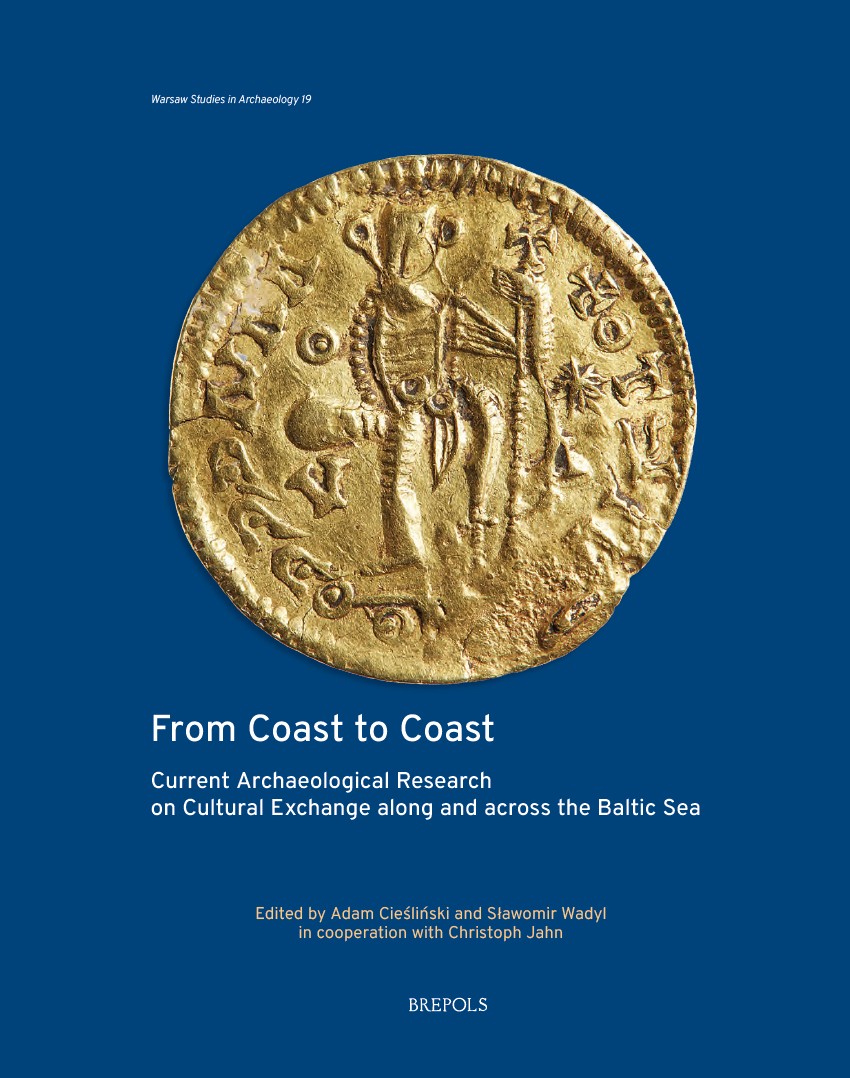 From Coast to Coast
Current Archaeological Research on Cultural Exchange along and across the Baltic Sea
Volume 19
 Frontiers of the Roman Empire: The Frontier of the Roman Province of Raetia
Grenzen des Römischen Reiches: Die Grenze der Römischen Provinz Raetien
 Gold, Silver and Glass: Power Networks, Cultural Identities, Technology Transfers and Agency across the Old World (7th Century BC – 1st Century AD)
Proceedings of a Conference Held at the British Museum, 16–18 June 2023
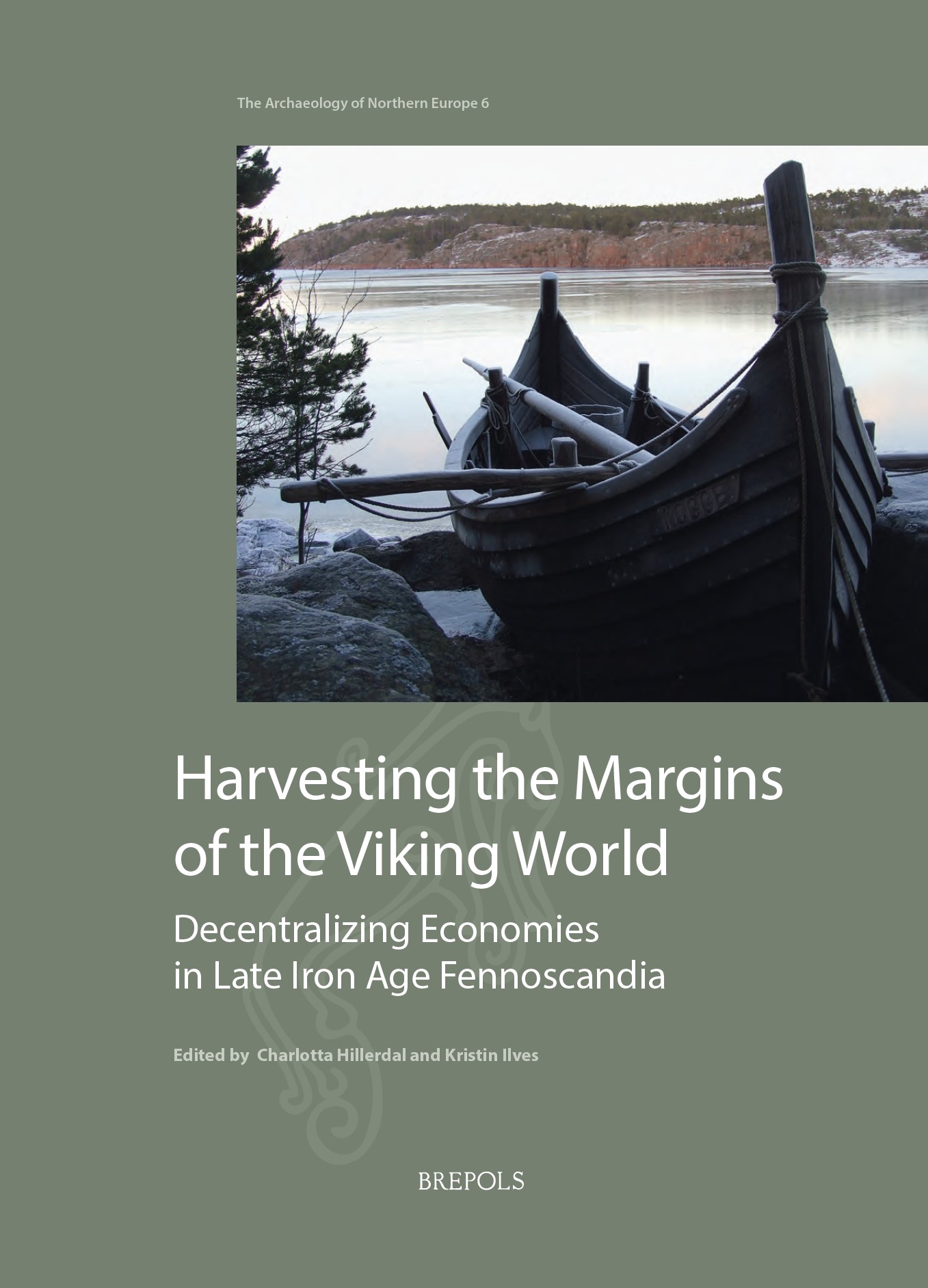 Harvesting the Margins of the Viking World
Decentralizing Economies in Late Iron Age Fennoscandia
Volume 6
 Images of Anonymous Women
A Semiotic Approach to Image-Text Relations in Interpretation of Ancient Near Eastern Art and the Hebrew Bible
Volume 310

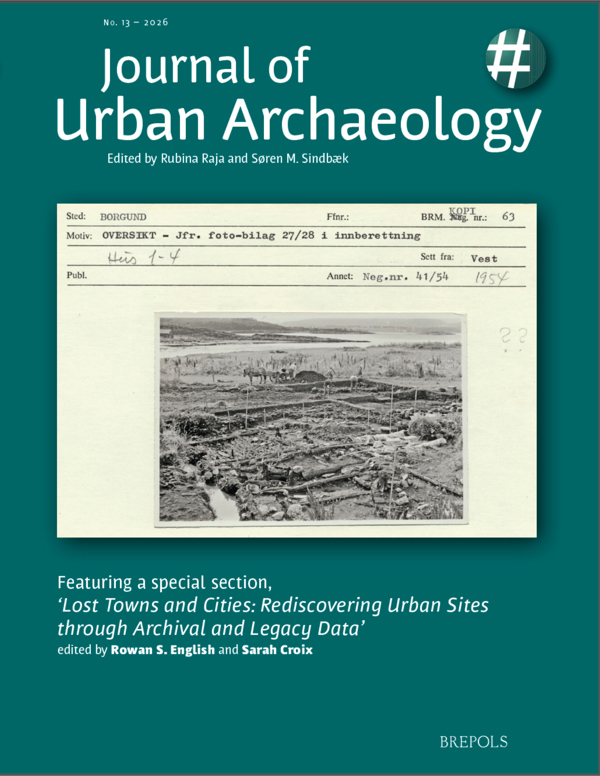 Journal of Urban Archaeology 13 (2026)
Featuring a special section, ‘Lost Towns and Cities: Rediscovering Urban Sites through Archival and Legacy Data’


 Making and Meaning in the Bronze and Iron Ages
Chronology, Landscapes and Societies across Europe. Proceedings from the METALAGES2024 Colloquium (Florence, 23 October 2024)

 Medieval Yeghegis, Armenia
History, Archaeology, Society. Local Multiplicities and Global Connections of a Rural Centre on the Silk Road(s)
 Mobility and Archaeogenetics in Central Asia
People – Goods – Ideas. 3rd International Conference on Central Asian Archaeology in Bern, 11th–13th January 2024
Volume 24


 Offa’s Dyke Journal: Volume 7 for 2025
A Journal for Linear Monuments, Frontiers and Borderlands Research


