Construction Processes in Historical Western Societies (5th c. BC – 10th c. AD)
Case Studies on Techniques, Models, and Costs
Edited by Christopher Courault Edited by Pedro Albuquerque Edited by Javier Á. Domingo Edited by Maria Serena Vinci Edited by Sebastián Vargas Vázquez

Hardback (Published)
(May 2026)
ISBN: 9781805832256
8.07 x 11.46 inches
Price: $90.00
In stock
This volume explores how ancient and early medieval societies sourced, crafted, transported, and reused construction materials. Through interdisciplinary studies—archaeology, geology, economics, and architecture—it examines supply networks, quarrying, workshops, long‑distance trade, and spolia, offering new methods and future research directions.
Construction Process in Historical Western Societies (6th C. BC – 10th C. AD) brings together studies devoted to the management of material resources in the architecture of Antiquity and the Early Middle Ages, exploring how past societies obtained, transformed, and reused materials intended for construction. Through an interdisciplinary approach, the book connects archaeology, geology, economic history, and architectural analysis in order to understand the processes that made possible the building of cities and monuments.
The contributions examine the supply chains of stone, marble, and other resources; the techniques of extraction and carving; the organization of construction workshops; and the long-distance circulation of materials. A cross-cutting theme is the reuse of ancient architectural elements, a phenomenon that reveals both economic strategies and cultural and symbolic changes in the use of urban space.
The volume is characterized by the application of innovative methodologies that combine archaeometric analyses, quarry surveys, the study of tool marks, and digital documentation tools. This diversity of approaches makes it possible to reconstruct more precisely the construction processes and production systems associated with historical architecture.
Beyond providing new data, the book proposes future lines of research focused on the comparative study of supply networks, the experimental reconstruction of ancient techniques, and the use of digital technologies to model construction processes. Taken together, it offers a broad and up-to-date view of past architecture as the result of interrelated technical, economic, and social decisions.
General Introduction – Christopher Courault, Pedro Albuquerque, Javier Á. Domingo, M. Serena Vinci, Sebastián Vargas-Vázquez
SECTION 1. MATERIALS EXTRACTION AND BUILDING PROCESS
1. Austeros, duraderos, fiables. Aportaciones sobre el diseño, la construcción y el mantenimiento de los hornos púnicos de la Bahía de Cádiz (siglos V-III a.C.) – Antonio Sáez Romero, Ricardo Belizón Aragón
2. Dall’estrazione dell’argilla alla produzione e commercio del laterizio della Pisa Romana: il caso dei Venulei – Eleonora Romanò, Fabiana Susini
3. Modalità di cantiere per l’esecuzione di elementi architettonici a Pompei: alcuni esempi – Patrizio Pensabene, Valerio Bruni
4. The Selection and Use of Materials for the Construction of Public Baths in Central Italy – Konogan Beaufay
5. The Regional Diffusion of the Building Stones on the Rivers of Roman Gaul – Jean-Pierre Gély
6. Project, Construction and Raw Materials in the Roman Theatre of Felicitas Iulia Olisipo / Lisbon – Lídia Fernandes, Carlos Cabral Loureiro
7. El aprovisionamiento y uso de rocas constructivas en Gerunda desde su fundación hasta mediados del año 1000 – Jordi Oliver Vert
8. Casa da Calçada: Construction Process and Resource Management at a Domestic Building of Mirobriga (Santiago do Cacém, Portugal) – Filipe Sousa, Catarina Felício
SECTION 2. DYNAMICS, LABOUR PROCESSES AND FINANCIAL STRATEGIES
9. Choix des cadences de travail dans les études de temps de construction. Méthodologie et cas d’application à l’extraction de terre – François Remise
10. Questions on the Architectural Energetics of the Aksumite Stelae – Constantin Canavas
11. El proceso constructivo en la arquitectura romana mediante el análisis de las líneas-guía – Carlos Márquez
12. Elementos decorativos marmóreos con marcas de elaboración, diseño y puesta en obra del frigidarium del complejo termal monumental de Valeria (Cuenca, España) – Javier Atienza
13. Amphitheatres on Private Properties: Investigating the Phenomenon of Evergetism on loca privata in Roman Italy – Ilaria Trivelloni
14. Balbo el Menor, financiador de teatros en Cádiz y Roma – Javier Á. Domingo, Juan de Dios Borrego, Christopher Courault
15. I templi del culto imperiale nei capita provinciarum ispanici: archeologia e storia economica – Lucio Lauri
SECTION 3. STRUCTURES, CONVERSIONS AND RENOVATIONS
16. Paredes bícromas con zócalo saliente de época republicana en la Península Ibérica: El caso de Kelse/Lepida – Celsa (Velilla del Ebro, Zaragoza) – Antonio Mostalac Carrillo
17. Ratio aedificandi e insediamenti d’altura di epoca romana in area alpina: l’exemplum del Doss Penede (Nago-Torbole, TN) – Michele Matteazzi, Annalisa Garattoni
18. Un nuovo progetto di studio sul complesso termale denominato Termas de Las Bóvedas (San Pedro Alcántara, Marbella, Spagna). Prime considerazioni su pianta e tecniche costruttive – Adalberto Ottati, Sara Díaz Ramos, Rafael Hidalgo Prieto, María Luisa Loza Azuaga, Pedro Rodríguez Oliva
19. Elementos arquitectónicos en marmora de color procedentes del área del templo al divus Augustus en Tarraco – Julio C. Ruiz
20. Últimas aportaciones al estudio de la torre del Pretorio de Tarragona: las fachadas norte y oeste. Recursos materiales y técnicas constructivas – Josep Maria Vila Carabassa, Maria Serena Vinci, Pilar Bravo Póvez, Joan Menchon
21. La cosiddetta Dépendance nella Villa dei Sette Bassi a Roma: dall’edificio termale all’edificio ecclesiastico – Carla Maria Amici, Alessandra Ten
22. La transformación del teatro romano de Carthago Nova en un complejo comercial de época tardorromana. De theatrum a mercado-almacén – Antonio J. Murcia Muñoz, Sebastián F. Ramallo Asensio, Elena Ruiz Valderas
Christopher Courault holds a PhD in archaeology and is a member of the research group Antiguas Ciudades de Andalucía (University of Córdoba). The focus of his research is the chaîne opératoire, construction time and costs, with particular attention to methodological revision and the social impact of major public works, including ancient urban fortifications.
Pedro Albuquerque is currently a distinguished researcher (Emergia) and lecturer in the department of Prehistory and Archaeology (University of Seville). He is a member of several research groups (HUM-152, De la Turdetania a la Bética) and institutions, such as the Centre for Global Studies (Aberta University, Portugal), CIAC (University of the Algarve, Portugal) and Uniarq (University of Lisbon, Portugal).
Javier Á Domingo is Professor of Christian Archaeology at the Pontifical University of the Holy Cross. Through several postdoctoral fellowships, he has undertaken various research activities at the University of Rome ‘La Sapienza’ and the Escuela Española de Historia y Arqueología in Rome. His studies are focused on Roman and late Roman architectural decoration, in addition to developing a methodology for calculating the economic costs of construction in the ancient world.
Maria Serena Vinci is an Assistant Professor of Classical Archaeology in the Department of Prehistory and Archaeology at the Universidad Nacional de Educación a Distancia (UNED), Madrid. Her research focuses primarily on Roman architecture and construction, with particular emphasis on the relationship between quarries and monuments. One line of investigation is on the use of epigraphic marks and carving guide-lines, understood as material evidence of planning, design, and construction processes.
Sebastián Vargas-Vázquez is a Professor in the Department of Prehistory and Archaeology at the University of Seville. His research focuses on the study of Roman mosaics, with a particular emphasis on the analysis of geometric designs and the socio-professional organization of musivarii (mosaic) workshops. Currently, his archaeological work is centered on the Roman city of Italica (Santiponce, Seville), where he analyses its architecture – primarily public buildings – and its integration within the city’s urban fabric.
- Edited by Christopher Courault
- Edited by Pedro Albuquerque
- Edited by Javier Á. Domingo
- Edited by Maria Serena Vinci
- Edited by Sebastián Vargas Vázquez
Similar Books


 Caesar’s Visions and Impact on the Roman Empire
Revisiting the Archaeological and Historical Record of the 40s BC
Volume 2


 Etruscan and Roman Hellenistic Anatomical ex votos
Reassessing Popular Religious Expressions in Central Italy
Volume 8




 Invisible Labour in Antiquity
Visualizing Obscure Work in the Ancient Mediterannean and West Asia
Volume 1

 Late Antique villae in the Balkans (3rd–7th c. AD): Current Research Questions and Perspectives
HAEMUS Companion to the Late Antique Balkans 1
Volume 4





 Portraying the Individual in the Roman East
Local–Imperial Entanglements in Sculpture, Mosaics, and Paintings (First–Fourth Centuries AD)
Volume 18


 Roman Copies, Collecting, and Culture in the Bay of Naples and Beyond
Papers in Honor of Eugene J. Dwyer
 Small Worlds and Relational Agencies: Local Societies in Early Medieval Iberia
Pequeños mundos y Agencias relacionales: Sociedades locales altomedievales en la Península Ibérica
 SOMA 2023: Proceedings of the 24th Symposium on Mediterranean Archaeology
Ideas that Travelled by the Sea, Udine, 2-4 February, 2023


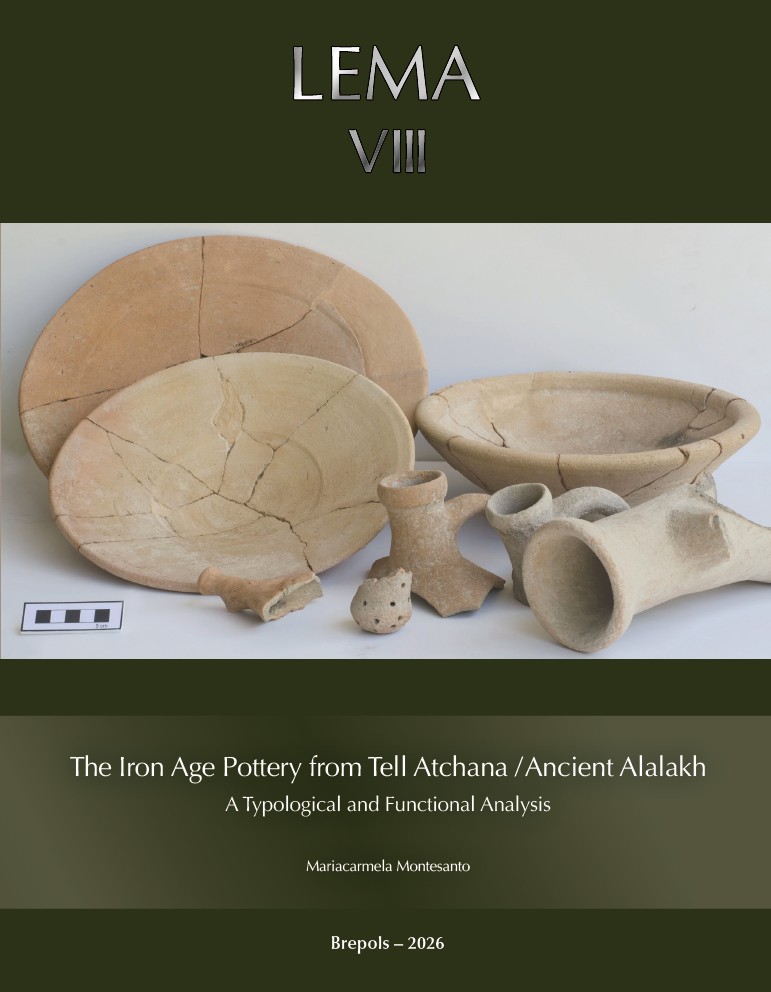 The Iron Age Pottery from Tell Atchana / Ancient Alalakh
A Typological and Functional Analysis
Volume 8


 Writing in the Church of the Nativity in Bethlehem
Inscription and Graffiti in a Multilingual and Multigraphic Perspective
Volume 45
 Zooarchaeology of Ancient Greek Sanctuaries in Southwestern Sicily
Faunal Analysis from Selinus and Akragas as Evidence of Differences in the Treatment of Animals for Ritual Purposes
 Alabaster
An Interdisciplinary Study of the Sources and Uses of Calcite Alabaster in Antiquity
Volume 5

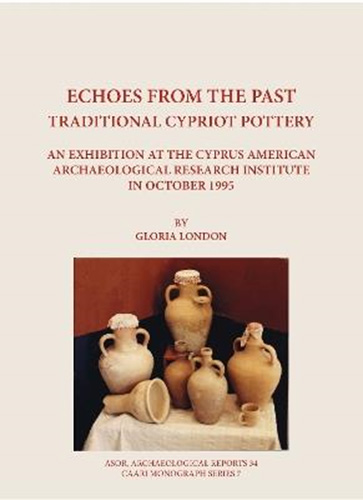 Echoes from the Past: Traditional Cypriot Pottery
An Exhibition at the Cyprus American Archaeological Research Institute in October 1995