
Coins of the Roman Revolution, 49 BC-AD 14
Evidence Without Hindsight
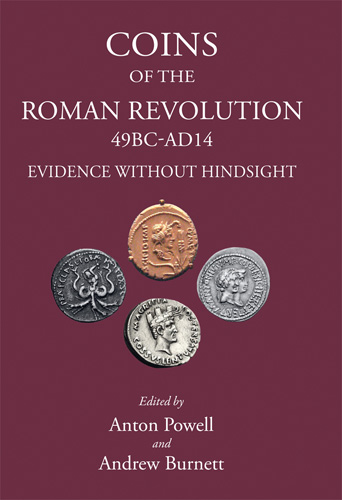
Coins of the best-known Roman revolutionary era allow rival pretenders to speak to us directly. After the deaths of Caesar and Cicero (in 44 and 43 BC) hardly one word has been reliably transmitted to us from even the two most powerful opponents of Octavian: Mark Antony and Sextus Pompeius – except through coinage and the occasional inscription. The coins are an antidote to a widespread fault in modern approaches: the idea, from hindsight, that the Roman Republic was doomed, that the rise of Octavian-Augustus to monarchy was inevitable, and that contemporaries might have sensed as much. Ancient works in other genres skilfully encouraged such hindsight. Augustus in the Res Gestae, and Virgil in Georgics and Aeneid, sought to flatten the history of the period, and largely to efface Octavian’s defeated rivals. But the latter’s coins in precious metal were not easily recovered and suppressed by Authority. They remain for scholars to revalue. In our own age, when public untruthfulness about history is increasingly accepted – or challenged, we may value anew the discipline of searching for other, ancient, voices which ruling discourse has not quite managed to silence. In this book eleven new essays explore the coinage of Rome’s competing dynasts. Julius Caesar’s coins, and those of his `son’ Octavian-Augustus, are studied. But similar and respectful attention is given to the issues of their opponents: Cato the Younger and Q. Metellus Scipio, Mark Antony and Sextus Pompeius, Q. Cornificius and others. A shared aim is to understand mentalities, the forecasts current, in an age of rare insecurity as the superpower of the Mediterranean faced, and slowly recovered from, division and ruin.
Other Titles in this Series

Similar Books


 Contesting Labeled Identities
The Sociology of Gentilics in Biblical and Northwest Semitic Literature

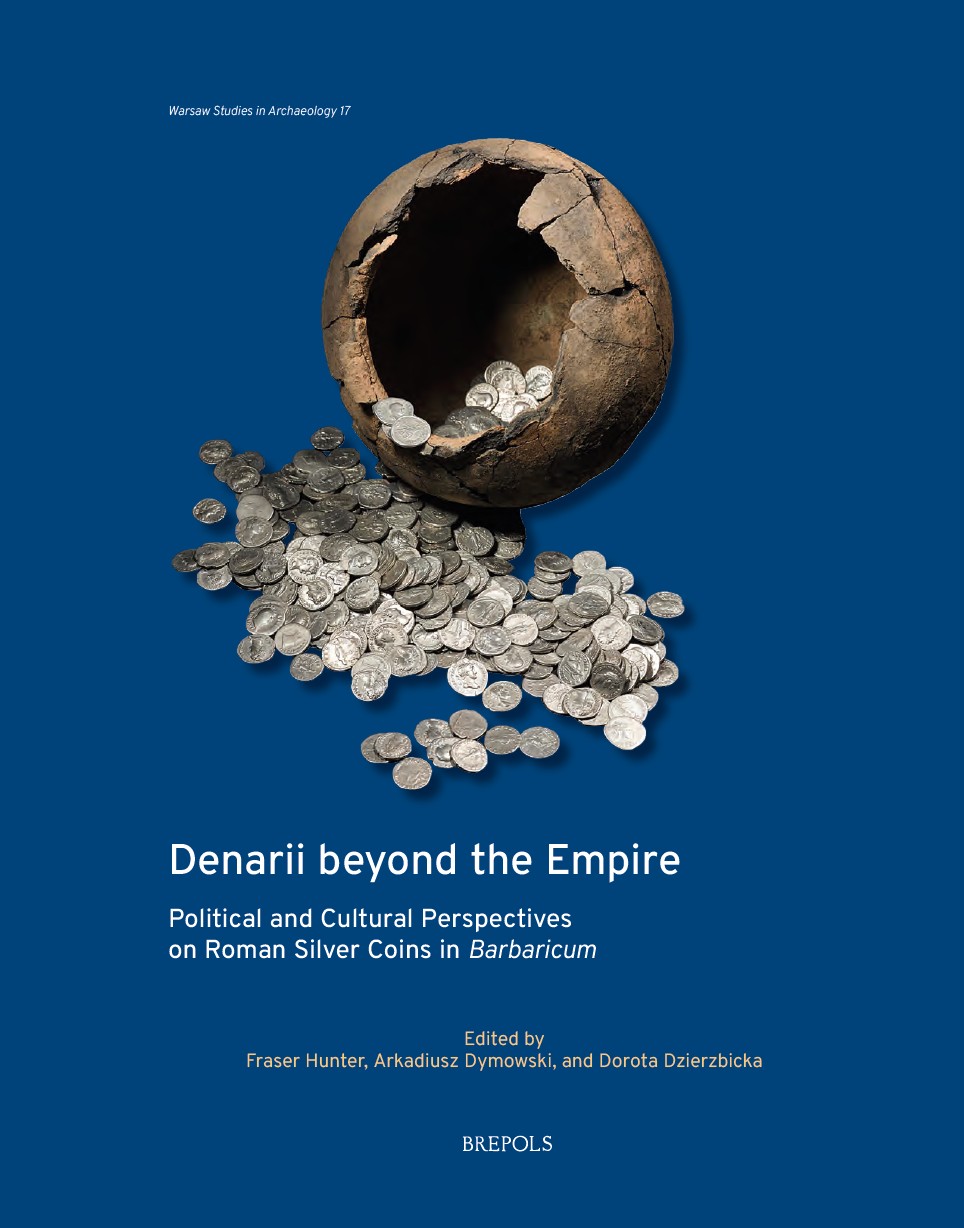 Denarii beyond the Empire
Political and Cultural Perspectives on Roman Silver Coins in Barbaricum
Volume 17
 Drunk the Potion, No Whit Charmed
The Doctrine of Pure and Perfect Souls from Iamblichus to Damascius

 Epigraphic “Shades” from Hellenistic Thrace
Contextualizing Inscriptions in Greek from Thracian Tombs

 Epiphanies of the Divine in the Septuagint and the New Testament
Fifth International Symposium of the Corpus Judaeo-Hellenisticum Novi Testamenti (CJHNT), 14-17 May 2015, Nottingham


 Gold, Silver and Glass: Power Networks, Cultural Identities, Technology Transfers and Agency across the Old World (7th Century BC – 1st Century AD)
Proceedings of a Conference Held at the British Museum, 16–18 June 2023
 Language and Power in the Roman Empire and Early India
Hierarchy, Ambiguity, and the Art of Reading the Signs in Cosmopolitan Cultures
 Late Antique villae in the Balkans (3rd–7th c. AD): Current Research Questions and Perspectives
HAEMUS Companion to the Late Antique Balkans 1
Volume 4


 Nurturing the Elite
Representations of Drinking, Eating, and Religious Vessels in Palmyrene Funerary Iconography
Volume 13





 Roman Copies, Collecting, and Culture in the Bay of Naples and Beyond
Papers in Honor of Eugene J. Dwyer



 The Compositional History of the Book of Kings
An Analysis of the Evaluative Frameworks in 1 Kings 14–2 Kings 25
