
Poetry Underpinning Power
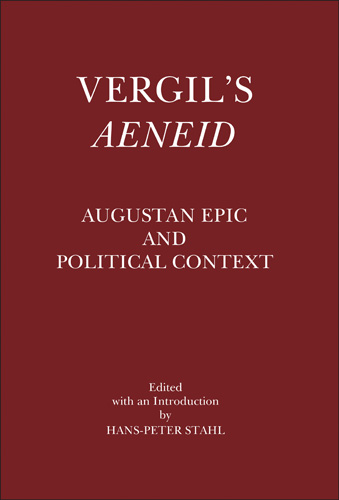
Vergil's Aeneid - The Epic for Emperor Augustus
by Hans-Peter Stahl
Hardback (Published)
(March 2016)
ISBN: 9781910589045
6.1 x 9.17 inches
Price: $95.00
In stock
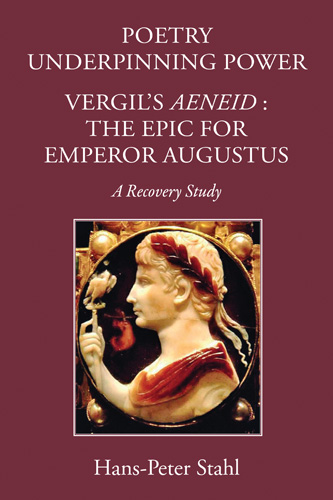
In recent decades, international research on Virgil has been marked, if not dominated, by the ideas of the ‘Harvard School’ and similar trends, according to which the poet was engaged in an elaborate work of subtle subversion, directed against the new ruler of the Roman world, Octavian-Augustus. Much of Virgil’s oeuvre consists prima facie of eulogy of the ruler, and of emphatic prediction of his enduring success: this is explained by numerous modern critics as generic convention, or as studied ambiguity, or as irony. This paradoxical position, which runs against ancient-as well as much modern-interpretation of the poet, continues to create widespread unease. Stahl’s new monograph is the most thorough study so far to question modern Virgilian criticism on philological grounds. He based himself on the internal logic and rhetoric of the Aeneid, and considers also political, historical, archaeological and philosophical subjects addressed by the poem. He finds that the poet has so presented the morality of his central figure, Augustus’ supposed ancestor Aeneas, and of those who (eventually) clash with him, Turnus and Dido, as to make it certain that Roman readers and hearers of the poem were meant to conclude in Aeneas’ favour. Virgil’s intention emerges from Stahl’s thorough, ingenious and original argumentation as decisively pro-Augustan. Stahl’s work, in short, will not only enliven debate on current critical hypotheses but for many will enduringly affect their credibility.
In recent decades, international research on Virgil has been marked, if not dominated, by the ideas of the ‘Harvard School’ and similar trends, according to which the poet was engaged in an elaborate work of subtle subversion, directed against the new ruler of the Roman world, Octavian-Augustus. Much of Virgil’s oeuvre consists prima facie of eulogy of the ruler, and of emphatic prediction of his enduring success: this is explained by numerous modern critics as generic convention, or as studied ambiguity, or as irony. This paradoxical position, which runs against ancient-as well as much modern-interpretation of the poet, continues to create widespread unease. Stahl’s new monograph is the most thorough study so far to question modern Virgilian criticism on philological grounds. He based himself on the internal logic and rhetoric of the Aeneid, and considers also political, historical, archaeological and philosophical subjects addressed by the poem. He finds that the poet has so presented the morality of his central figure, Augustus’ supposed ancestor Aeneas, and of those who (eventually) clash with him, Turnus and Dido, as to make it certain that Roman readers and hearers of the poem were meant to conclude in Aeneas’ favour. Virgil’s intention emerges from Stahl’s thorough, ingenious and original argumentation as decisively pro-Augustan. Stahl’s work, in short, will not only enliven debate on current critical hypotheses but for many will enduringly affect their credibility.
Part I: Pious King Aeneas and his Ethically Flawed Opponents Chapter 1: Augustan Virgil and the Political Rival Chapter 2: The Death of King Turnus Chapter 3: Aeneas the Warrior Chapter 4: Winning the Reader's Assent through Subliminal Guidance Chapter 5: Allocating Guilt and Innocence, I: Queen Dido, the Liberated Widow Part II: Checks and Balances of a Literary Interpretation: Political Detours of Poetic Travel Routes Chapter 6: Before Founding Lavinium, Aeneas Inspects the Site of Rome (Aeneid 8) Part III: Testing a Critical Method by Repeat Application: The Author Directs his Reader Chapter 7: Allocating Guilt and Innocence, II: King Turnus, the Impious Opponent Chapter 8: Epilogue
- By (author) Hans-Peter Stahl
"Stahl's proposed reading of the Aeneid as poetry underpinning Augustus' power offers an engagingly written, extremely well-annotated, and, most importantly, original contribution to current scholarship on Vergil's epic." --Barbara Weinlich, University of Montana, Phoenix, Vol. 71 No. 1-2
—
Other Titles in this Series






Similar Books


 Ars Prophetica
Theology in the Poetry of Twentieth-Century Hebrew Poets Avraham Halfi, Shin Shalom, Amir Gilboa, and T. Carmi


 Cahiers de littérature française
Les Métamorphoses du texte. Enjeux intertextuels et transpositions visuelles
Volume 25


 Drunk the Potion, No Whit Charmed
The Doctrine of Pure and Perfect Souls from Iamblichus to Damascius

 Epiphanies of the Divine in the Septuagint and the New Testament
Fifth International Symposium of the Corpus Judaeo-Hellenisticum Novi Testamenti (CJHNT), 14-17 May 2015, Nottingham


 European Drama and Performance Studies
Dramatisations politiques. Théâtre, politique et idéologie au XIXe siècle (1806-1914)
Volume 27


 Language and Power in the Roman Empire and Early India
Hierarchy, Ambiguity, and the Art of Reading the Signs in Cosmopolitan Cultures
 Late Antique villae in the Balkans (3rd–7th c. AD): Current Research Questions and Perspectives
HAEMUS Companion to the Late Antique Balkans 1
Volume 4
 LiCArC
Trauma et création artistique : l’engagement des artistes arabes dans des dynamiques de résiliences
Volume 14




 Nurturing the Elite
Representations of Drinking, Eating, and Religious Vessels in Palmyrene Funerary Iconography
Volume 13


