
Clothing the Body of Christ at Colossae
A Visual Construction of Identity
by Rosemary Canavan

What we think of our bodies and what we wear says something about who we are and how we belong. This was the same in the ancient world. Rosemary Canavan explores the imagery of clothing and body in the first century CE Christian writing, the Letter to the Colossians. Through the use of this imagery in the letter, the writer critiques the way people understood themselves in a particular part of the Greco-Roman world in the Lycus Valley in south western Asia Minor (Turkey). An examination of statuary, funerary monuments and coins in this geographical location contemporaneous with the letter’s writing reveals how clothing and body images were understood. This is then placed in dialogue with the metaphorical use of clothing and body in other texts, especially the Letter to the Colossians. Social identity and rhetorical studies draw on archaeological, epigraphical, iconographical and literary sources to formulate a new approach to biblical interpretation aptly named visual exegesis.
- By (author) Rosemary Canavan
Other Titles in this Series

 Pauline Communities as ‘Scholastic Communities’
A Study of the Vocabulary of 'Teaching' in 1 Corinthians, 1 and 2 Timothy and Titus
Volume 335


 Die Wunder an den Widersachern
Wunderhermeneutik am Beispiel der Strafwunder im lukanischen Doppelwerk
Volume 612


 The Temple Keys of Isaiah 22:22, Revelation 3:7, and Matthew 16:19
The Isaianic Temple Background and Its Spatial Significance for the Mission of Early Christ Followers
Volume 559


 Jesaja 53 als theologische Mitte der Apostelgeschichte
Studien zu ihrer Christologie und Ekklesiologie im Anschluss an Apg 8,26-40
Volume 398

 Luke-Acts and Jewish Historiography
A Study on the Theology, Literature, and Ideology of Luke-Acts
Volume 366
 Spirits and the Proclamation of Christ
1 Peter 3:18-22 in Light of Sin and Punishment Traditions in Early Jewish and Christian Literature
Volume 305
 Rediscovering Righteousness in Romans
Personified dikaiosyne within Metaphoric and Narratorial Settings
Volume 240
 Der Kolosserbrief im Kontext des paulinischen Erbes
Eine intertextuelle Studie zur Auslegung und Fortschreibung der Paulustradition
Volume 271
 Jesus’ Death and the Gathering of True Israel
The Johannine Appropriation of Restoration Theology in the Light of John 11.47-52
Volume 217

 Schopfungspoetik im Johannesevangelium
Sprachanalytische Untersuchungen zum Lebensmotiv. Kontexte und Normen neutestamentlicher Ethik / Contexts and Norms of New Testament Ethics. Band XVI
Volume 621

 Desire in Paul’s Undisputed Epistles
Semantic Observations on the Use of epithymeo, ho epithymetes, and epithymia in Roman Imperial Texts
Volume 539


 Peter – Apocalyptic Seer
The Influence of the Apocalypse Genre on Matthew's Portrayal of Peter
Volume 348

Similar Books


 Athanasius of Alexandria, Epistula ad episcopos Aegypti et Libyae
Old Slavonic Version and English Translation
Volume 261


 Cyril of Alexandria’s Christological Exegesis
Explorations of Partitive Exegesis in the Dialogues on the Trinity
Volume 70


 Epiphanies of the Divine in the Septuagint and the New Testament
Fifth International Symposium of the Corpus Judaeo-Hellenisticum Novi Testamenti (CJHNT), 14-17 May 2015, Nottingham

 Extracanonical Traditions and the Holy Land
Texts, Rituals, and Material Culture in Late Antique Palestine
 From Joseph to Jesus
The Joseph Narrative as a Compositional Template from Old Greek Esther to the Gospel of Luke
Volume 125


 Paradise Lost in Transmission
The Return to Eden in the Apocalypse of Peter within Its Ethiopic and Early Christian Contexts



 Punning in Odd or Elegant Constructions in Jeremiah
The Convergence of Linguistics, Rhetoric, and Textuality in the Hebrew Text of Jeremiah

 Shame in the Worlds of the Hebrew Bible and Akkadian Texts
A Linguistic Study and Its Implications
Volume 33

 Tabernacle, Table, Ark, and Text
Richard of Saint Victor on the Interpretation of Scripture
Volume 67
 The Anglo-Norman Bible’s Books of Kings, a Critical Edition
(BL Royal 1 C III, fols 234r-274v)
Volume 37
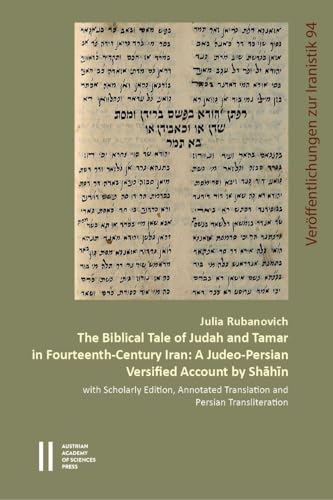 The Biblical Tale of Judah and Tamar in Fourteenth-Century Iran
A Judeo-Persian Versified Account by Shāhīn with Scholarly Edition, Annotated Translation and Persian Transliteration
Volume 94, 951
 The Body
Lived, Cultured, Adorned: Essays on Dress and the Body in the Bible and Ancient Near East in Honor of Nili S. Fox

 The Compositional History of the Book of Kings
An Analysis of the Evaluative Frameworks in 1 Kings 14–2 Kings 25
 The Discourse of Rites
Shaping and Reshaping the (Counter-)Priestly Rituals Conducted Outside the Tabernacle


