Christianity and National Identity in Twentieth-Century Europe
Conflict, Community, and the Social Order
Contributions by Gregor Feindt Contributions by Gladys Ganiel Contributions by Mihai-D. Grigore Contributions by Matthew D. Hockenos Contributions by Jorge Luengo Sanchez Contributions by Lazaros Miliopoulos Contributions by Patrick Pasture Contributions by John Wolffe Contributions by Stefan Gerber Edited by John Carter Wood

Hardback (Published)
(September 2016)
ISBN: 9783525101490
6.34 x 9.33 inches
Price: $107.00
In stock
Der Band untersucht, wie Glaube und nationale Identität im Europa des 20. Jahrhunderts ausgehandelt wurden.
This collection explores how Christian individuals and institutions – whether Churches, church-related organisations, clergy, or lay thinkers – combined the topics of faith and national identity in twentieth-century Europe. “National identity” is understood in a broad sense that includes discourses of citizenship, narratives of cultural or linguistic belonging, or attributions of distinct, “national” characteristics. The collection addresses Catholic, Protestant, and Orthodox perspectives, considers various geographical contexts, and takes into account processes of cross-national exchange and transfer. It shows how national and denominational identities were often mutually constitutive, at times leading to a strongly exclusionary stance against “other” national or religious groups. In different circumstances, religiously minded thinkers critiqued nationalism, emphasising the universalist strains of their faith, with varying degrees of success. Moreover, throughout the century, and especially since 1945, both church officials and lay Christians have had to come to terms with the relationship between their national and “European” identities and have sought to position themselves within the processes of Europeanisation. Various contexts for the negotiation of faith and nation are addressed: media debates, domestic and international political arenas, inner-denominational and ecumenical movements, church organisations, cosmopolitan intellectual networks and the ideas of individual thinkers.
PD Dr. Gregor Feindt ist Wissenschaftlicher Mitarbeiter am Georg Forster Forum der Johannes Gutenberg-Universität Mainz und Privatdozent an der Christian-Albrechts-Universität zu Kiel. Von 2014 bis 2025 war er Wissenschaftlicher Mitarbeiter am Leibniz-Institut für Europäische Geschichte in Mainz.
- Contributions by Gregor Feindt
- Contributions by Gladys Ganiel
- Contributions by Mihai-D. Grigore
- Contributions by Matthew D. Hockenos
- Contributions by Jorge Luengo Sanchez
- Contributions by Lazaros Miliopoulos
- Contributions by Patrick Pasture
- Contributions by John Wolffe
- Contributions by Stefan Gerber
- Edited by John Carter Wood
Other Titles in this Series
 Von Cádiz nach London
Spanischer Liberalismus im Spannungsfeld von nationaler Selbstbestimmung, Internationalität und Exil (1820–1833)
Volume 222

 Orthodoxa Confessio?
Konfessionsbildung, Konfessionalisierung und ihre Folgen in der östlichen Christenheit
Volume 114
 »Wie ein Apostel Deutschlands«
Apostolat, Obrigkeit und jesuitisches Selbstverständnis am Beispiel des Petrus Canisius (1543–1570)
Volume 239
 Verstümmelte Körper?
Lebenswelten und soziale Praktiken von Kastratensängern in Mitteleuropa 1712–1844
 Sisters Crossing Boundaries
German Missionary Nuns in Colonial Togo and New Guinea, 1897–1960
Volume 232
 Arab Feminism and Islamic History
The Transnational Life and Work of Lebanese-Syrian Writer Widad Sakakini (1913–1991)
Volume 255
 Exportgut Reformation
Ihr Transfer in Kontaktzonen des 16. Jahrhunderts und die Gegenwart evangelischer Kirchen in Europa




 Die jesuitische Berichterstattung über die Neue Welt
Zur Veröffentlichungs-, Verbreitungs- und Rezeptionsgeschichte jesuitischer Americana auf dem deutschen Buchmarkt im Zeitalter der Aufklärung
Volume 226


 Unversöhnte Verschiedenheit
Verfahren zur Bewältigung religiös-konfessioneller Differenz in der europäischen Neuzeit
Volume 108
 »In the Cause of Humanity«
Eine Geschichte der humanitären Intervention im langen 19. Jahrhundert
Volume 256


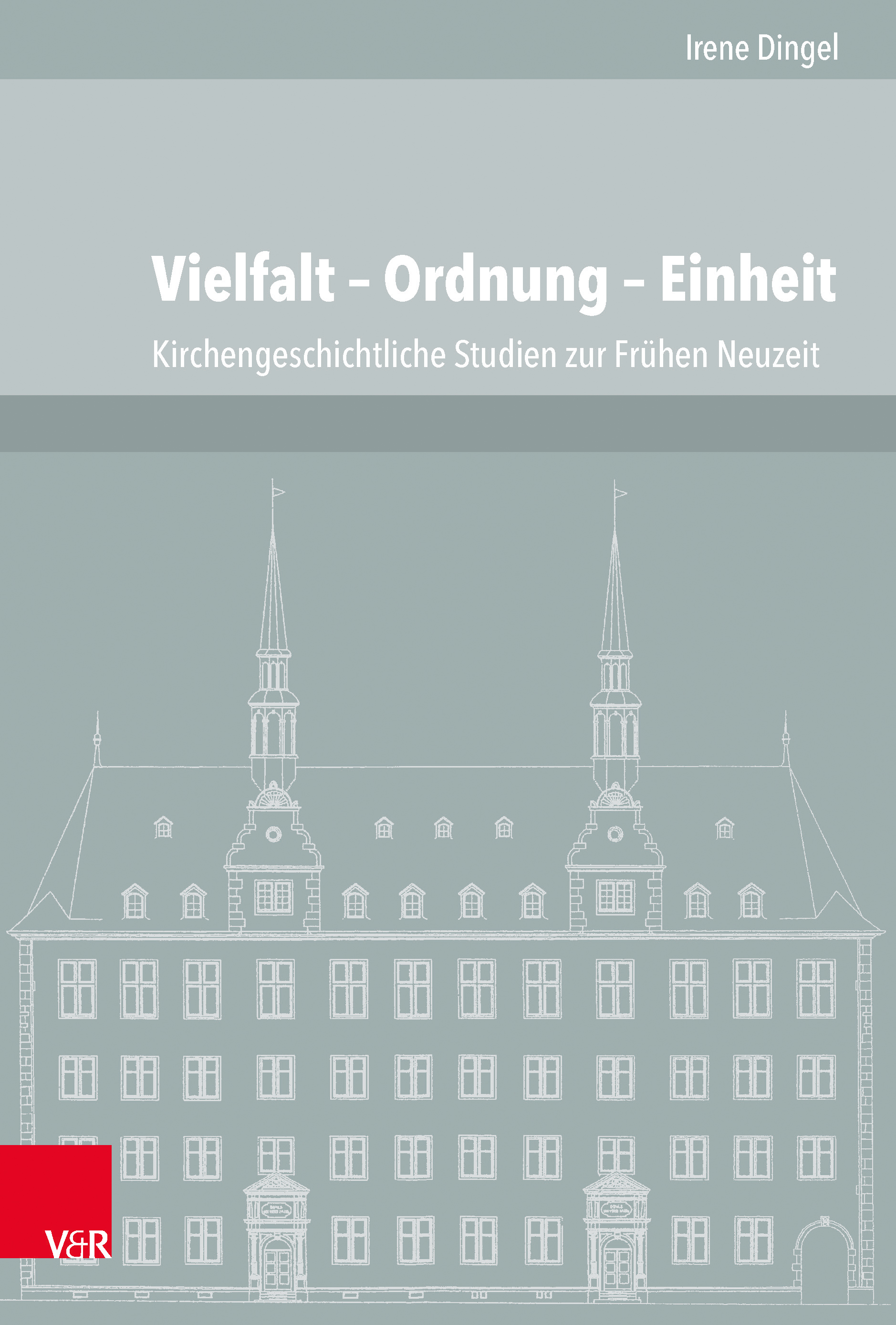 Vielfalt – Ordnung – Einheit
Kirchengeschichtliche Studien zur Frühen Neuzeit aus den Jahren 1997 bis 2015

Similar Books
 ‘For You I Study, For You I Work, For You I Live, For You I Am Ready To Even Give My Life’
Essays in Honour of Francis (Frank) J Moloney, SDB
 A Connecting Polemic in the Medieval Mediterranean
The Correspondence of Leo III and ʿUmar II
Volume 6





 Cultic Kisses
Fruitful Encounters Between Deities and Humans. Festschrift for Angelika Berlejung on the Occasion of Her 65th Birthday




 Extracanonical Traditions and the Holy Land
Texts, Rituals, and Material Culture in Late Antique Palestine
 Fear, Fear of God, God-Fearers
Philological and Historical Perspectives on the World of Ancient Judaism and Christianity


 Hoghe minne es deen vor dander
Essays on the Christian Mystical Tradition in Honour of Rob Faesen SJ
Volume 122
 Liturgia semper reformanda
Adaptations and accommodations in the liturgy in light of canon 838 of the Code of Canon Law


 On Becoming a Theologian of the Cross
Revisiting Luther’s theologus crucis from the Heidelberg Disputation to the Genesis Lectures

 Pre-Christian Religions, Rituals, and Beliefs in Central and Northern Europe
Interdisciplinary Investigations
Volume 5

 Reforming Good Works in Geneva
Bénédict Pictet’s Doctrine of Good Works and His Place in Late Reformed Orthodoxy
Volume 85