
Bühne der Dissidenz und Dramaturgie der Repression
Ein Kulturkonflikt in der späten DDR
Contributions by Agnès Arp Contributions by Matthias Braun Contributions by Jeannette van Laak Contributions by Katharina Lenski Contributions by Martin Morgner Edited by Lutz Niethammer Edited by Roger Engelmann
Hardback (Published)
(November 2013)
ISBN: 9783525350355
6.34 x 9.33 inches
Price: $38.00
On back order
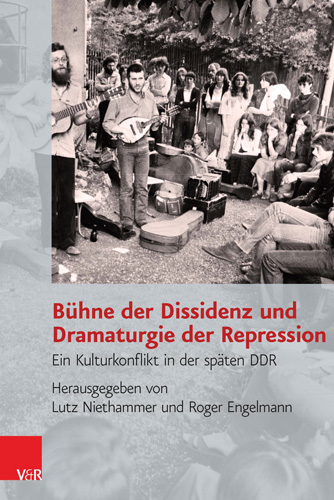
In the early 1980s, the Socialist Unity Party of Germany eased its cultural political restrictions thereby appearing to provide a space for new formal and thematic approaches in the GDR. It was not only in Berlin that unconventional young talent made use of this supposed room for manoeuvre. In Gera, a regional town based around industry and administration, a small center of alternative popular culture emerged which included the band “Liedehrlich” (featuring, among others, Stephan Krawczyk), the duo Gornandt and Ronnefarth and the local puppet show. It became the subject of a remarkable cultural conflict in which the various state players were pulling on very different strings. While the cultural politicians in question were encouraging or at least tolerated the artists, the local secret police considered them to be ‘hostile and negative’ from the very beginning and fought them by deploying the most elaborate procedure they had at their disposal, the so called “Zentraler Operativer Vorgang” (central operative procedure). German text.
English summary: In the early 1980s, the Socialist Unity Party of Germany eased its cultural political restrictions thereby appearing to provide a space for new formal and thematic approaches in the GDR. It was not only in Berlin that unconventional young talent made use of this supposed room for manoeuvre. In Gera, a regional town based around industry and administration, a small center of alternative popular culture emerged which included the band “Liedehrlich” (featuring, among others, Stephan Krawczyk), the duo Gornandt and Ronnefarth and the local puppet show. It became the subject of a remarkable cultural conflict in which the various state players were pulling on very different strings. While the cultural politicians in question were encouraging or at least tolerated the artists, the local secret police considered them to be ‘hostile and negative’ from the very beginning and fought them by deploying the most elaborate procedure they had at their disposal, the so called “Zentraler Operativer Vorgang” (central operative procedure). German description: In den fruhen 1980er Jahren lockerte die SED ihre kulturpolitischen Vorgaben und schien damit in der DDR Raum fur neue formale und inhaltliche Ansatze zu geben. Auch fernab von Berlin nutzten unkonventionelle Nachwuchskunstler ihren vermeintlichen Spielraum. In Gera, einer von Industrie und Verwaltung gepragten Bezirkstadt, entstand mit der Gruppe Liedehrlich (u.a. mit Stephan Krawczyk), dem Gesangsduo Gornandt und Ronnefarth und dem ortlichen Puppenspiel ein kleines Zentrum alternativer Popularkultur, das zum Gegenstand eines bemerkenswerten Kulturkonfliktes wurde, in dem die verschiedenen staatlichen Akteure an sehr unterschiedlichen Strangen zogen. Wahrend die zustandigen Kulturpolitiker die Kunstler forderten oder zumindest tolerierten, betrachtete die ortliche Staatssicherheit sie von Anfang an als feindlich-negativ und bekampfte sie mit der aufwendigsten Vorgangsart, die ihr zur Verfugung stand, einem Zentralen Operativen Vorgang.
- Contributions by Agnès Arp
- Contributions by Matthias Braun
- Contributions by Jeannette van Laak
- Contributions by Katharina Lenski
- Contributions by Martin Morgner
- Edited by Lutz Niethammer
- Edited by Roger Engelmann
Other Titles in this Series


 Mythos Schwedt
DDR-Militärstrafvollzug und NVA-Disziplinareinheit aus dem Blick der Staatssicherheit
 Knastware für den Klassenfeind
Häftlingsarbeit in der DDR, der Ost-West-Handel und die Staatssicherheit (1970-1989)



 Ausreise per Antrag: Der lange Weg nach drüben
Eine Studie über Herrschaft und Alltag in der DDR-Provinz

 Fasse Dich kurz!
Der grenzüberschreitende Telefonverkehr der Opposition in den 1980er Jahren und das Ministerium für Staatssicherheit
 Staats-Sicherheiten im Sozialismus
Geheimpolizei und staatssozialistisches Regime in der DDR und Osteuropa

 Auftrag: Menschenraub
Entführungen von Westberlinern und Bundesbürgern durch das Ministerium für Staatssicherheit der DDR

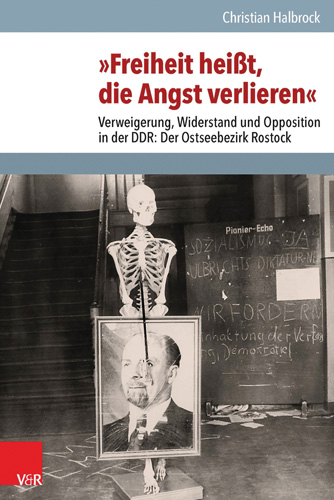 »Freiheit heißt, die Angst verlieren«
Verweigerung, Widerstand und Opposition in der DDR: Der Ostseebezirk Rostock


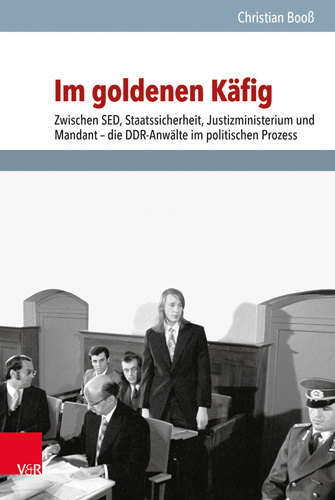 Im goldenen Käfig
Zwischen SED, Staatssicherheit, Justizministerium und Mandant – die DDR-Anwälte im politischen Prozess

Similar Books


 As Messianism Turns to Heresy
The Regenstein Chair Lectures On Lurianic Kabbalah and Shabbatai Tzevi at Hebrew Union College - Cincinnati
 Balthasar Caymox of Nuremberg
Early Modern German Print Publishers: Popular Prints of the Seventeenth Century

 Beyond Sovereign Courts
Agents and Practices in Early Modern Spanish and Habsburg Diplomacy
Volume 3


 Constitutional Conflict as Judicial Civil Disobedience and Conscientious Objection
Reconceptualising National Constitutional Court Rulings in the European Union Legal Space




 Food Security under Armed Conflict
Global Knowledge Landscape and Public Attention to Social, Economic, and Humanitarian Dimensions

 Formulary apportionment in international tax law
An allocation method for the age of globalization and digitalization
Volume 210


 Hofmann oder Vorkämpfer der „philosophes“?
Deutsche Voltaire-Bildnisse und -Imaginationen im Zeitalter der Aufklärung
 Innovationes Lovanienses: Arts, Law and Theology at the University of Louvain (1425–1797)
Studium Lovaniense: Learning across Borders, 2
Volume 18


 Legal Unification through Case Law?
Supreme Courts and the Emergence of Uniform Law in the Modern Era
Volume 242


 Myths and Tales of the Inughuit
Erik Holtved's Polar Eskimo Texts Revised and Re-translated into Danish and English
Volume 475, 12


 Students, Scholars and Their Books at the University of Louvain (1425-1797)
Studium Lovaniense: Learning across Borders, 1
Volume 17


 The Documentation of Historical Facts in Trial Judgments of the International Criminal Court
A Constitutional Theory of International Criminal Proceedings
Volume 66