
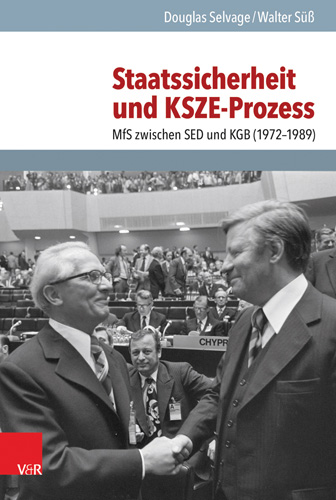
Staatssicherheit und KSZE-Prozess
MfS zwischen SED und KGB (1972–1989)
By (author) Douglas Selvage By (author) Walter Süß Consultant editor Nancy Aris Consultant editor Katrin Budde Consultant editor Thomas Hacker Consultant editor Petra Morawe Consultant editor Iris Gleicke Consultant editor Martin Gutzeit Consultant editor Horst Möller Consultant editor Astrid Rothe-Beinlich Consultant editor Siegmund Ehrmann Consultant editor Manfred Wilke Consultant editor Jörn Wunderlich Consultant editor Uwe Schwabe Consultant editor Florian Steger Consultant editor Jörn Mothes Consultant editor Bodo Walther Consultant editor Kai Langer
Hardback (Published)
(February 2019)
ISBN: 9783525310694
6.34 x 9.33 inches
Price: $69.00
On back order
Das Buch analysiert die Rolle und Wirkung des Ministeriums für Staatssicherheit (MfS) im KSZE-Prozess.
English summary: The book analyzes the role, activities and influence of the East German Ministry of State Security (MfS or Stasi) not only in connection with the Conference for Security and Cooperation in Europe (CSCE) and its follow-up conferences (i. e., the “CSCE Process”), but also in terms of limiting its influence upon East German society in terms of improved human rights and increased human contacts between East and West. On the one hand, the MfS supported the hard line of the East German party and state leadership in the CSCE process – also, when necessary, in opposition to the Soviet Union. On the other hand, the MfS supported Moscow’s demands – also communicated by its “fraternal organ”, the KGB – that the East German leadership should conduct a policy of strict “delimitation” (Abgrenzung) with regard to West Germany in order to seal Germany’s division. In general, Minister of State Security Erich Mielke supported the hardest possible line toward West Germany, whether as a representative of the East German Party leadership with regard to Moscow or as a supporter of Moscow’s hard line for the GDR towards West Germany within the SED regime. However, the economic weakness of the GDR and the Soviet Union, further exacerbated by the arms race with NATO and especially the U.S. in the 1980’s, led to concessions by both regimes to the West both within and outside of the CSCE process that further limited the possibilities of the MfS in terms of repressing East German dissidents. More importantly, this was also the case with regard to the growing movement to emigrate from the GDR to West Germany that had developed in response to the GDR’s signing of the CSCE Final Act in Helsinki in August 1975. In the end, the Stasi, which had always been a “servant of two masters” – i. e. the East German Party and the Soviet Union, represented by the KGB – could no longer keep the domestic effects arising from the CSCE process and detente under control because of the concessions of its two erstwhile “masters” to the West. German description: Das Buch analysiert die Rolle und Wirkung des ostdeutschen Ministeriums fur Staatssicherheit (MfS) im Zusammenhang mit dem nach der Unterzeichnung der Schlussakte der Konferenz fur Sicherheit und Zusammenarbeit in Europa (KSZE) entfachten diplomatischen Prozess (KSZE-Prozess) in Europa und bei dem Versuch der Eindammung von dessen nachfolgenden Auswirkungen in den Bereichen der Menschenrechte und der menschlichen Kontakte auf die DDR und Osteuropa. Auf der einen Seite unterstutzte die MfS-Fuhrung die harte Linie der Partei- und Staatsfuhrung der DDR im KSZE-Prozess, auch gegenuber Moskau. Auf der anderen Seite unterstutzte das MfS weitgehend die Forderungen Moskaus gegenuber der SED-Fuhrung zur Abgrenzung der DDR von der Bundesrepublik. Der Minister fur Staatssicherheit Erich Mielke agierte normalerweise als Verfechter einer moglichst harten Linie gegenuber der Bundesrepublik innerhalb und ausserhalb des KSZE-Prozesses, ob als Vertreter der Interessen der Partei- und Staatsfuhrung der DDR gegenuber Moskau oder als Verfechter der sowjetischen Linie in der SED-Fuhrung im Bundnis mit dem sowjetischen Bruderorgan, dem KGB. Die wirtschaftliche Schwache der Sowjetunion bzw. der DDR, verscharft durch weitere Militarausgaben wegen der Aufrustung der NATO und insbesondere der USA, fuhrte aber zu Zugestandnissen beider Regimes innerhalb und ausserhalb des KSZE-Prozesses, die die Repressionsmoglichkeiten des MfS gegenuber ostdeutschen Oppositionellen bzw. der – nach der Unterzeichnung der KSZE-Schlussakte entstandenen – Ausreisebewegung erheblich einschrankten. Am Ende konnte das MfS als Diener zweier Herren – die SED-Fuhrung und die Sowjetunion, vertreten durch den KGB – die innenpolitischen Auswirkungen des KSZE-Prozesses wegen der Zugestandnisse seiner beiden Herren an den Westen nicht mehr unter Kontrolle halten.
- By (author) Douglas Selvage
- By (author) Walter Süß
- Consultant editor Nancy Aris
- Consultant editor Katrin Budde
- Consultant editor Thomas Hacker
- Consultant editor Petra Morawe
- Consultant editor Iris Gleicke
- Consultant editor Martin Gutzeit
- Consultant editor Horst Möller
- Consultant editor Astrid Rothe-Beinlich
- Consultant editor Siegmund Ehrmann
- Consultant editor Manfred Wilke
- Consultant editor Jörn Wunderlich
- Consultant editor Uwe Schwabe
- Consultant editor Florian Steger
- Consultant editor Jörn Mothes
- Consultant editor Bodo Walther
- Consultant editor Kai Langer
Other Titles in this Series
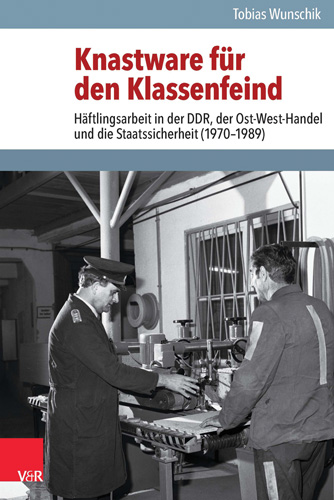 Knastware für den Klassenfeind
Häftlingsarbeit in der DDR, der Ost-West-Handel und die Staatssicherheit (1970-1989)



 Ausreise per Antrag: Der lange Weg nach drüben
Eine Studie über Herrschaft und Alltag in der DDR-Provinz

 Staats-Sicherheiten im Sozialismus
Geheimpolizei und staatssozialistisches Regime in der DDR und Osteuropa
 Fasse Dich kurz!
Der grenzüberschreitende Telefonverkehr der Opposition in den 1980er Jahren und das Ministerium für Staatssicherheit
 Auftrag: Menschenraub
Entführungen von Westberlinern und Bundesbürgern durch das Ministerium für Staatssicherheit der DDR


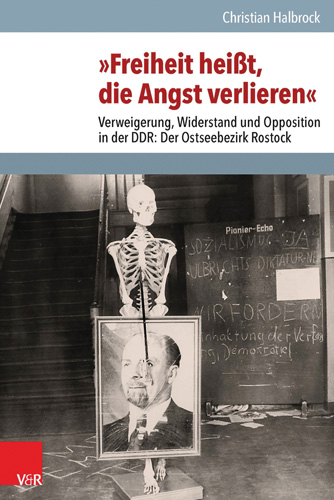 »Freiheit heißt, die Angst verlieren«
Verweigerung, Widerstand und Opposition in der DDR: Der Ostseebezirk Rostock


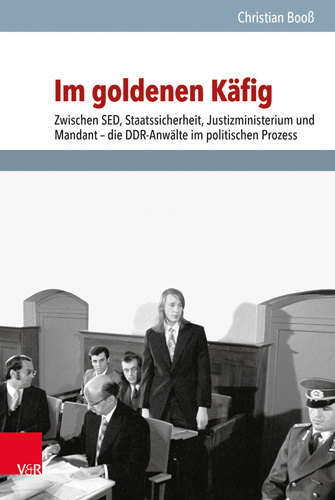 Im goldenen Käfig
Zwischen SED, Staatssicherheit, Justizministerium und Mandant – die DDR-Anwälte im politischen Prozess

 Dem Volk auf der Spur …
Staatliche Berichterstattung über Bevölkerungsstimmungen im Kommunismus. Deutschland – Osteuropa – China
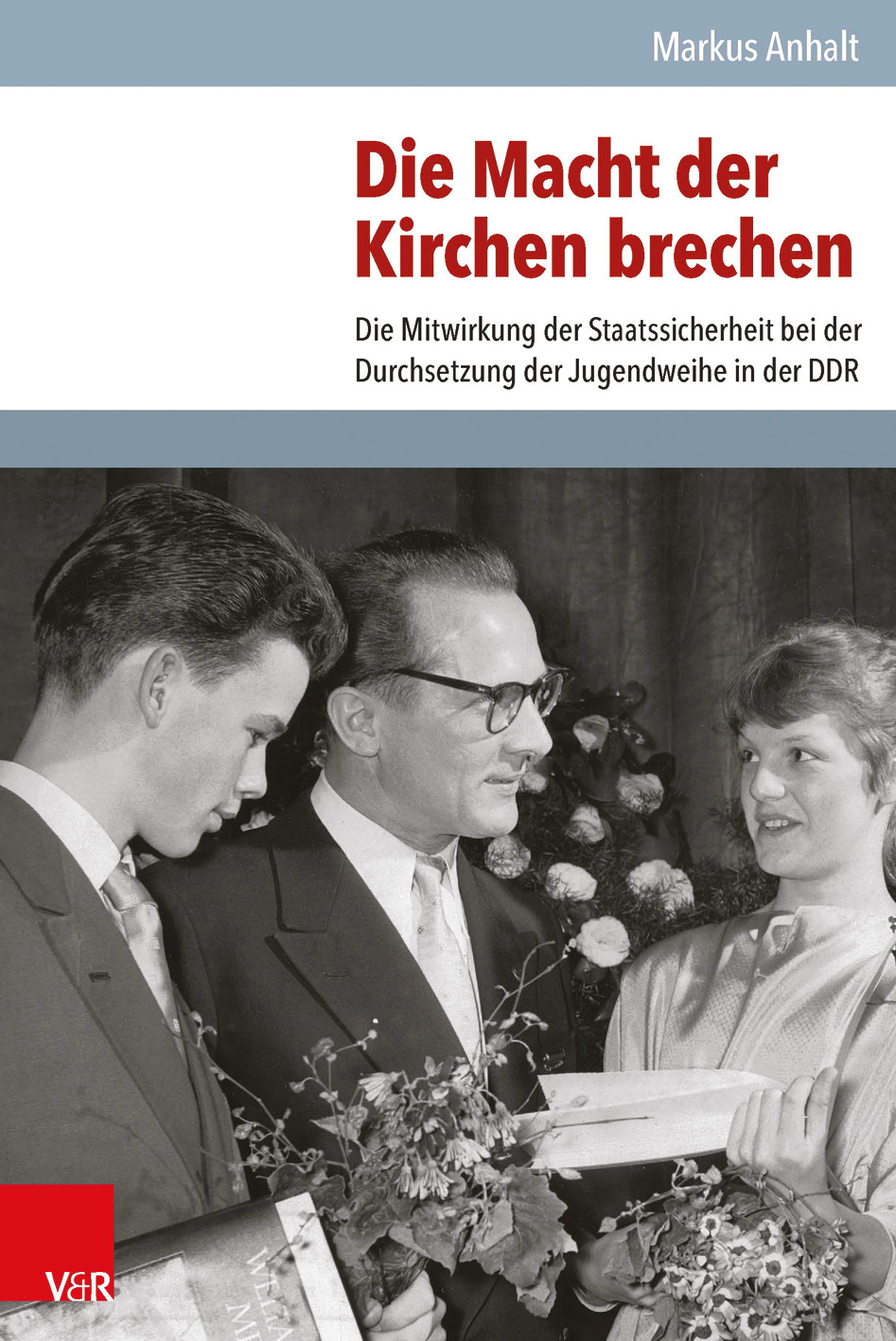 Die Macht der Kirchen brechen
Die Mitwirkung der Staatssicherheit bei der Durchsetzung der Jugendweihe in der DDR

 »Kristallhart gegenüber allen Feinden«
Die DDR-Staatsanwaltschaft und das MfS im politischen Strafprozess
Similar Books


 As Messianism Turns to Heresy
The Regenstein Chair Lectures On Lurianic Kabbalah and Shabbatai Tzevi at Hebrew Union College - Cincinnati
 Balthasar Caymox of Nuremberg
Early Modern German Print Publishers: Popular Prints of the Seventeenth Century

 Beyond Sovereign Courts
Agents and Practices in Early Modern Spanish and Habsburg Diplomacy
Volume 3




 Constitutional Conflict as Judicial Civil Disobedience and Conscientious Objection
Reconceptualising National Constitutional Court Rulings in the European Union Legal Space


 Dis/United States of Vulnerability
Literary and Cultural Transgressions in U.S. Poetry Since the 1960s
Volume 330


 European Drama and Performance Studies
Dramatisations politiques. Théâtre, politique et idéologie au XIXe siècle (1806-1914)
Volume 27

 Food Security under Armed Conflict
Global Knowledge Landscape and Public Attention to Social, Economic, and Humanitarian Dimensions

 Formulary apportionment in international tax law
An allocation method for the age of globalization and digitalization
Volume 210


 Hofmann oder Vorkämpfer der „philosophes“?
Deutsche Voltaire-Bildnisse und -Imaginationen im Zeitalter der Aufklärung
 Innovationes Lovanienses: Arts, Law and Theology at the University of Louvain (1425–1797)
Studium Lovaniense: Learning across Borders, 2
Volume 18


 Legal Unification through Case Law?
Supreme Courts and the Emergence of Uniform Law in the Modern Era
Volume 242


