
Au fil de l’eau et du temps: Architecture, spatialité et diachronie de la gestion de l’eau en Méditerranée
Edited by Marina Covolan

Hardback (Published)
(January 2026)
ISBN: 9781805831761
11.46 x 8.07 inches
Price: $77.00
In stock
This volume examines water management from the Bronze Age to the modern era across southern Europe and the Near East, highlighting continuity and change in hydraulic systems.
La maîtrise des ressources hydriques a constitué l’un des fondements majeurs du développement des sociétés humaines. De la protohistoire à l’époque moderne, l’approvisionnement, le stockage et l’évacuation de l’eau représentent trois problématiques fondamentales. L’étude diachronique des dispositifs hydrauliques offre ainsi un observatoire privilégié des capacités d’adaptation et d’innovation des sociétés face aux contraintes environnementales, tout en révélant l’évolution des structures sociales et politiques.
Les seize contributions couvrent un large éventail géographique — de l’Europe méridionale au Proche-Orient — et une chronologie étendue — de l’âge du Bronze, en passant par les époques grecque et punique, jusqu’à l’Antiquité tardive, le Moyen Âge et l’époque moderne —, permettant de saisir la permanence de certaines pratiques autant que leurs évolutions.
Le présent volume rassemble les actes issus d’un workshop et d’un colloque internationaux organisés à Aix-en-Provence en novembre 2023 et en novembre 2024, dans le cadre d’un projet postdoctoral. Le projet CIVIS3i « SeBNA – Water distribution systems in the ancient world : forms of continuity, permanence and subsistence in contemporary society », lancé en février 2023, a été cofinancée par les actions Marie Curie (H2020), avec l’appui de la fondation A*MIDEX, et accueillie au Centre Camille Jullian (Aix Marseille Univ, CNRS) et à la Sapienza Università di Roma.
Introduction – Marina Covolan
Chapitre 1: Approvisionnement et stockage de l’eau dans les villes du Levant Sud de l’âge du Bronze (c. 3700-1200 av. n. è.) : problématiques, vestiges et gestion – Blandine Besnard
Chapitre 2: Les trois temps de l’eau dans l’ancienne Tyr – Julien Cavero, Patrick Ferreira, Gilles Rollier, Jean-Baptiste Yon
Chapitre 3: Elea-Velia: il Vallone del Frittolo e il suo sfruttamento in epoca classica. Nuovi dati dalla sorgente Hyele – Daniele De Simone, Francesco Uliano Scelza, Tiziana D’Angelo
Chapitre 4: Les aqueducs de la Sicile tyrrhénienne. État de la recherche – Giovanni Polizzi
Chapitre 5: Il cosiddetto “Acquedotto sannitico”: gestione e distribuzione dell’acqua tra Serino e Benevento in epoca romana – Marina Covolan
Chapitre 6: ‘Intus in tenebris’. Tecniche e metodologie di scavo per l’Acquedotto Augusteo della Campania in area flegrea (Napoli, Italia) – Daniele De Simone, Graziano Ferrari
Chapitre 7: Alimentation en eau de la colonie romaine de Tubusuctu (Algérie) – Yani Aidali
Chapitre 8: Gestion de l’eau et techniques de construction hydraulique dans les villas romaines d’Istrie (Croatie). Contexte local et transferts techniques – Corinne Rousse, Pauline Ducret, Vincent Dumas, Gaetano Benčić, Philippe Bromblet,
Anne-Marie D’Ovidio, Viktor Čudoski
Chapitre 9: La citerne du site de la « Plate-Forme » à Fréjus. Nouvelle étude sur un ouvrage hydraulique d’époque impériale – Claudio Taffetani
Chapitre 10: Mortiers et bétons de tuileau : du choix à la contrainte, réflexions sur leur mise en œuvre – Fréderic Rivière
Chapitre 11: Des qanàts antiques dans la cité de Béziers – Adeline Barbe
Chapitre 12: Gérer les excès d’eau dans la ville antique : le cas du secteur de Trinquetaille, à Arles – Cécile Allinne, Marie-Pierre Rothé
Chapitre 13: From medieval irrigation to modernization: evolution of a Dominican garden – Natalie Gonzalez
Chapitre 14: Les puits à roue et à noria dans la plaine et les vallées languedociennes (XVe-XXe siècle) – Lisa Caliste, Julia Desagher
Chapitre 15; Inventaire des mines d’eau provençales, approches archéologiques et historiques – Hélène Aulagnier, Lucas Martin
Chapitre 16: La revivification des puits artésiens dans l’oasis de Kharga (Égypte), xviie-xixe siècles – Nicolas Michel
Conclusion: Pour une hydrohistoire ou une hydroarchéologie – Sophie Bouffier
Auteurs et résumés
Marina Covolan est postdoctorante au Centre Camille Jullian (Aix Marseille Univ, CNRS, Aix-en-Provence, France). Elle travaille principalement sur l’architecture romaine de Campanie, notamment celle de la région vésuvienne et phlégréenne, avec une attention particulière portée à l’architecture hydraulique.
- Edited by Marina Covolan
Similar Books


 Archaeological Excavations at Irmis Rka: An Investigation of a Multi-Layered Settlement in Southwest Georgia
Results from the 2020 Season: Early Bronze Age to Medieval Occupations


 Catuvellaunia and Rome: Economic and Political Relations during the Final Decades Pre-conquest
The Role of Grain from Southeastern Britain and Its Potential for Maintenance of the Roman Military along the Frontier on the Rhine
 Colour Concept “Secoli bui” a colori
Codici cromatici e architetture dipinte nell’età tardoantica e medievale

 Crossing Disciplines in the Study of Archaeology and Prehistoric Art: Insights from the Sahara and Mediterranean Africa
Proceedings of the XX UISPP World Congress (5–9 September 2023, Timișoara, Romania) Volume / Session 18
 Crossing Sacred Landscapes
Contacts and Continuities in the Desert Cults and Beliefs of Ancient Northern Arabia and the Arid Southern Levant
 Cuneiform Artefacts from Archaeological Contexts: New Research on Ancient Iraq
Proceedings of a Conference Held at the Bavarian Academy of Sciences and Humanities, July 4–5, 2024
Volume 2

 ENTANGLED AFRICA
Intra-African Relations Between Rain Forest and Mediterranean from Around 4,000 BCE to 1,500 CE


 Exploring Prehistoric Pottery in Japan
A Study of Organic Inclusions, Adhering Materials, and Impressions of Woven Items

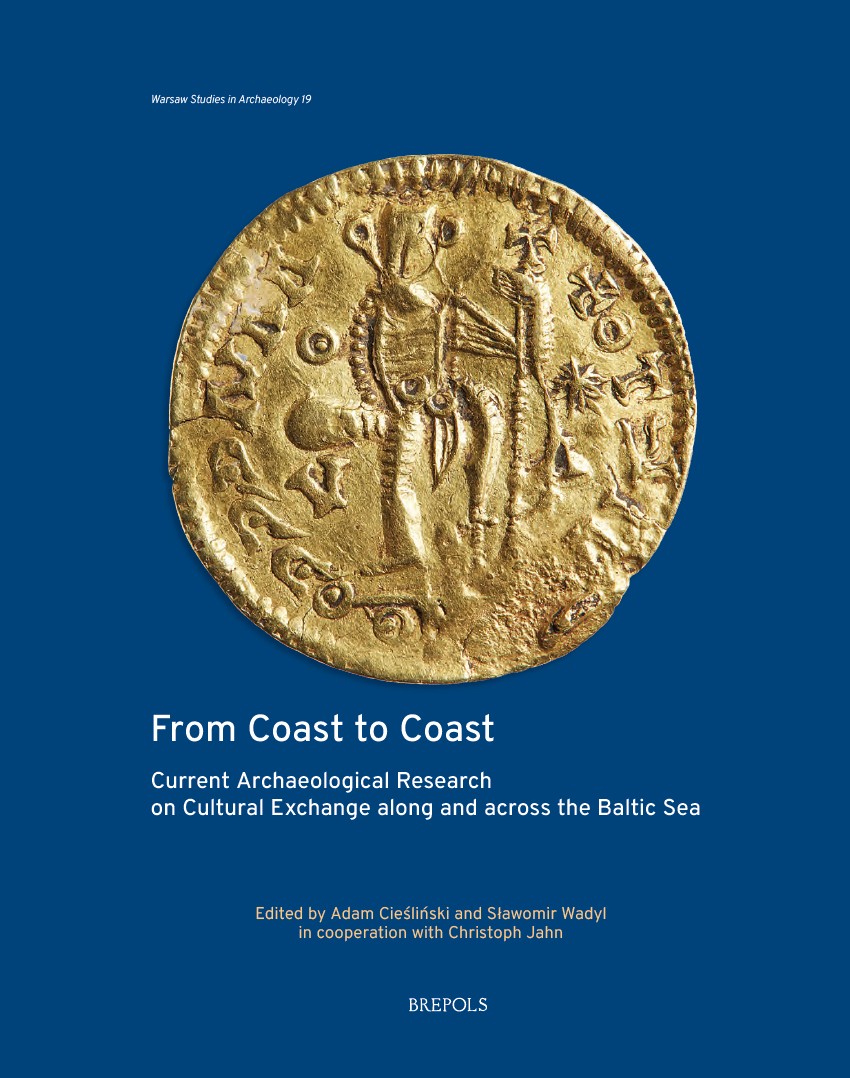 From Coast to Coast
Current Archaeological Research on Cultural Exchange along and across the Baltic Sea
Volume 19
 Frontiers of the Roman Empire: The Frontier of the Roman Province of Raetia
Grenzen des Römischen Reiches: Die Grenze der Römischen Provinz Raetien
 Gold, Silver and Glass: Power Networks, Cultural Identities, Technology Transfers and Agency across the Old World (7th Century BC – 1st Century AD)
Proceedings of a Conference Held at the British Museum, 16–18 June 2023
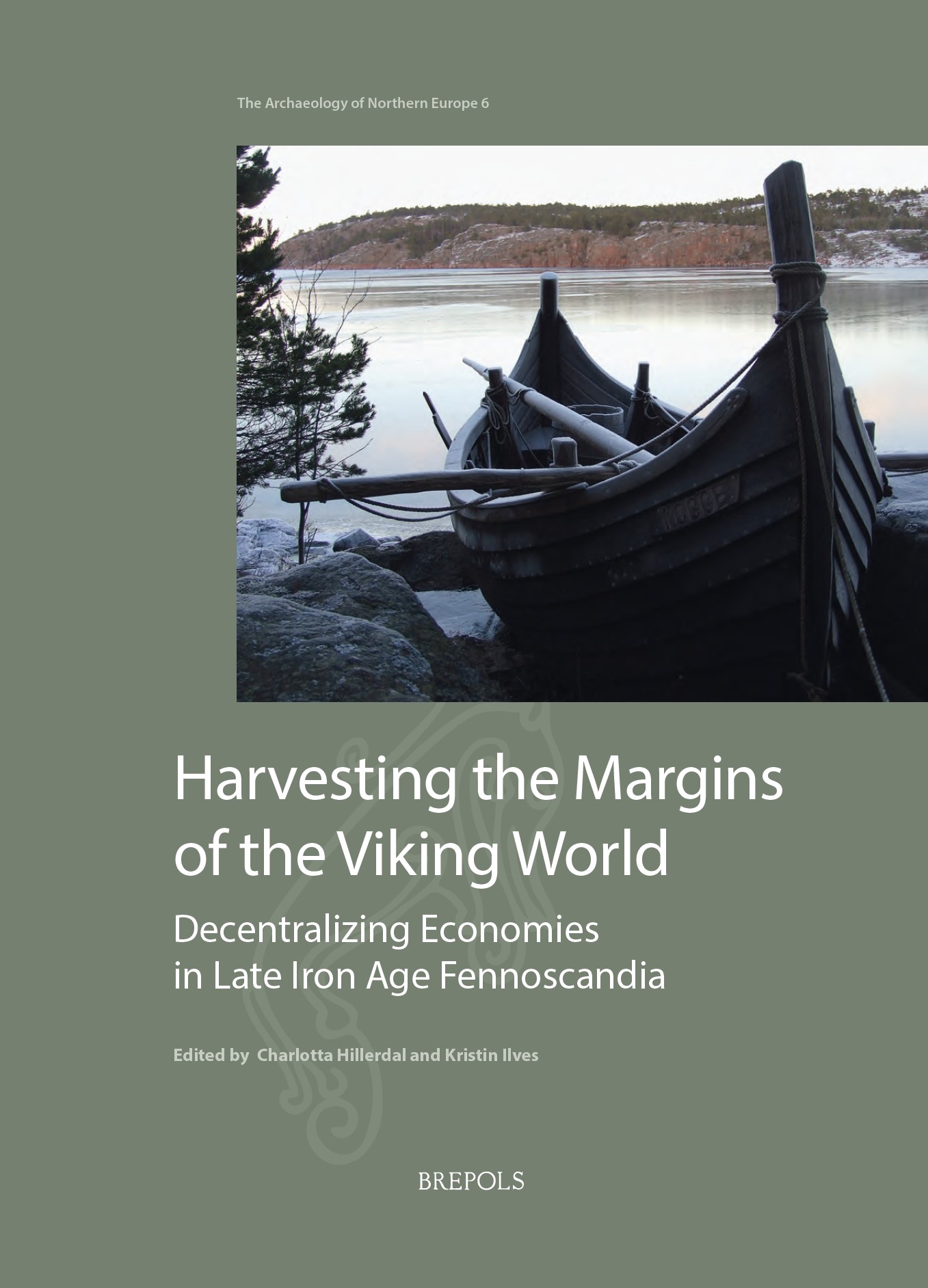 Harvesting the Margins of the Viking World
Decentralizing Economies in Late Iron Age Fennoscandia
Volume 6
 Images of Anonymous Women
A Semiotic Approach to Image-Text Relations in Interpretation of Ancient Near Eastern Art and the Hebrew Bible
Volume 310

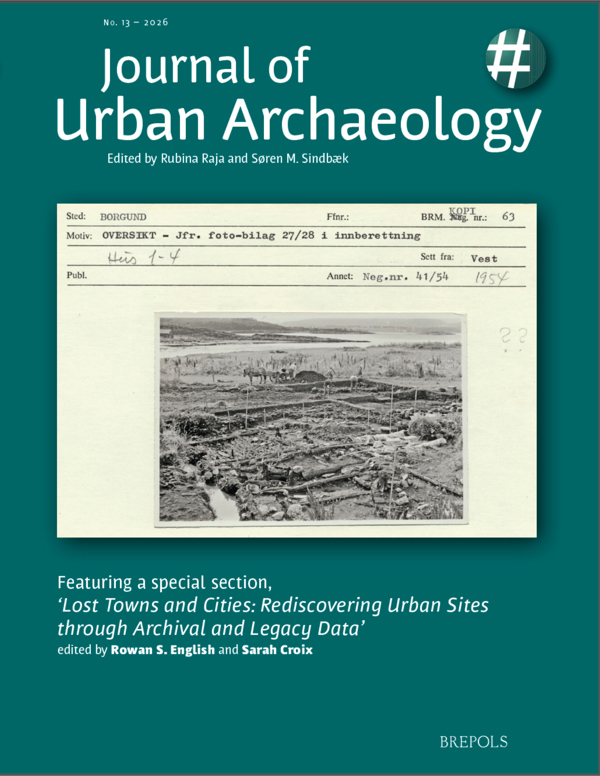 Journal of Urban Archaeology 13 (2026)
Featuring a special section, ‘Lost Towns and Cities: Rediscovering Urban Sites through Archival and Legacy Data’


 Making and Meaning in the Bronze and Iron Ages
Chronology, Landscapes and Societies across Europe. Proceedings from the METALAGES2024 Colloquium (Florence, 23 October 2024)

 Medieval Yeghegis, Armenia
History, Archaeology, Society. Local Multiplicities and Global Connections of a Rural Centre on the Silk Road(s)
 Mobility and Archaeogenetics in Central Asia
People – Goods – Ideas. 3rd International Conference on Central Asian Archaeology in Bern, 11th–13th January 2024
Volume 24


 Offa’s Dyke Journal: Volume 7 for 2025
A Journal for Linear Monuments, Frontiers and Borderlands Research


