
Archaeology
Euboea and Central Greece: Attica, Boeotia, Phthiotis, Eurytania, Phokis, Aetolia, Akarnania
Edited by Andreas G. Vlachopoulos

Hardback (Published)
(December 2009)
ISBN: 9789602042908
Price: $100.00
On back order
The second volume completes the circumnavigation of the islands, opening with the large island of Euboea in the Aegean. It then moves westwards towards the Ionian Sea, covering the southern part of the Greek Mainland, the region known today as Central Greece or Sterea Hellas. During historical times, this wide geographical region was not a discreet entity with a specific name, as were Thessaly, Epirus or the Peloponnese. Nevertheless, the prefectures of Central Greece (Attica, Boeotia, Phthiotis, Evrytania, Phokis, Aetoloakarnanania), that is, the modern administrative-geographical districts, coincide for the greater part of their territory with the ancient regions that in Antiquity were defined as lands of ‘ethne’ or tribes. For the long prehistoric era (from the appearance of man to the early first millennium BC), there is, of course, no evidence on the tribally or ethnically constituted regions, since there are no written sources to corroborate such a division. There existed also ancient ethnic-geographical unities (Phokis, Lokris, Doris, Achaia Phthiotis and others) – frequently these too with vague or fluctuating boundaries, like their populations – which do not coincide with modern administrative divisions of Central Greece. Last, and this too is not unrelated to the archaeological ‘human geography’ of the Greek Mainland, the Ephorates of Prehistoric and Classical Antiquities of the Hellenic Ministry of Culture supervise small parts of neighbouring prefectures, weaving a singular topographical canvas that complicates the overall study of the ancient tribal territories.
From the editor’s preface: The first volume in the series “Archaeology” examined the Aegean islands, excepting Euboea. I had pointed out there that this exception was dictated by the geographical peculiarity of Euboea and its dual -island and mainland- cultural physiognomy over the millennia. The second volume completes the circumnavigation of the islands, opening with the large island of Euboea in the Aegean. It then moves westwards towards the Ionian Sea, covering the southern part of the Greek Mainland, the region known today as Central Greece or Sterea Hellas. During historical times, this wide geographical region was not a discreet entity with a specific name, as were Thessaly, Epirus or the Peloponnese. Nevertheless, the prefectures of Central Greece (Attica, Boeotia, Phthiotis, Evrytania, Phokis, Aetoloakarnanania), that is, the modern administrative-geographical districts, coincide for the greater part of their territory with the ancient regions that in Antiquity were defined as lands of ‘ethne’ or tribes. For the long prehistoric era (from the appearance of man to the early first millennium BC), there is, of course, no evidence on the tribally or ethnically constituted regions, since there are no written sources to corroborate such a division. There existed also ancient ethnic-geographical unities (Phokis, Lokris, Doris, Achaia Phthiotis and others) – frequently these too with vague or fluctuating boundaries, like their populations – which do not coincide with modern administrative divisions of Central Greece. Last, and this too is not unrelated to the archaeological ‘human geography’ of the Greek Mainland, the Ephorates of Prehistoric and Classical Antiquities of the Hellenic Ministry of Culture supervise small parts of neighbouring prefectures, weaving a singular topographical canvas that complicates the overall study of the ancient tribal territories.
- Edited by Andreas G. Vlachopoulos
Similar Books

 Caesar’s Visions and Impact on the Roman Empire
Revisiting the Archaeological and Historical Record of the 40s BC
Volume 2


 Etruscan and Roman Hellenistic Anatomical ex votos
Reassessing Popular Religious Expressions in Central Italy
Volume 8


 Invisible Labour in Antiquity
Visualizing Obscure Work in the Ancient Mediterannean and West Asia
Volume 1
 Late Antique villae in the Balkans (3rd–7th c. AD): Current Research Questions and Perspectives
HAEMUS Companion to the Late Antique Balkans 1
Volume 4


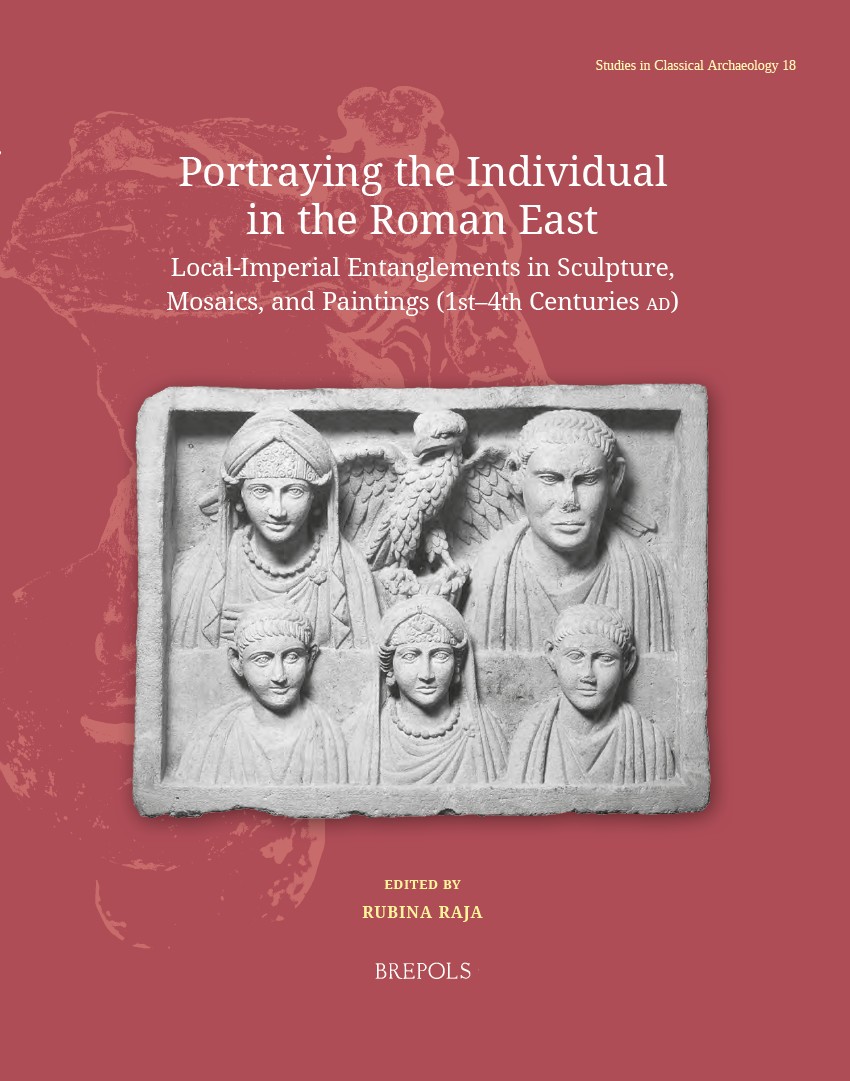 Portraying the Individual in the Roman East
Local–Imperial Entanglements in Sculpture, Mosaics, and Paintings (First–Fourth Centuries AD)
Volume 18

 Small Worlds and Relational Agencies: Local Societies in Early Medieval Iberia
Pequeños mundos y Agencias relacionales: Sociedades locales altomedievales en la Península Ibérica

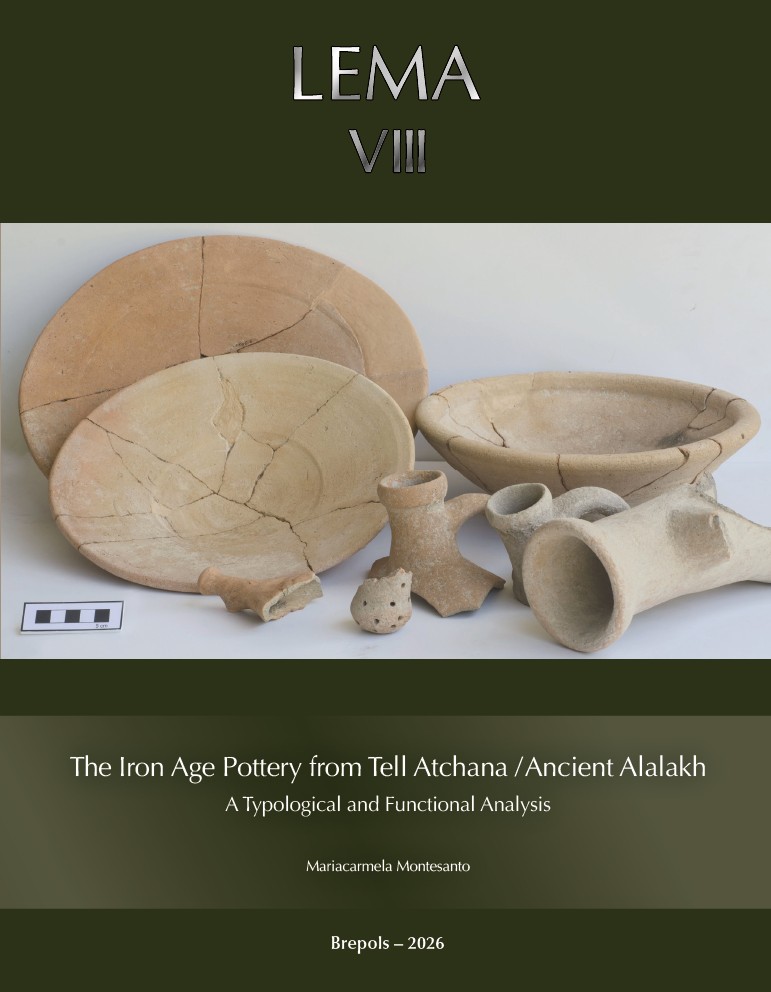 The Iron Age Pottery from Tell Atchana / Ancient Alalakh
A Typological and Functional Analysis
Volume 8

 Writing in the Church of the Nativity in Bethlehem
Inscription and Graffiti in a Multilingual and Multigraphic Perspective
Volume 45


 Atlante tematico di topografia antica 36-2026
Urbanistica e monumenti, porti, Roma. Ricerche sui monti Aurunci
Volume 36
 Cerámica común romana y ciclo haliéutico
Análisis de los contextos de las cetariae de Iulia Traducta

 Nuove scoperte e progressi nelle metodologie di rilievo e analisi dell’arte rupestre post-paleolitica in Italia
New discoveries and progress in the tracing and analysis methodologies of the post-Paleolithic rock art in Italy


 A Dramatic Event in Late Roman Florence
The Anomalous Burial Site Discovered beneath the Uffizi Gallery

 Alexander the Great and the Campaign of Gaugamela
New Research on Topography and Chronology. IAMNI 1 (Italian Archaeological Mission to Northern Iraq)
Volume 53


 Approaching Ancient Greek Coastal and Inland Poleis in the Northern Peloponnese
New Research in the Microregions of Aigeira, Lousoi and Sikyon
Volume 4