
ANCIENT PHOKIS
New approaches to its history, archaeology and topography. International conference, DAI Athens, 30 March–1 April 2017
Edited by Katja Sporn Edited by Alexandre Farnoux Edited by Eric Laufer

Paperback (Published)
(June 2024)
ISBN: 9783752008258
8.31 x 11.69 inches
Price: $194.00
In stock
English summary: This volume of the International Conference held in Athens in 2017, jointly organised by the German Archaeological Institute and the Ecole Francaise d’Athenes, brings together for the first time a cross-section of current research on ancient Phokis. As a region in the heart of ancient Greece, Phokis was of central importance for transport and travel. Politically and culturally, it was therefore often exposed to the interests and influences of neighbouring powers. A considerable number of mostly small poleis shaped the political landscape. In Delphi and Abai (Kalapodi), two oracles exercised an early impact far beyond the borders of the country. A substantial amount of recent fieldwork has contributed significantly to expanding our picture of ancient Phokis. The 32 papers collected in this volume cover the time span from the Iron Age to the Early Byzantine period. They address topics ranging from historical issues to settlement archaeology, sacred topography, material culture and the architectural design of the sanctuaries; from analyses of individual matters and broad material genres, to enquiries into aspects of a particular Phokian identity. Thus, for the first time, a broad overview of the previous research tradition, desiderata, and new perspectives for future research into ancient Phokis is provided. German description: Der Band der 2017 in Athen abgehaltenen internationalen Tagung, die gemeinsam vom Deutschen Archaologischen Institut und der Ecole Francaise d’Athenes organisiert wurde, versammelt erstmals einen Querschnitt der aktuellen Forschung zum antiken Phokis. Als Region im Herzen des antiken Griechenlands war Phokis von zentraler Bedeutung fur Verkehr und Reisen. Politisch und kulturell war sie daher haufig den Interessen und Einflussen der Nachbarmachte ausgesetzt. Eine betrachtliche Anzahl von meist kleinen Poleis pragte die politische Landschaft. In Delphi und Abai (Kalapodi) wirkten zwei Orakel schon fruh weit uber die Grenzen des Landes hinaus. Eine betrachtliche Anzahl neuerer Feldforschungen hat wesentlich dazu beigetragen, unser Bild vom antiken Phokis zu erweitern. Die 32 in diesem Band versammelten Beitrage decken die Zeitspanne von der Eisenzeit bis zur fruhbyzantinischen Periode ab. Sie befassen sich mit Themen, die von historischen Fragen uber Siedlungsarchaologie, sakrale Topographie, materielle Kultur und die architektonische Gestaltung der Heiligtumer bis hin zu Analysen einzelner Gegenstande und breiter Materialgattungen sowie Untersuchungen zu Aspekten einer besonderen “phokischen” Identitat reichen. Damit wird erstmals ein breiter Uberblick uber die bisherige Forschungstradition, Desiderate und neue Perspektiven fur die zukunftige Erforschung des antiken Phokis gegeben.
English summary: This volume of the International Conference held in Athens in 2017, jointly organised by the German Archaeological Institute and the Ecole Francaise d’Athenes, brings together for the first time a cross-section of current research on ancient Phokis. As a region in the heart of ancient Greece, Phokis was of central importance for transport and travel. Politically and culturally, it was therefore often exposed to the interests and influences of neighbouring powers. A considerable number of mostly small poleis shaped the political landscape. In Delphi and Abai (Kalapodi), two oracles exercised an early impact far beyond the borders of the country. A substantial amount of recent fieldwork has contributed significantly to expanding our picture of ancient Phokis. The 32 papers collected in this volume cover the time span from the Iron Age to the Early Byzantine period. They address topics ranging from historical issues to settlement archaeology, sacred topography, material culture and the architectural design of the sanctuaries; from analyses of individual matters and broad material genres, to enquiries into aspects of a particular Phokian identity. Thus, for the first time, a broad overview of the previous research tradition, desiderata, and new perspectives for future research into ancient Phokis is provided. German description: Der Band der 2017 in Athen abgehaltenen internationalen Tagung, die gemeinsam vom Deutschen Archaologischen Institut und der Ecole Francaise d’Athenes organisiert wurde, versammelt erstmals einen Querschnitt der aktuellen Forschung zum antiken Phokis. Als Region im Herzen des antiken Griechenlands war Phokis von zentraler Bedeutung fur Verkehr und Reisen. Politisch und kulturell war sie daher haufig den Interessen und Einflussen der Nachbarmachte ausgesetzt. Eine betrachtliche Anzahl von meist kleinen Poleis pragte die politische Landschaft. In Delphi und Abai (Kalapodi) wirkten zwei Orakel schon fruh weit uber die Grenzen des Landes hinaus. Eine betrachtliche Anzahl neuerer Feldforschungen hat wesentlich dazu beigetragen, unser Bild vom antiken Phokis zu erweitern. Die 32 in diesem Band versammelten Beitrage decken die Zeitspanne von der Eisenzeit bis zur fruhbyzantinischen Periode ab. Sie befassen sich mit Themen, die von historischen Fragen uber Siedlungsarchaologie, sakrale Topographie, materielle Kultur und die architektonische Gestaltung der Heiligtumer bis hin zu Analysen einzelner Gegenstande und breiter Materialgattungen sowie Untersuchungen zu Aspekten einer besonderen “phokischen” Identitat reichen. Damit wird erstmals ein breiter Uberblick uber die bisherige Forschungstradition, Desiderate und neue Perspektiven fur die zukunftige Erforschung des antiken Phokis gegeben.
- Edited by Katja Sporn
- Edited by Alexandre Farnoux
- Edited by Eric Laufer
Other Titles in this Series
 Baugeschichte von Nauplia
aus dem Nachlass herausgegeben und kommentiert von Alexander Zah
Volume 10
 Terrakotten aus Akraiphia und ihr Fundkontext
Beitrage zur Chronologie der archaischen bootischen Koroplastik
Volume 8
 Heiligtümer im Bereich von Stadtmauern und Stadttoren
Festkolloquium aus Anlass des 100jährigen Jubiläums der Kerameikosgrabung des Deutschen Archäologischen Instituts in Athen
Volume 12

Similar Books


 Caesar’s Visions and Impact on the Roman Empire
Revisiting the Archaeological and Historical Record of the 40s BC
Volume 2

 Construction Processes in Historical Western Societies (5th c. BC – 10th c. AD)
Case Studies on Techniques, Models, and Costs


 Etruscan and Roman Hellenistic Anatomical ex votos
Reassessing Popular Religious Expressions in Central Italy
Volume 8




 Invisible Labour in Antiquity
Visualizing Obscure Work in the Ancient Mediterannean and West Asia
Volume 1

 Late Antique villae in the Balkans (3rd–7th c. AD): Current Research Questions and Perspectives
HAEMUS Companion to the Late Antique Balkans 1
Volume 4





 Portraying the Individual in the Roman East
Local–Imperial Entanglements in Sculpture, Mosaics, and Paintings (First–Fourth Centuries AD)
Volume 18


 Roman Copies, Collecting, and Culture in the Bay of Naples and Beyond
Papers in Honor of Eugene J. Dwyer
 Small Worlds and Relational Agencies: Local Societies in Early Medieval Iberia
Pequeños mundos y Agencias relacionales: Sociedades locales altomedievales en la Península Ibérica
 SOMA 2023: Proceedings of the 24th Symposium on Mediterranean Archaeology
Ideas that Travelled by the Sea, Udine, 2-4 February, 2023


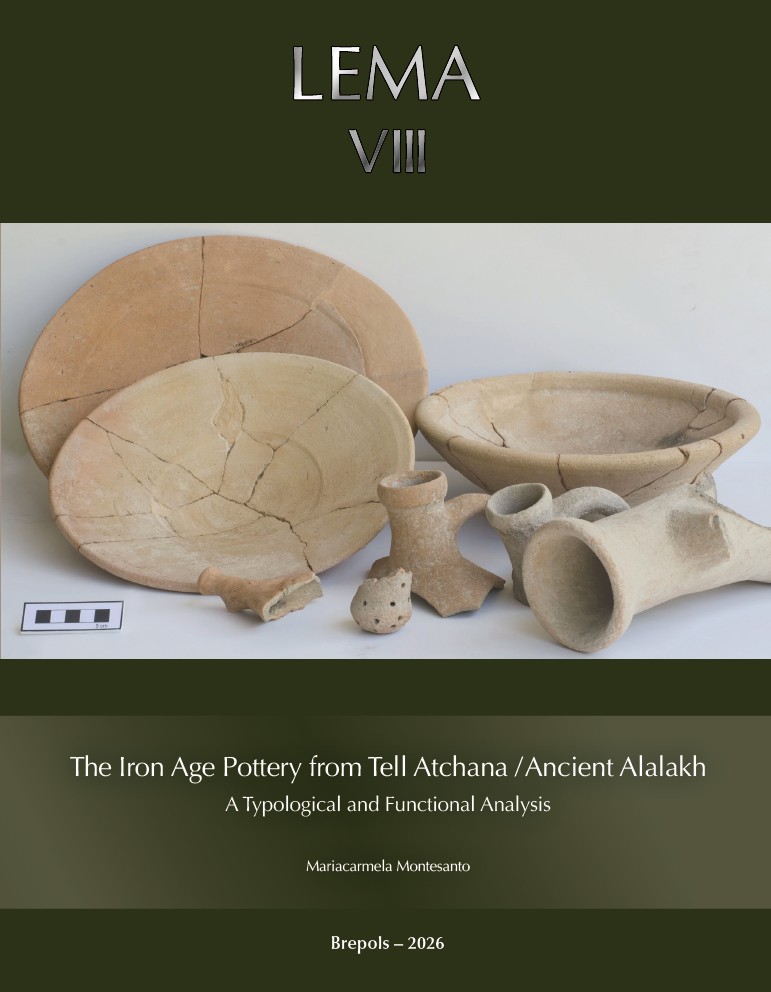 The Iron Age Pottery from Tell Atchana / Ancient Alalakh
A Typological and Functional Analysis
Volume 8
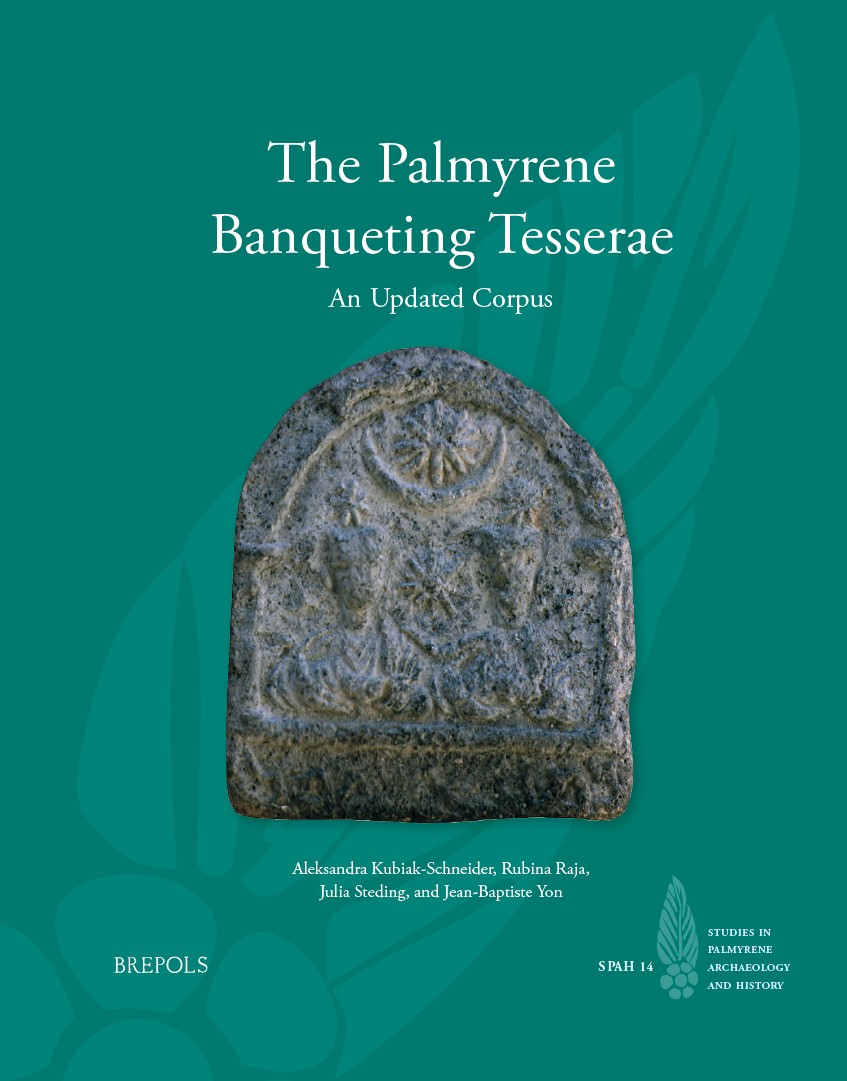


 Writing in the Church of the Nativity in Bethlehem
Inscription and Graffiti in a Multilingual and Multigraphic Perspective
Volume 45
 Zooarchaeology of Ancient Greek Sanctuaries in Southwestern Sicily
Faunal Analysis from Selinus and Akragas as Evidence of Differences in the Treatment of Animals for Ritual Purposes
 Alabaster
An Interdisciplinary Study of the Sources and Uses of Calcite Alabaster in Antiquity
Volume 5

 Echoes from the Past: Traditional Cypriot Pottery
An Exhibition at the Cyprus American Archaeological Research Institute in October 1995