
De-colonising the Biblical Narrative. Volume 1
Genesis 1-11
by Norman Habel
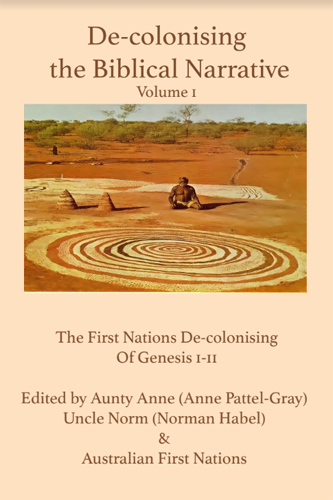
De-colonising the Biblical Narrative, Volume One represents a landmark in contemporary hermeneutics. In this volume we take into account our colonial history and develop a de-colonising hermeneutic which we employ to identify the colonial editing of the text and to retrieve precolonial narratives with which First Nations peoples of Australia may resonate. In the first volume we attempt to de-colonise the narratives of Genesis 1-11 and retrieve pre-colonial legends that are comparable to First Nations ancestral narratives. In Genesis One, for example, we retrieve a Primal Land Narrative in which the primordial ground is born, comes to life, creates life and is named ‘Land’ by the Creator Spirit. As we work through the traditions of Genesis 1-11 we also discern colonial additions like the mandate to dominate associated with the Imago Dei in Genesis 1.26-28. At the close of the analysis of each narrative, we include the response of First Nations Australia, thereby illustrating, not only the significance of our finding, but also the relevance for First Nations peoples.
De-colonising the Biblical Narrative, Volume One represents a landmark in contemporary hermeneutics. In this volume we take into account our colonial history and develop a de-colonising hermeneutic which we employ to identify the colonial editing of the text and to retrieve precolonial narratives with which First Nations peoples of Australia may resonate. In the first volume we attempt to de-colonise the narratives of Genesis 1-11 and retrieve pre-colonial legends that are comparable to First Nations ancestral narratives. In Genesis One, for example, we retrieve a Primal Land Narrative in which the primordial ground is born, comes to life, creates life and is named ‘Land’ by the Creator Spirit. As we work through the traditions of Genesis 1-11 we also discern colonial additions like the mandate to dominate associated with the Imago Dei in Genesis 1.26-28. At the close of the analysis of each narrative, we include the response of First Nations Australia, thereby illustrating, not only the significance of our finding, but also the relevance for First Nations peoples.
- By (author) Norman Habel
Other Titles in this Series
 De-colonising the Biblical Narrative. Volume 4
The Colonial Worldview of the Book of Joshua
Volume 4
Similar Books


 Athanasius of Alexandria, Epistula ad episcopos Aegypti et Libyae
Old Slavonic Version and English Translation
Volume 261



 Contesting Labeled Identities
The Sociology of Gentilics in Biblical and Northwest Semitic Literature
 Cyril of Alexandria’s Christological Exegesis
Explorations of Partitive Exegesis in the Dialogues on the Trinity
Volume 70


 Epiphanies of the Divine in the Septuagint and the New Testament
Fifth International Symposium of the Corpus Judaeo-Hellenisticum Novi Testamenti (CJHNT), 14-17 May 2015, Nottingham


 Extracanonical Traditions and the Holy Land
Texts, Rituals, and Material Culture in Late Antique Palestine
 From Joseph to Jesus
The Joseph Narrative as a Compositional Template from Old Greek Esther to the Gospel of Luke
Volume 125





 Nicholas of Lyra’s Commentaries on the Gospels of Matthew and Luke
Franciscan Exegesis in a Time of Crisis
 Paradise Lost in Transmission
The Return to Eden in the Apocalypse of Peter within Its Ethiopic and Early Christian Contexts




 Punning in Odd or Elegant Constructions in Jeremiah
The Convergence of Linguistics, Rhetoric, and Textuality in the Hebrew Text of Jeremiah


 Reformed Covenantal Eudaimonism
Wilhelmus à Brakel (1635–1711) on Highest Good, Virtue, and Law
Volume 87
