
Ancient Settlement Systems and Cultures in the Ram Hormuz Plain, Southwestern Iran
Excavations at Tall-e Geser and Regional Survey in the Ram Hormuz Area
by Abbas Alizadeh, Loghman Ahmadzadeh, Mehdi Omidfar, John R. Alden, Leah Minc, Jacques Connan, John Zumberge and Kendra Imbus

After World War II, archaeological fieldwork was resumed in Iran in 1948. McCown chose the Ram Hormuz region, southeast of lowland Susiana and the region south and east of the provincial town of Ahvaz down to the Persian Gulf. He recorded 118 sites in the areas and eventually chose for excavation the large prehistoric mound complex Tall-e Geser.
After a decade-long hiatus in the years of World War II, archaeological fieldwork was resumed in Iran in 1948. In that year, the Oriental Institute returned to its long tradition of archaeological research by sending Donald McCown to the lowlands of southwestern Iran to conduct a series of surface surveys to find a multi-period site for excavation. For his survey, McCown chose the Ram Hormuz region, southeast of lowland Susiana and the region south and east of the provincial town of Ahvaz down to the Persian Gulf. McCown recorded 118 sites in the Ram Hormuz and Ahvaz areas and eventually chose for excavation the large prehistoric mound complex Tall-e Geser. Three months of excavation in 1948 and 1949 yielded materials that were kept in Chicago for many years. Apart from short articles, the site was never fully published. In Part 1 of this two-part volume, Abbas Alizadeh and colleagues have undertaken a final publication of the site. This task was undertaken because of a number of important considerations. First, the excavations at Geser have been cited as justifying the division of the Uruk period in southwestern Iran into Early, Middle, and Late phases. Second, Geser remains the only systematically excavated site in the Ram Hormuz region – a strategic location between the Susiana and Mesopotamian alluvium and the Zagros highlands of southwestern Iran. Third, Geser has produced a very extensive body of archaeological materials dating to the comparatively less understood proto-Elamite period, roughly the first few centuries of the third millennium bc. And finally, with the exception of a 700-800-year gap following the proto-Elamite phase, Geser remains one of the only sites in the Near East to have a very long and generally uninterrupted depositional sequence, in this case spanning from the fifth millennium BC to the Safavid period. The site’s crucial location, its importance in the archaeological literature, and its long stratigraphic sequence made it imperative that the original excavation results from Geser be published in anticipation of a time when the site can be re-excavated. Part 2 of this volume presents the results of regional surveys conducted in the Ram Hormuz plain from 2005 to 2008, which were undertaken by Alizadeh and colleagues with the goal of understanding the semi-nomadic, mobile component of lowland Susiana and its hinterlands through time.
- By (author) Loghman Ahmadzadeh
- By (author) John R Alden
- By (author) Abbas Alizadeh
- By (author) Jacques Connan
- By (author) Kendra Imbus
- By (author) Leah Minc
- By (author) Mehdi Omidfar
- By (author) John Zumberge
Other Titles in this Series
 Excavations at the prehistoric mound of Chogha Bonut, Khuzestan, Iran
Seasons 1976/77, 1977/78, and 1996
Volume 120
 Early Megiddo on the East Slope (The ‘Megiddo Stages’)
A Report on the Early Occupation of the East Slope of Megiddo. Result of the Oriental Institute's Excavations, 1925-1933
Volume 139


 Tell Hamoukar, Volume 1. Urbanism and Cultural Landscapes in Northeastern Syria
The Tell Hamoukar Survey, 1999-2001
Volume 137

 The Amuq Valley Regional Projects, Volume 1
Surveys in the Plain of Antioch and Orontes Delta, Turkey, 1995-2002
Volume 131
 The Temple of Khonsu. Volume II
Scenes and Inscriptions in the Court and the First Hypostyle Hall
Volume 103
 Temple of Khonsu, Volume 3
The Graffiti on the Khonsu Temple Roof at Karnak: A Manifestat
Volume 123
 The Egyptian Book of the Dead
Documents in the Oriental Institute Museum at the University of Chicago
Volume 82

 Archaeology of the Bronze Age, Hellenistic, and Roman Remains at an Ancient Town on the Euphrates River
Excavations at Tell Es-Sweyhat, Syria Volume 2
Volume 125
 The Archive of Thotsutmis, Son of Panouphis
Early Ptolemaic Ostraca from Deir el Bahari (O. Edgerton)
Volume 146

 Reliefs and Inscriptions at Luxor Temple, Volume 1
The Festival Procession of Opet in the Colonnade Hall
Volume 112

 Excavations in the Plain of Antioch III
Stratigraphy, Pottery, and Small Finds from Chatal Hoyuk in the Amuq Plain
Volume 143


 The Origins of State Organisations in Prehistoric Highland Fars, Southern Iran
Excavations at Tall-e Bakun
Volume 128
 Town and Country in Southeastern Anatolia, Volume II
The Stratigraphic Sequence at Kurban Hoyuk
Volume 110

 Kerkenes Special Studies 1
Sculpture and Inscriptions from the Monumental Entrance to the Palatial complex at Kerkenes, Turkey
Volume 135


Similar Books


 Connecting the Dots: Counting, Writing, and the Beginnings of Civilization
The Secret Lives of Clay Tokens: A Memoir

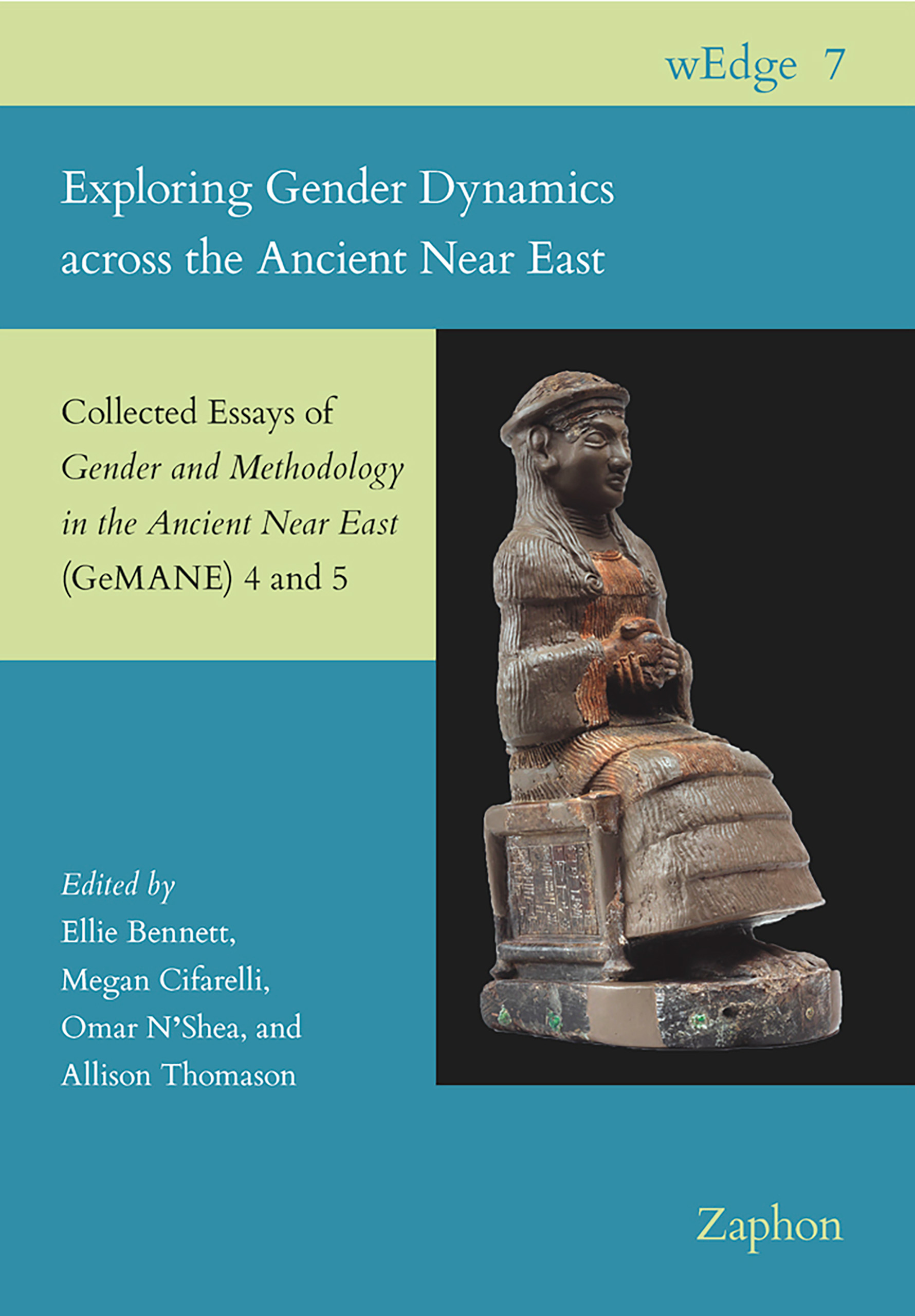 Exploring Gender Dynamics across the Ancient Near East
Collected Essays of Gender and Methodology in the Ancient Near East (GeMANE) 4 and 5
Volume 7


 Ḫattušaš utnē išḫameški
Hittite and Other Ancient Near Eastern Studies Presented to Piotr Taracha on the Occasion of His 65th Birthday

 New Research on Old Collections in Southwest Asian Archaeology
Proceedings of the Workshop Held at the British Museum, London, 31 July – 2 August, 2023
 Old Aramaic Inscriptions and their Contexts
An Epigraphic, Archaeological, and Historical Synthesis
Volume 63

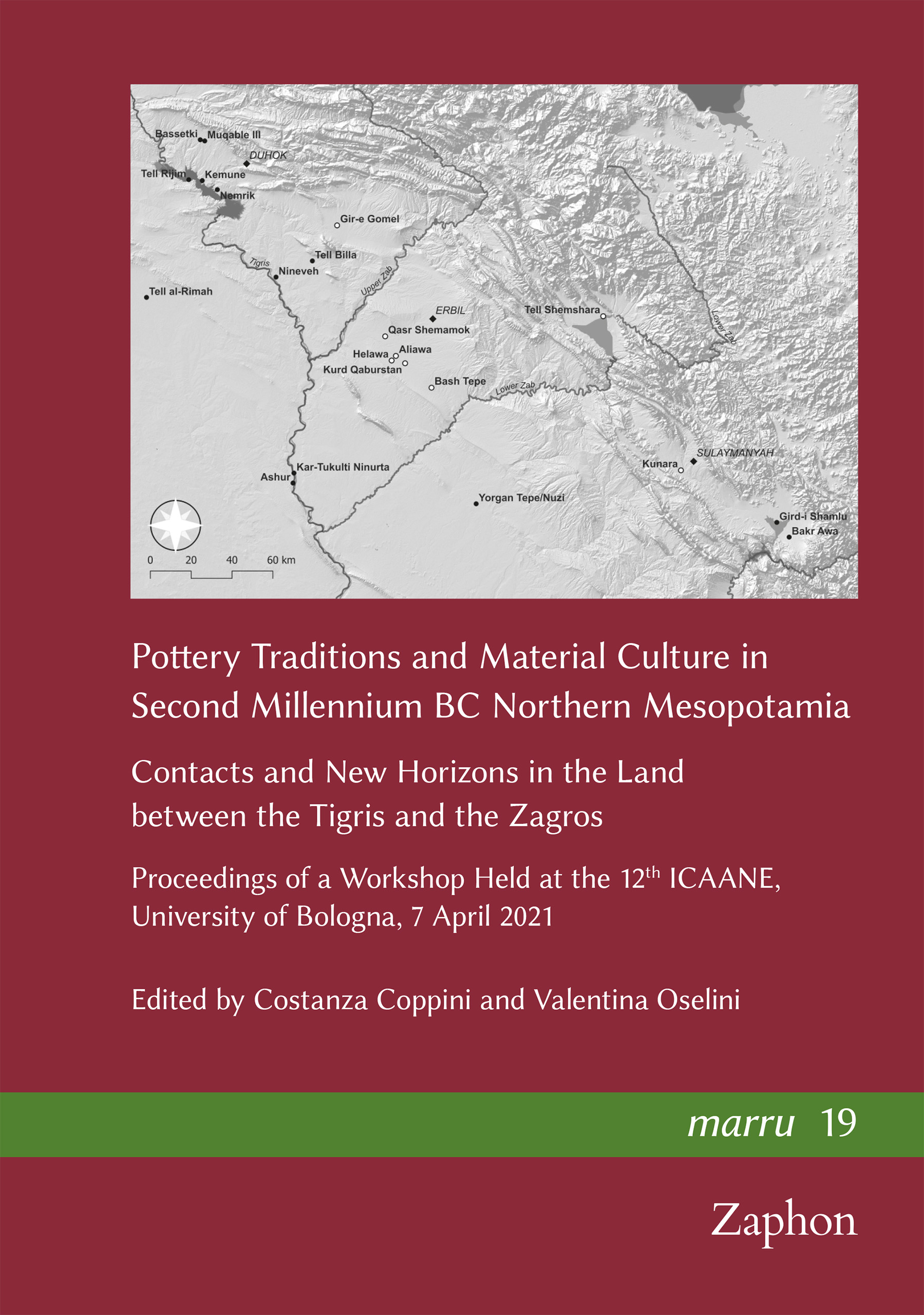 Pottery Traditions and Material Culture in Second Millennium BC Northern Mesopotamia
Contacts and New Horizons in the Land between the Tigris and the Zagros. Proceedings of a Workshop Held at the 12th ICAANE, University of Bologna, 7 April 2021
Volume 19
 Punning in Odd or Elegant Constructions in Jeremiah
The Convergence of Linguistics, Rhetoric, and Textuality in the Hebrew Text of Jeremiah
 Shame in the Worlds of the Hebrew Bible and Akkadian Texts
A Linguistic Study and Its Implications
Volume 33
 Telling Contexts
Archaeological and Textual Studies in Honor of Elizabeth Bloch-Smith and Mark S. Smith
 The Body
Lived, Cultured, Adorned: Essays on Dress and the Body in the Bible and Ancient Near East in Honor of Nili S. Fox
 The Discourse of Rites
Shaping and Reshaping the (Counter-)Priestly Rituals Conducted Outside the Tabernacle
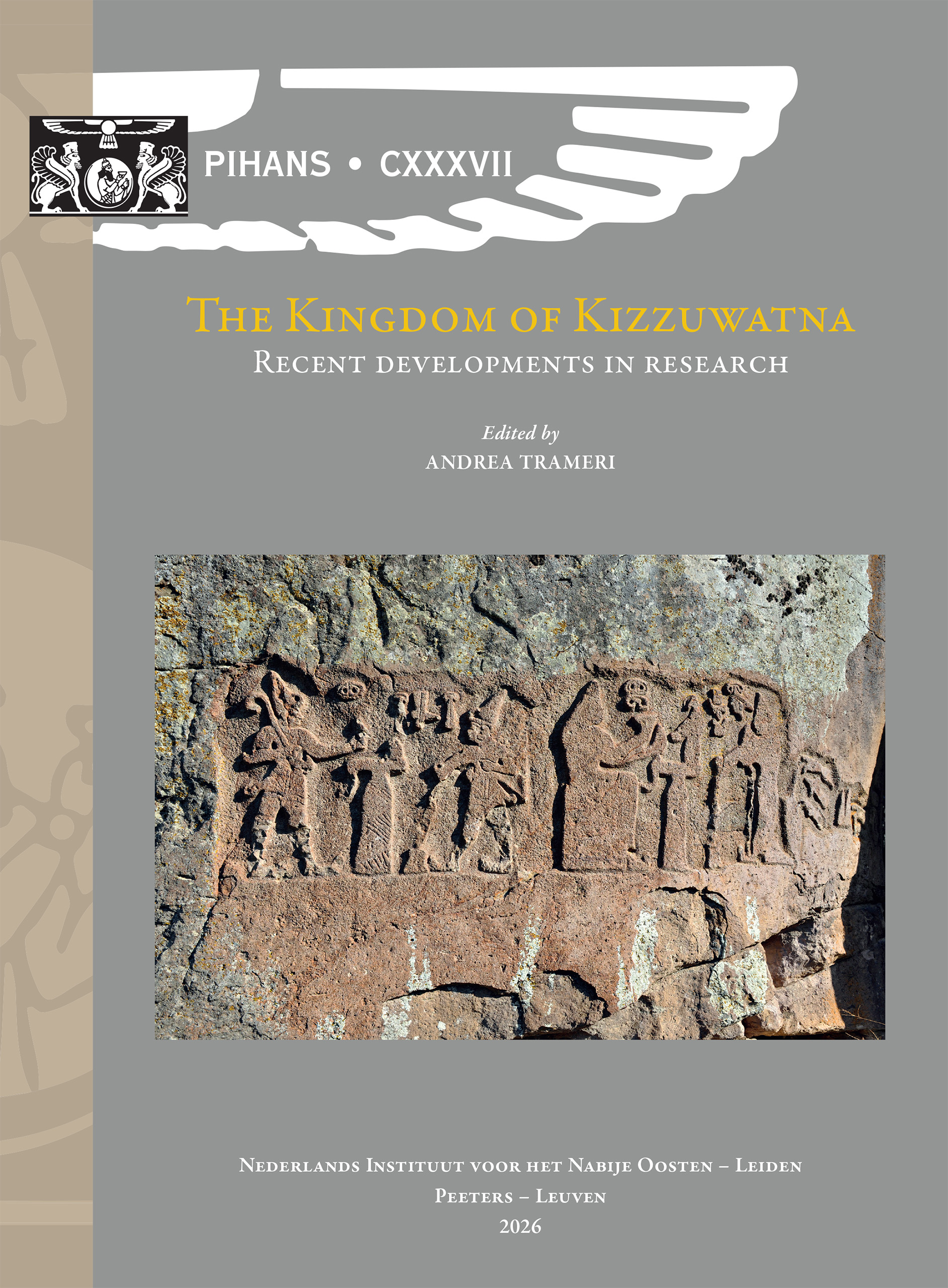 The Kingdom of Kizzuwatna: Recent Developments in Research
Proceedings of the Third NINO Postdoctoral Research Fellow Annual Conference, Leiden, 23rd-25th March 2023
Volume 137


 Die Entwicklung erdbebensicherer Bautechniken in der Frühen und Mittleren Eisenzeit in Ostanatolien
Volume 11
 Die JHWH-Religion und die Vorstellung göttlicher Gesetzgebung
Überschneidungen zwischen der Rechtsentwicklung und der Sphäre der Religion in der Geschichte des antiken Israel und Juda

 Kultur – Kontakt – Kultur
Beiträge anlässlich der 66. Rencontre Assyriologique Internationale in Frankfurt/Main und Mainz, 25.–29. Juli 2022
Volume 35
 Menschenwürde und Menschenrechte im Altem Orient, Israel und Hellas. Band 1
Human Dignity and Human Rights in the Ancient Near East, Ancient Israel, and Hellas. Volume 1
Volume 311
 Ptolemaiou Procheiroi Kanones. Les «Tables Faciles» de Ptolemée. Volume 2a: Tables A3-A13
Édition critique, Transcription
 Sprachwissenschaftliche und kulturhistorische Reflexionen
Festschrift zu Ehren von Jörg Klinger
Volume 31

 Vom Mädchen zur Frau
Weihgaben als Indikatoren rituellen und kommunikativen Handelns von Frauen in griechischen Kulten
Volume 188
 Von der Symmachie zur Arché und zurück
Die Entwicklungsphasen des Ersten Attischen Seebundes (478/7–404 v. Chr.)
