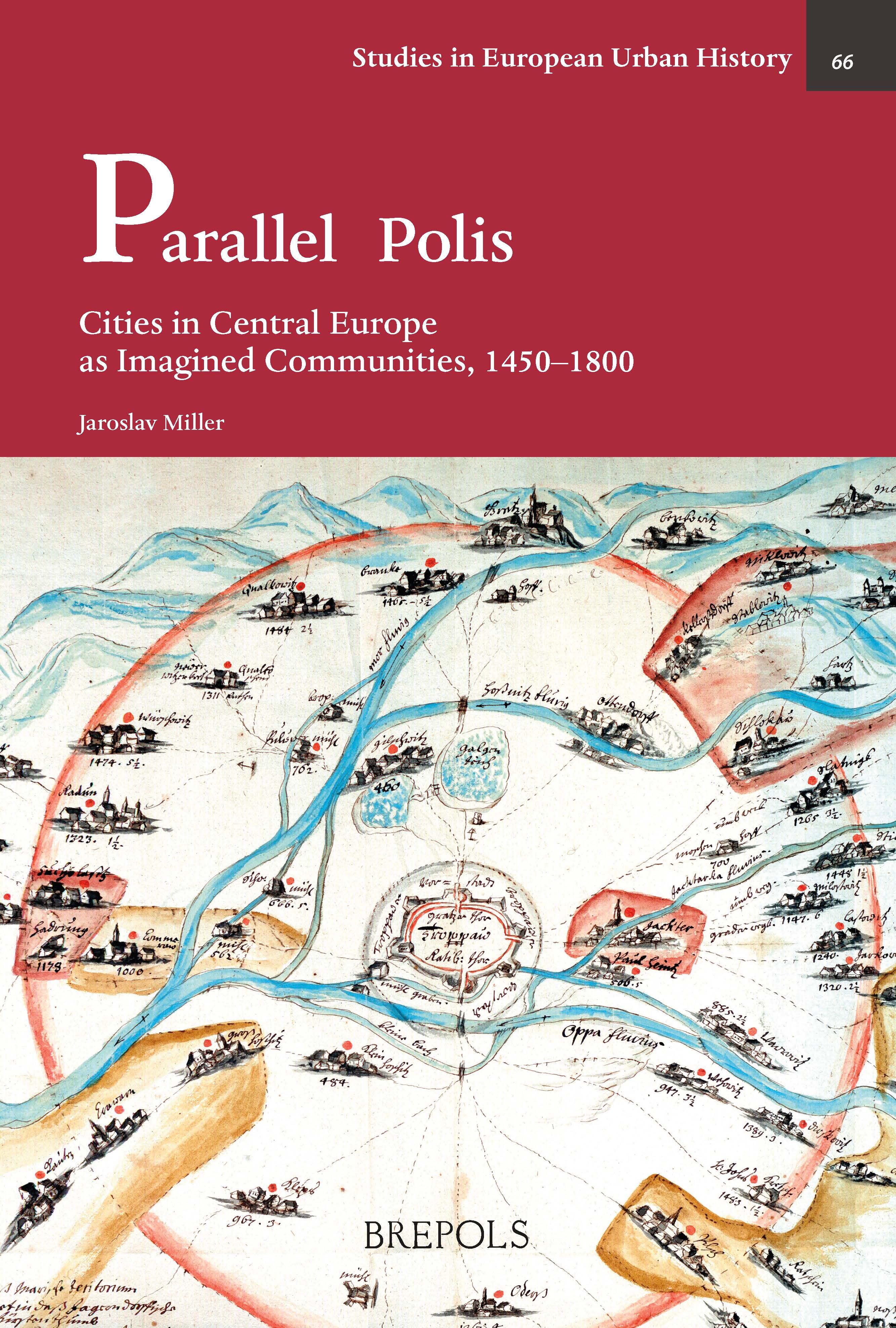
Versteckt – Verirrt – Verschollen
Reisen und Nicht-Wissen
Edited by Irina Gradinari Edited by Dorit Müller Edited by Johannes Pause
Hardback (Published)
(March 2016)
ISBN: 9783954901258
6.69 x 9.49 inches
Price: $198.00
In stock
Since the Early Modern Period, traveling becomes a central strategy enhancing knowledge. At the same time, travel seems to deliver a gateway for the incalculable and unfathomable. Contributions to this addition seek to explore how this type of non-knowledge appears in travelogues and travel fiction in literature, film, and art. Those investigations can show the aesthetic and epistemic dimensions of non-knowledge. As travel is conceptualized both as a medium and a poetical figure reflecting upon knowledge processes this publication will enrich the discussions on theory of knowledge as well as on travel writing.<br/>
English summary: The present addition observes the intricate connection between travel and non-knowledge in travel writing, film, and art. At the latest, by the Early Modern Period, traveling becomes not just a central strategy acquiring, authorizing, and questioning knowledge but also a gateway of non-knowledge. Though, the theoretical or practical frontier crossing into the unknown confronts travelers with experiences which cannot be integrated into existing registers of knowledge. The ways of dealing with this non-knowledge are manifold. It can be identified as own ignorance or as foreign, incomprehensible ‘other’ knowledge which is explicitly excluded. It can take shape as aesthetic and mystical experience in works of art and literature or it can be processed as unfathomable and traumatic incident revealed between the lines. Representing non-knowledge is highly dependent on the kind of the respective travel and media, genres and aesthetics of travel depictions. The contribution seek to give space to this nexus: Subject of investigation are travelogues and travel fiction, maps and expedition films, feature films and paintings, as well as video art, and postcards of travelers. Further more the articles focus on different forms of travel. They analyze journeys of exploration whose protagonists are on the search for the New World, treasures, adventures, or confirmation of their scientific presumptions and on the way discovering unexpectedly ‘other’ knowledge, getting lost, or missing. They also deal with the figure of the vagabond for whom traveling becomes an end in itself or an experiment for gaining new experiences and aesthetic practices to express non-knowledge. Further contributions are occupied with pathfinders who take a fresh look from afar onto the already known to uncover hidden connections. They might be entangled against their will into crime investigations or have a war-related need to travel. As this publication conceptualizes travel as both a medium and a poetical figure reflecting upon knowledge processes it will enrich the discussions on the theory of (non)-knowledge as well as on travel writing. German description: Der vorliegende Sammelband widmet sich dem Zusammenhang von Reisen und Nicht-Wissen in Reisedokumentationen sowie in Reisefiktionen der Literatur, des Films und der Bildenden Kunst. Spatestens seit der Fruhen Neuzeit wurden Reisen nicht nur zu einer wichtigen Strategie der Aneignung, Legitimation und Reflexion neuen Wissens oder der Revision etablierter Wissensbestande, sondern auch zum zentralen Einfallstor und Generator des Nicht-Wissens. Denn die theoretische oder praktische Grenzuberschreitung ins Unbekannte konfrontiert die Reisenden mit Erscheinungen und Erfahrungen, die nicht in vorhandene Wissensregister integriert werden konnen. Die Umgangsformen mit dem erfahrenen Nicht-Wissen sind dabei vielfaltig. Es kann als eigenes Unwissen identifiziert oder als fremdes’ unverstandliches ‘anderes’ Wissen bewusst ausgeschlossen werden, es kann als asthetische oder mystische Erfahrung in Werken der Kunst und Literatur Gestaltung finden oder aber als unfassbares und traumatisches Ereignis zwischen den Zeilen der Reiseberichte persistieren. Die Inszenierung des Nicht-Wissens hangt in hohem Masse von der Art der thematisierten Reise und den gewahlten Medien, Gattungen und Asthetiken der Reisedarstellung ab. Die Beitrage des Bandes versuchen diesem Zusammenhang durch die Analyse eines breiten Spektrums von Prasentationsformen Raum zu geben. Untersuchungsgegenstande sind sowohl Reiseberichte und literarische Reisefiktionen als auch Karten und Expeditionsfilme, Spielfilme und Bilder sowie Werke der Videokunst und Postkarten von Reisenden. Daruber hinaus wenden sich die Artikel verschiedenen Formen von Reisen und damit differierenden Inszenierungsweisen des Nicht-Wissens zu: Sie untersuchen Entdeckungsreisen, deren Protagonisten auf der Suche nach der Neuen Welt, nach Schatzen, Abenteuern oder nach Bestatigung ihrer wissenschaftlichen Annahmen sind und dabei unvermutet ‘anderem’ Wissen begegnen, sich verirren oder verschollen bleiben. Sie beschaftigen sich aber auch mit der Figur des Vagabunden, dem das Reisen zum Selbstzweck oder Experiment zum Gewinn neuer Erfahrungen wird und der asthetische Verfahren erprobt, in denen das Nicht-Wissen zur Anschauung gelangen kann. Weitere Beitrage befassen sich mit Spurensuchern, welche aus der Entfernung einen neuen Blick auf das Bekannte werfen, um bislang versteckte Zusammenhange aufzuspuren oder die wider Willen in kriminologische Ermittlungen und kriegsbedingtes Unterwegssein verwickelt werden. Indem die Studien des Bandes die Reise gleichermassen als Medium und asthetische Figur der Reflexion epistemischer Prozesse konzeptualisieren, bereichern sie nicht nur die Reiseforschung, sondern liefern auch einen Beitrag zur Debatte uber den Begriff des Nicht-Wissens.
Irina Gradinari is research fellow at the Institut für Kulturwissenschaft (Institute for Cultural History and Theory) at Humboldt-Universität Berlin. From 2010-2013 she worked as an assistant fellow at the German Department at University Trier. Her current research project aims to investigate memory politics in West/East German as well as Russian war films on the Second World War.<br/>Selected publications: I. G.: Genre, Gender und Lustmord. Mörderische Geschlechterfantasien in der deutschsprachigen Gegenwartsprosa, Bielefeld 2011; I. G. et al. (eds.): Geschlechter-Szene. Repräsentation von Gender in Literatur, Film, Performance und Theater, Freiburg 2010; I. G. et al. (eds.): Verbrechen – Fiktion – Vermarktung. Gewalt in den zeitgenössischen slavischen Literaturen, Potsdam 2013; I. G./ Höltgen, Stefan (eds.): Heiße Drähte. Medien im Kalten Krieg, Bochum 2014. Dies./Müller, Dorit/Pause, Johannes (eds.): Wissensraum Film, Wiesbaden 2014.<br/><br/>Dorit Müller is research fellow with the Emmy Noether Research Group Bauformen der Imagination. Literatur und Architektur in der Moderne (Building Formations of Imagination. Literature and Architecture in Modernity) at Freie Universität Berlin. From 2011-2013 she worked as postdoctoral fellow at the Research Center for Historical and Cultural Studies at Trier University. She is currently investigating architectures of knowledge in literature and visual media using historical examples of Arctic research and polar fiction.<br/>Selected publications: D. M.: Gefährliche Fahrten. Das Automobil in Literatur und Film um 1900, Würzburg 2004; <br/>D. M./Boden, Petra (eds.): Populäres Wissen im medialen Wandel, Berlin 2009; D. M./Scholz, Sebastian (eds.): Raum, Wissen, Medien. Zur raumtheoretischen Reformulierung des Medienbegriffs, Bielefeld 2012; D. M./Weber, Julia (eds.): Die Räume der Literatur. Exemplarische Zugänge zu Kafkas Erzählung „Der Bau“, Berlin 2013; D.M,/Gradinari, Irina/Pause, Johannes (eds.): Wissensraum Film, Wiesbaden 2014.<br/><br/>Johannes Pause is research fellow with the ERC-Project „The Principle of Disruption“ at Technical University of Dresden. From 2009-2014 he worked as postdoctoral fellow at the Research Center for Historical and Cultural Studies at Trier University. In his most recent project he is studying political cinema from the 1960s to the years 2000.<br/>Selected publications: J. P.: Texturen der Zeit. Zum Wandel ästhetischer Zeitkonzepte in der deutschsprachigen Gegenwartsliteratur, Köln 2012; J. P./ Nanz, Tobias (eds.): Das Undenkbare filmen. Atomkrieg im Kino, Bielefeld 2013; J. P./Gradinari, Irina/Müller, Dorit (eds.): Wissensraum Film, Wiesbaden 2014; J. P./Nanz, Tobias (eds.): Politiken des Ereignisses. Mediale Formierungen von Vergangenheit und Zukunft, Bielefeld 2015.<br/>
- Edited by Irina Gradinari
- Edited by Dorit Müller
- Edited by Johannes Pause
„Der Band ist [...] wirklich empfehlenswert. Vorliegendes Buch ist definitiv eine Bereicherung auf dem Feld der Thematisierung von Reiseliteraturen. Zahlreiche Abbildungen [...] erhöhen überdies das Lesevergügen.“<br/><br/>Von: Jörg Füllgrabe<br/>In: literaturkritik.de, Nr. 4, April 2017. Online unter: <a target="_blank" href="http://literaturkritik.de/public/rezension.php?rez_id=23135">http://literaturkritik.de/public/rezension.php?rez_id=23135</a>
—
Other Titles in this Series

 Spezialisierung und Professionalisierung
Träger und Foren städtischer Außenpolitik während des späten Mittelalters und der frühen Neuzeit


 Der „Zug über Berge“ während des Mittelalters
Neue Perspektiven der Erforschung mittelalterlicher Romzüge


 Utilidad y decoro
Zeremoniell und symbolische Kommunikation in den „Leges Palatinae“ König Jacobs III. von Mallorca (1337)

 Fiktionalität im Artusroman des 13. bis 15. Jahrhunderts
Romanistische und germanistische Perspektiven


Similar Books
 «Solazoxa festa, stradolze e stracomplia»
Festschrift für Raymund Wilhelm zum 65. Geburtstag mit Beiträgen zu Diskurstraditionen und mittelalterlicher Philologie
Volume 249
 A Collaborative Tapestry in Honour of Shirley Ann Brown / Une fresque brodée en l’honneur de Shirley Ann Brown
The Bayeux Tapestry Seen by her Colleagues and Friends / La Tapisserie de Bayeux vue par ses collègues et amis


 Behind the Scenes of Medieval Roofs
An Overview of the Roofing Systems of Italian Churches
Volume 90
 Between Bones and Beliefs
Human-Bird Relations in Central and Northern Europe in the First Millennium AD
Volume 4

 Cahiers de recherches médiévales et humanistes – Journal of Medieval and Humanistic Studies
Volume 51


 Christina of Sweden in Context
A Celebration of Seventeenth-Century Queenship 400 Years in the Making



 Engaged Languages and Literatures / Langues et Littératures engagées
Critical Views / Regards Critiques



 Innovation and Medieval Communities
The Circulation of Ideas and Practices in and out of the Town (1200-1500)
Volume 63
 John Dunstaple Reading Boethius
John Dunstaple’s Annotations to Boethius’s “De institutione musica” in the Manuscript Oxford, Corpus Christi College Library, MS 118


 Medieval Debates on Foreknowledge: Future Contingents, Prophecy, and Divination
Acts of the XXVII Annual Colloquium of the SIEPM, Trento 12-15 September 2023
Volume 31

 Medieval Yeghegis, Armenia
History, Archaeology, Society. Local Multiplicities and Global Connections of a Rural Centre on the Silk Road(s)


 Nicholas of Lyra’s Commentaries on the Gospels of Matthew and Luke
Franciscan Exegesis in a Time of Crisis