Vaucelles Abbey
Social, Political, and Ecclesiastical Relationships in the Borderland Region of the Cambresis, 1131-1300
By (author) Kathryn Salzer

This study examines Vaucelles’ political, social, and economic life in order to explain how the Cistercian house (a direct daugher-house of Clairvaux) flourished in the borderland region of Cambresis in the twelfth and thirteenth centuries.
Founded in 1131 by the castellan of Cambrai, Vaucelles Abbey thrived in a borderland region, where German emperors, French kings, Flemish counts, bishops of Cambrai, and the Cistercian Order all had active interests. To understand how Vaucelles flourished, we must look at the relationships that the house created and fostered with various international, regional, and local individuals and institutions. Vaucelles used these connections to protect the vast patrimony that the monks created in the two centuries after its foundation. This study asserts that three principal factors influenced the foundation and development of Vaucelles. First, the abbey was fortunate in its local support, beginning with the castellan family and expanding to include numerous regional families and the bishops of Cambrai. Second, the abbey was established in a political borderland, a geo-political situation that Vaucelles survived and actually turned into a positive feature of its development. And finally, Vaucelles was a Cistercian monastery, a direct daughter house of Clairvaux. Vaucelles’ Cistercian observance fostered relationships that were particularly significant to the abbey’s development from the late twelfth century onward. These factors offer exceptional tools for demonstrating many features of Vaucelles’ political, social, and economic life during the twelfth and thirteenth centuries.
- By (author) Kathryn Salzer
Other Titles in this Series


 Monastic Communities and Canonical Clergy in the Carolingian World (780-840)
Categorizing the Church
Volume 8


 The Late Medieval Cistercian Monastery of Fountains Abbey, Yorkshire
Monastic Administration, Economy, and Archival Memory
Volume 5
Similar Books
 ‘For You I Study, For You I Work, For You I Live, For You I Am Ready To Even Give My Life’
Essays in Honour of Francis (Frank) J Moloney, SDB
 A Collaborative Tapestry in Honour of Shirley Ann Brown / Une fresque brodée en l’honneur de Shirley Ann Brown
The Bayeux Tapestry Seen by her Colleagues and Friends / La Tapisserie de Bayeux vue par ses collègues et amis
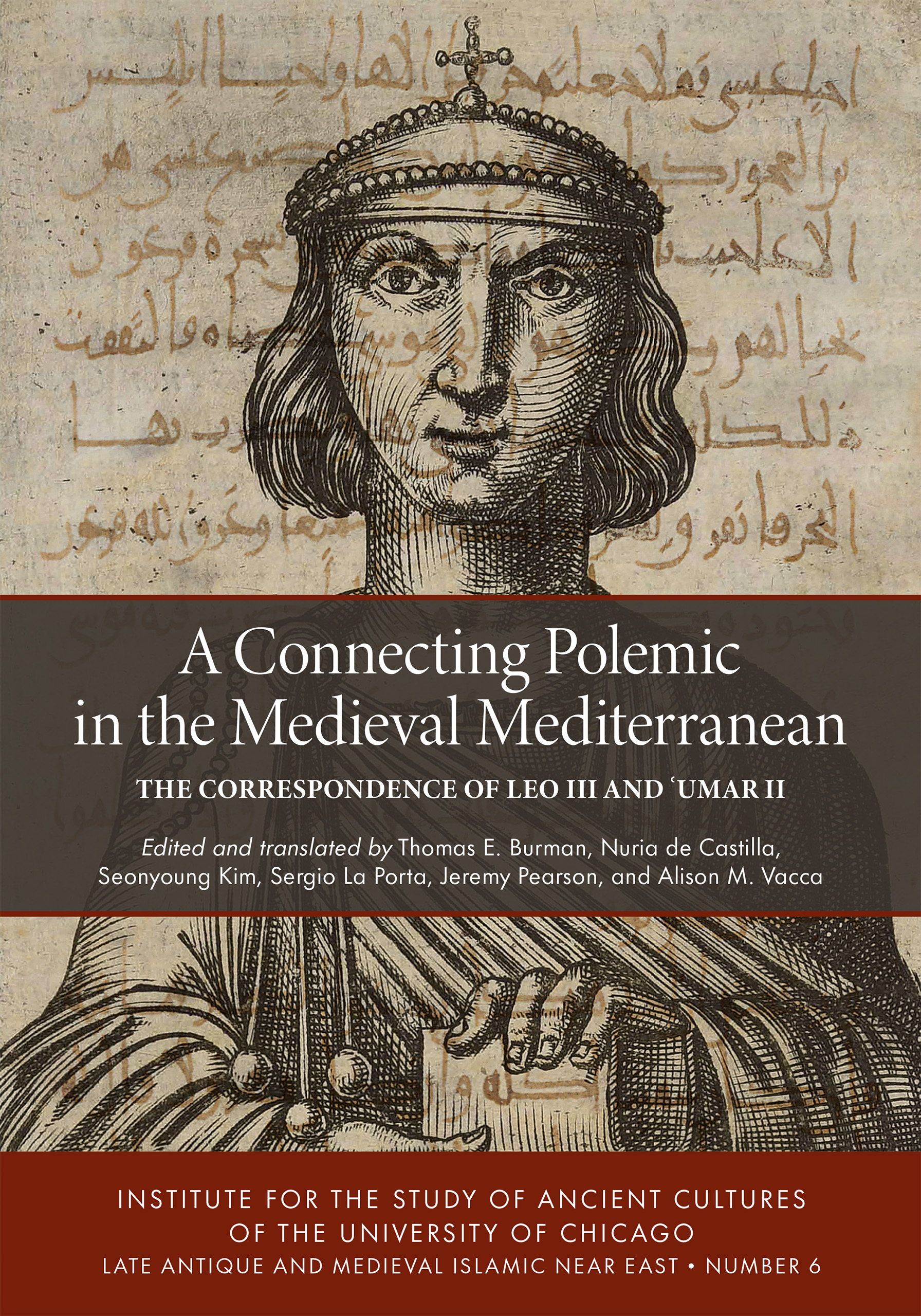 A Connecting Polemic in the Medieval Mediterranean
The Correspondence of Leo III and ʿUmar II
Volume 6







 Ars Prophetica
Theology in the Poetry of Twentieth-Century Hebrew Poets Avraham Halfi, Shin Shalom, Amir Gilboa, and T. Carmi
 As Messianism Turns to Heresy
The Regenstein Chair Lectures On Lurianic Kabbalah and Shabbatai Tzevi at Hebrew Union College - Cincinnati

 Behind the Scenes of Medieval Roofs
An Overview of the Roofing Systems of Italian Churches
Volume 90

 Beyond Sovereign Courts
Agents and Practices in Early Modern Spanish and Habsburg Diplomacy
Volume 3


 Creating the Woman in Antiquity
Proceedings of the 16th Melammu Workshop, Innsbruck, 2–3 June 2022
Volume 13


 Drunk the Potion, No Whit Charmed
The Doctrine of Pure and Perfect Souls from Iamblichus to Damascius