
Universal – International – Global
Art Historiographies of Socialist Eastern Europe
Contributions by Michael Feist Contributions by Éva Forgács Contributions by Maja and Reuben Fowkes Contributions by Maja Fowkes Contributions by Corinne Geering Contributions by Piotr Juszkiewicz Contributions by Adri Kácsor Contributions by Krista Kodres Contributions by Mária Orišková Contributions by Elena Sharnova Contributions by Robert Born Contributions by Antje Kempe Contributions by Marina Dmitrieva Contributions by Reuben Fowkes Contributions by Douglas Gabriel Contributions by Ivan Gerat Edited by Antje Kempe Edited by Beata Hock Edited by Marina Dmitrieva Series edited by Robert Born Series edited by Ada Raev
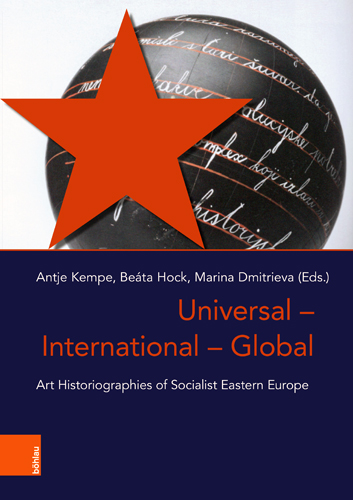
Hardback (Published)
(January 2023)
ISBN: 9783412520816
6.34 x 9.25 inches
Price: $74.00
On back order
Teaching back to earlier efforts to conceive of the international community in a less Eurocentric way, the volume proposes a tentative link between socialist internationalism as a political and cultural diplomatic principle in the Soviet Block and some new approaches to art and cultural historiography introduced there. In the “Second World”, universal art history or Weltkunstgeschichte were endorsed as frameworks for the teaching and writing of art history. Authors in this book interrogate whether “world art history” as practiced by socialist scholars had aspirations and achievements comparable to today’s Global Art History and World Art Studies. Or was this knowledge production in an internationalist paradigm a mere foil for communist rhetoric, behind which severed cultural relations to the Western world could also be recommenced?
This collection of articles explores a possible alternative beginning of Global Art History and World Art Studies, two methodologies that set a worldwide focus in the study of art around the 2000s. Reaching back to earlier efforts to conceive of the international community in a less Eurocentric way, the volume proposes a tentative link between socialist internationalism as a political and cultural diplomatic principle in the Soviet Block and some new approaches to art and cultural historiography introduced there. In the “Second World”, universal art history or Weltkunstgeschichte were endorsed as frameworks for the teaching and writing of art history. Authors in this book interrogate whether “world art history” as practiced by socialist scholars had aspirations and achievements comparable to today’s Global Art History and World Art Studies. Or was this knowledge production in an internationalist paradigm a mere foil for communist rhetoric, behind which severed cultural relations to the Western world could also be recommenced?
- Contributions by Michael Feist
- Contributions by Éva Forgács
- Contributions by Maja and Reuben Fowkes
- Contributions by Maja Fowkes
- Contributions by Corinne Geering
- Contributions by Piotr Juszkiewicz
- Contributions by Adri Kácsor
- Contributions by Krista Kodres
- Contributions by Mária Orišková
- Contributions by Elena Sharnova
- Contributions by Robert Born
- Contributions by Antje Kempe
- Contributions by Marina Dmitrieva
- Contributions by Reuben Fowkes
- Contributions by Douglas Gabriel
- Contributions by Ivan Gerat
- Edited by Antje Kempe
- Edited by Beata Hock
- Edited by Marina Dmitrieva
- Series edited by Robert Born
- Series edited by Ada Raev
Other Titles in this Series
 Künstlerinnen und Migration
Olga von Boznańska und Otolia Gräfin Kraszewska im München des Fin de Siècle


 Harte Währung Beton
Eine Kulturgeschichte des Massenwohnungsbaus im sozialistischen Jugoslawien und seinen Nachfolgestaaten

 Medialisierte Körper
Performances und Aktionen der Neoavantgarden Ostmitteleuropas in den 1970er Jahren
 “Der Russe Kandinsky”
Zur Bedeutung der russischen Herkunft Vasilij Kandinskijs für seine Rezeption in Deutschland, 1912-1945
 Visual Memory and Oblivion
Monuments and Conflicts in Urban Spaces in Central and Eastern Europe from the Nineteenth Century to the Present Day
Similar Books
 A Collaborative Tapestry in Honour of Shirley Ann Brown / Une fresque brodée en l’honneur de Shirley Ann Brown
The Bayeux Tapestry Seen by her Colleagues and Friends / La Tapisserie de Bayeux vue par ses collègues et amis



 Balthasar Caymox of Nuremberg
Early Modern German Print Publishers: Popular Prints of the Seventeenth Century


 ENTANGLED AFRICA
Intra-African Relations Between Rain Forest and Mediterranean from Around 4,000 BCE to 1,500 CE


 Gold, Silver and Glass: Power Networks, Cultural Identities, Technology Transfers and Agency across the Old World (7th Century BC – 1st Century AD)
Proceedings of a Conference Held at the British Museum, 16–18 June 2023


 Legal Visuality
Exegesis, Ambiguity, and Dissimulation of the Donation of Constantine in the Early Modern Period
 Listening to the Swan Song
More-than-Human Beings and Sounds in Literature and Culture Through the Ages


 Monastic Manuscripts from the Eastern Mediterranean (Sinai, Jerusalem, Antioch)
Production, Use, and Contexts

 Naples as Laboratory / Laboratorium Neapel
Style Options, Artistic Rivalry and Self Fashioning in Neapolitan Baroque Painting / Plurale Stilbildung, Kunstlerkonkurrenz und Self Fashioning in der neapolitanischen Barockmalerei

 Nurturing the Elite
Representations of Drinking, Eating, and Religious Vessels in Palmyrene Funerary Iconography
Volume 13


 Portraying the Individual in the Roman East
Local–Imperial Entanglements in Sculpture, Mosaics, and Paintings (First–Fourth Centuries AD)
Volume 18


 Technical Studies of Asian Art
Proceedings of the Seventh Forbes Symposium at the Freer Gallery of Art


