
Grenze/Granica
Art on the German-Polish Border after 1990
By (author) Burcu Dogramaci By (author) Marta Smolińska Series edited by Robert Born Series edited by Ada Raev
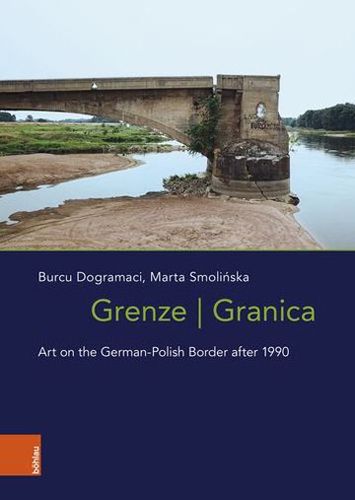
Hardback (Published)
(February 2024)
ISBN: 9783412528812
6.93 x 9.69 inches
Price: $74.00
On back order
Marta Smolinska and Burcu Dogramaci analyse works by international contemporary artists that reference the German-Polish border. The artworks, created between 1990 and the early 2020s, reference narratives of expulsion and the fluid, spectral and aesthetic nature of borders through sensory and somaesthetic perception. They examine the historical shifts of that border from the angle of changing political and societal contexts, lost homelands, expulsion of people and new political orders.
This book sets out to analyse for the very first time a selection of works by international contemporary artists that reference the German-Polish border, and to draw attention to artworks created between 1990 and the early 2020s. The projects explored reference narratives of expulsion and the fluid, spectral and aesthetic nature of borders through sensory and somaesthetic perception. They examine the historical shifts of that border from the angle of changing political and societal contexts, lost homelands, expulsion of people and new political orders. The book is the product of research in the field at the German-Polish border, interviews with artists, visits to their studios, and archival work. It employs a transdisciplinary toolbox, combining methods from art history, border (art) studies, migration studies, memory studies, geopoetics, limotrophy and more. The volume questions the double figure of dividing and sharing that finds expression in the German word “eine (Grenze) teilen”, which means either to divide or to share a border: separation by a shared border and shared historical experience, regarded from two, often dissimilar perspectives. The study focuses on artistic projects ranging from photography to installation art and artistic methods from mapping to re-enacting, which address the issue of the borderland as a dynamic transition space.
Burcu Dogramaci lehrt Kunstgeschichte an der Ludwig-Maximilians-Universität München und forscht zur Kunst der Moderne und der Gegenwart.
- By (author) Burcu Dogramaci
- By (author) Marta Smolińska
- Series edited by Robert Born
- Series edited by Ada Raev
Other Titles in this Series

 Harte Währung Beton
Eine Kulturgeschichte des Massenwohnungsbaus im sozialistischen Jugoslawien und seinen Nachfolgestaaten

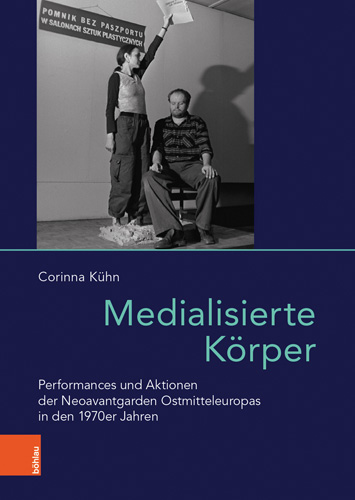 Medialisierte Körper
Performances und Aktionen der Neoavantgarden Ostmitteleuropas in den 1970er Jahren
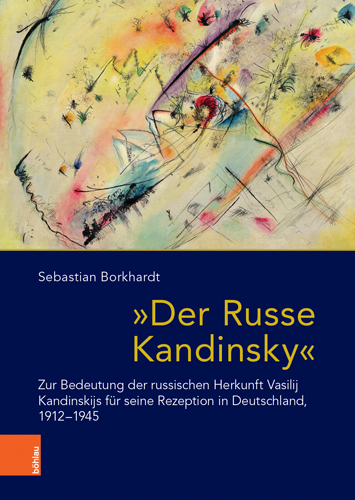 “Der Russe Kandinsky”
Zur Bedeutung der russischen Herkunft Vasilij Kandinskijs für seine Rezeption in Deutschland, 1912-1945
 Visual Memory and Oblivion
Monuments and Conflicts in Urban Spaces in Central and Eastern Europe from the Nineteenth Century to the Present Day
 Künstlerinnen und Migration
Olga von Boznańska und Otolia Gräfin Kraszewska im München des Fin de Siècle

Similar Books
 A Collaborative Tapestry in Honour of Shirley Ann Brown / Une fresque brodée en l’honneur de Shirley Ann Brown
The Bayeux Tapestry Seen by her Colleagues and Friends / La Tapisserie de Bayeux vue par ses collègues et amis





 Balthasar Caymox of Nuremberg
Early Modern German Print Publishers: Popular Prints of the Seventeenth Century


 Constitutional Conflict as Judicial Civil Disobedience and Conscientious Objection
Reconceptualising National Constitutional Court Rulings in the European Union Legal Space


 ENTANGLED AFRICA
Intra-African Relations Between Rain Forest and Mediterranean from Around 4,000 BCE to 1,500 CE


 Formulary apportionment in international tax law
An allocation method for the age of globalization and digitalization
Volume 210


 Gold, Silver and Glass: Power Networks, Cultural Identities, Technology Transfers and Agency across the Old World (7th Century BC – 1st Century AD)
Proceedings of a Conference Held at the British Museum, 16–18 June 2023


 Hofmann oder Vorkämpfer der „philosophes“?
Deutsche Voltaire-Bildnisse und -Imaginationen im Zeitalter der Aufklärung


 Kulturelles Erbe und gesellschaftliche Identität
Das Akademienprojekt „Corpus Vitrearum Medii Aevi“ im Einsatz für den Kulturgutschutz in der Ukraine
 Legal Unification through Case Law?
Supreme Courts and the Emergence of Uniform Law in the Modern Era
Volume 242
 Legal Visuality
Exegesis, Ambiguity, and Dissimulation of the Donation of Constantine in the Early Modern Period
 Linguistic and Media Studies Perspectives on Research into Social and Political Polarisation
The Case of Poland
 Listening to the Swan Song
More-than-Human Beings and Sounds in Literature and Culture Through the Ages


 Monastic Manuscripts from the Eastern Mediterranean (Sinai, Jerusalem, Antioch)
Production, Use, and Contexts

 Naples as Laboratory / Laboratorium Neapel
Style Options, Artistic Rivalry and Self Fashioning in Neapolitan Baroque Painting / Plurale Stilbildung, Kunstlerkonkurrenz und Self Fashioning in der neapolitanischen Barockmalerei