
The Usage of Ochre at the Verge of Neolithisation from the Near East to the Carpathian Basin
By (author) Julia Kościuk-Załupka

Paperback (Published)
(March 2023)
ISBN: 9781803273365
8.07 x 11.46 inches
Price: $64.00
In stock
This volume explores the cultural meaning of ochre among the societies of the Late Epipalaeolithic/Mesolithic and the Early Neolithic from the Levant to the Carpathian Basin.
The Usage of Ochre at the Verge of Neolithisation from the Near East to the Carpathian Basin explores the cultural meaning of ochre among the societies of the Late Epipalaeolithic/Mesolithic and the Early Neolithic from the Levant to the Carpathian Basin. Firstly, the book attempts an accurate characterization of the material, ochre. Both its features as well as its possible outcrops and co-occurring minerals are outlined. The cultural background is described, in particular underlining the continuation of chosen elements and the visible dichotomy between sacral and profane areas of ochre application. On that basis it proved possible to discuss the meanings of ochre, underscored by that division. The discussion also focuses on the possibility of matching archaeological and natural samples. This in turn would allow the creation of a map of interconnections between societies and/or outcrops. To that end the project employed geochemical methods, such as SEM, EDS and a trial study with Raman spectroscopy. The main results demonstrate the possibility of ochre characterization based on laboratory results and the visible interconnections between Epipalaeolithic/Mesolithic and Neolithic societies.
1. Introduction Purpose of the work Territorial range Chronological range Bibliographical review Review of the material sources Methodological framework 2. Ochre The definition of ochre and its characteristics Natural occurrence of mineral components of ochre Other ochre components Methods of ochre analysis Analytical procedures in ochre studies: main expectations 3. Cultural Background with Particular Consideration of Neolithisation Processes and Interregional Contacts. The Question of a Sacred-Profane Dichotomy The Levant Anatolia The Balkan Peninsula and Southern Carpathian Basin Northern and Eastern Carpathian Basin 4. Contexts of Ochre Finds in Archaeological Layers 5. Ethnographic Analogies for Ochre Application 6. Ochre in the Neolithic Transformations from the Levant to the Carpathian Basin Levant Anatolia The Balkan Peninsula and Southern Carpathian Basin Northern and Eastern Carpathian Basin Summary 7. Ochre Outcrops on the Terrains under Investigation The Levant Anatolia The Balkan Peninsula Carpathian Basin 8. Analysis of Ochre Samples Methodological approach Israel Turkey Bulgaria Romania Hungary Slovakia Discussion 9. The Meaning of Ochre in Societies on the Verge of Neolithisation 10. Conclusions 11. Bibliography Appendix 1. Catalogue of Archaeological Sites Appendix 2. Catalogue of Natural Ochre Outcrops Links to Online Appendices Appendix 3. Catalogue of Ochre Samples Appendix 4. Catalogue of EDS Studies Appendix 5. Plates, 1. Introduction
Purpose of the work ;
Territorial range ;
Chronological range ;
Bibliographical review ;
Review of the material sources ;
Methodological framework ;
2. Ochre
The definition of ochre and its characteristics ;
Natural occurrence of mineral components of ochre ;
Other ochre components ;
Methods of ochre analysis ;
Analytical procedures in ochre studies: main expectations ;
3. Cultural Background with Particular Consideration of Neolithisation Processes and Interregional Contacts. The Question of a Sacred-Profane Dichotomy
The Levant ;
Anatolia ;
The Balkan Peninsula and Southern Carpathian Basin ;
Northern and Eastern Carpathian Basin ;
4. Contexts of Ochre Finds in Archaeological Layers
5. Ethnographic Analogies for Ochre Application
6. Ochre in the Neolithic Transformations from the Levant to the Carpathian Basin
Levant ;
Anatolia ;
The Balkan Peninsula and Southern Carpathian Basin ;
Northern and Eastern Carpathian Basin ;
Summary ;
7. Ochre Outcrops on the Terrains under Investigation
The Levant ;
Anatolia ;
The Balkan Peninsula ;
Carpathian Basin ;
8. Analysis of Ochre Samples
Methodological approach ;
Israel ;
Turkey ;
Bulgaria ;
Romania ;
Hungary ;
Slovakia ;
Discussion ;
9. The Meaning of Ochre in Societies on the Verge of Neolithisation
10. Conclusions
11. Bibliography
Appendix 1. Catalogue of Archaeological Sites
Appendix 2. Catalogue of Natural Ochre Outcrops
Links to Online Appendices
Appendix 3. Catalogue of Ochre Samples
Appendix 4. Catalogue of EDS Studies
Appendix 5. Plates
Julia Kościuk-Załupka gained her PhD from the Jagiellonian University, Cracow. She directed the project on ochre utilization at the verge of the Neolithic, of which this book is the result, financed by the Polish MInistry of Science and Higher Education. She has been an active participant in many projects. Her major interests refer to the Stone Age, with special focus on tools and techniques.
- By (author) Julia Kościuk-Załupka
'Kościuk-Załupka delivers a solid survey of the research area and embeds the search for ochre sources and usage deep into the cultural evidence of emerging Neolithic societies.' – Marion Ucklemann (2025): ANTIQUITY Volume 99
—
Similar Books





 Archaeological Excavations at Irmis Rka: An Investigation of a Multi-Layered Settlement in Southwest Georgia
Results from the 2020 Season: Early Bronze Age to Medieval Occupations

 Boğazköy Tablets in the Museum of Anatolian Civilizations (Bo 9032–Bo 9097)
Anadolu Medeniyetleri Müzesinde Bulunan Boğazköy Tabletleri (Bo 9032–Bo 9097)
Volume 4


 Catuvellaunia and Rome: Economic and Political Relations during the Final Decades Pre-conquest
The Role of Grain from Southeastern Britain and Its Potential for Maintenance of the Roman Military along the Frontier on the Rhine
 Connecting the Dots: Counting, Writing, and the Beginnings of Civilization
The Secret Lives of Clay Tokens: A Memoir

 Curating the Prehistoric Past
Studies on West Asian Archaeology and Beyond in Honour of Yoshihiro Nishiaki

 Exploring Gender Dynamics across the Ancient Near East
Collected Essays of Gender and Methodology in the Ancient Near East (GeMANE) 4 and 5
Volume 7


 Ḫattušaš utnē išḫameški
Hittite and Other Ancient Near Eastern Studies Presented to Piotr Taracha on the Occasion of His 65th Birthday




 Kultur – Kontakt – Kultur
Beiträge anlässlich der 66. Rencontre Assyriologique Internationale in Frankfurt/Main und Mainz, 25.–29. Juli 2022
Volume 35
 Making and Meaning in the Bronze and Iron Ages
Chronology, Landscapes and Societies across Europe. Proceedings from the METALAGES2024 Colloquium (Florence, 23 October 2024)


 Money of Mercenaries in the Cimmerian Bosporus
From the Mithridatic Wars to the Roman-Bosporan War of AD 45-49
Volume 45

 New Research on Old Collections in Southwest Asian Archaeology
Proceedings of the Workshop Held at the British Museum, London, 31 July – 2 August, 2023
 Old Aramaic Inscriptions and their Contexts
An Epigraphic, Archaeological, and Historical Synthesis
Volume 63


 Politics, Peoples, and Polities in the Ancient Near East
Proceedings of the 69th Rencontre Assyriologique Internationale, Helsinki
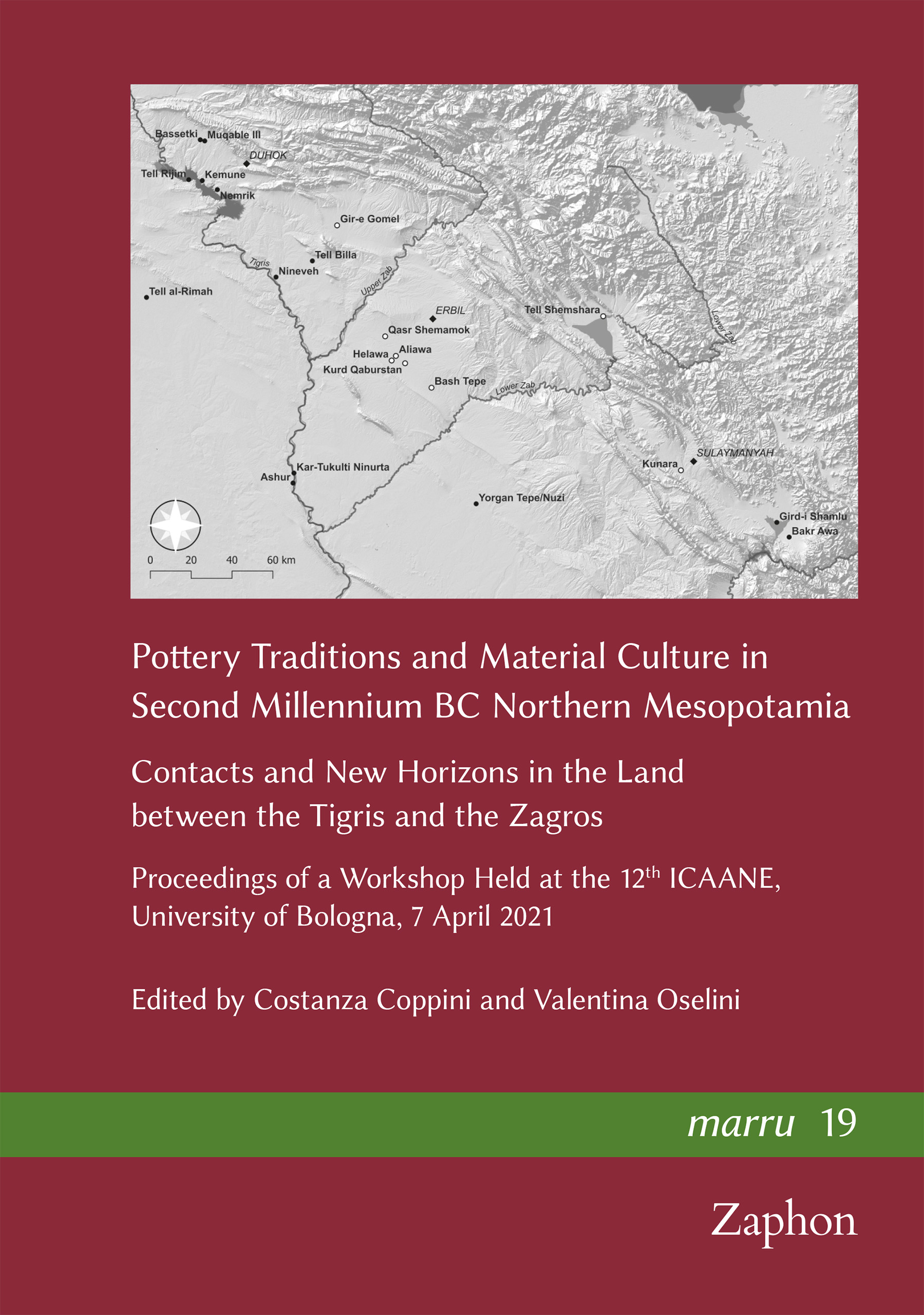 Pottery Traditions and Material Culture in Second Millennium BC Northern Mesopotamia
Contacts and New Horizons in the Land between the Tigris and the Zagros. Proceedings of a Workshop Held at the 12th ICAANE, University of Bologna, 7 April 2021
Volume 19