
The New Jerusalem in the Book of Revelation
A Study of Revelation 21-22 in the Light of its Background in Jewish Tradition
by Pilchan Lee

Paperback (Published)
(December 2001)
ISBN: 9783161474774
Price: $99.00
On back order
There is a development between expectation for the rebuilding of the New Jerusalem/Temple in the Old Testament and the coming of the New Jerusalem/Temple in Revelation. In Revelation, there is a dynamic relation between the New Jerusalem and the Heavenly Jerusalem: the New Jerusalem is the descent of the Heavenly Jerusalem. Moreover, there is no Temple building which was expected as the eschatological promise in the Old Testament but rather God and the Lamb is the Temple. How can this shift be explained? Pilchan Lee examines the exegetical tradition which existed between the Old Testament and Revelation. He assumes that as the exegetical tradition, the early Jewish (apocalyptic) literature functions as a key element for forming the idea of the New Jerusalem in Revelation. John’s main argument is that the church (which is symbolized by several images) is placed in heaven now (chapters 4-20) and the church (which is symbolized by the New Jerusalem) will descend to the earth from heaven in the future (21-22).
1. The Jerusalem/Temple Idea in the Old Testament Introduction - The Book of Ezekiel - The Book of Isaiah - The Book of Jeremiah - The Book of Zechariah 2. The Jerusalem/Temple Idea in the Early Jewish Literature Introduction - 1 (Ethiopic Apocalypse of) Enoch - 2 (Slavonic Apocalypse of) Enoch - Tobit - Sectarian Works at Qumran - The Fourth Book of Ezra - 1 Baruch - 2 (Syriac Apocalypse of) Baruch - Baruch - The Apocalypse of Abraham - Pseudo-Philo (Latin Title, Liber Antiquitatum Biblicarum: Hereafter LAB) - The Sibylline Oracles, Book 5 - Yavnean Movement: Rabbinic Response to the Temple Destruction - Bar Kokhba Revolt 3. The Jerusalem/Temple Idea in the New Testament 4. The New Jerusalem in Revelation Introduction - Structural Analysis: Structure and Composition - Contextual Analysis I - Contextual Analysis II: Babylon the Harlot (17:1-19:10) and the Transition from Babylon to the Great to the New Jerusalem (19:11-21:8) - Exegetical Analysis: The New Jerusalem (21:1-22:5) - Thematic Analysis: The Relation of the Heavenly Temple and the New Jerusalem in Revelation
- By (author) Pilchan Lee
Other Titles in this Series
 Educating Early Christians through the Rhetoric of Hell
'Weeping and Gnashing of Teeth' as Paideia in Matthew and the Early Church
Volume 382


 Hebraisches Evangelium und synoptische Uberlieferung
Untersuchungen zum hebraischen Hintergrund der Evangelien
Volume 312
 The Offering of the Gentiles
Paul's Collection for Jerusalem in Its Chronological, Cultural, and Cultic Contexts
Volume 248


 Der Jakobusbrief in der Alten Kirche
Eine Spurensuche vom Neuen Testament bis zu Origenes
Volume 588


 Sexualitat und Geschlecht bei Paulus
Die Spannung zwischen 'Inklusivitat' und 'Exklusivitat' des paulinischen Ethos am Beispiel der Sexual- und Geschlechterrollenethik
Volume 512


 Wie Geschichten Geschichte schreiben
Fruhchristliche Literatur zwischen Faktualitat und Fiktionalitat
Volume 395

 Bodily Resurrection and Ethics in 1 Cor 15
Connecting Faith and Morality in the Context of Greco-Roman Mythology
Volume 360
 New Creation in Paul’s Letters
A Study of the Historical and Social Setting of a Pauline Concept
Volume 272


 The Origins of Pauline Pneumatology
The Eschatological Bestowal of the Spirit upon Gentiles in Judaism and in the Early Development of Paul's Theology
Volume 194
 Religious Experience of the Pneuma
Communication with the Spirit World in 1 Corinthians 12 and 14
Volume 230
 Sinners, Works of Law, and Transgression in Gal 2:14b-21
A Study in Paul's Line of Thought
Volume 602

 Paul’s Concept of a Hebrew Deity in Relation to Jesus
Insights from the Kyrios and Theos Citations
Volume 593


 Von den Wachtern zu Adam
Fruhjudische Mythen uber die Ursprunge des Bosen und ihre fruhchristliche Rezeption
Volume 426
Similar Books



 Athanasius of Alexandria, Epistula ad episcopos Aegypti et Libyae
Old Slavonic Version and English Translation
Volume 261


 Connecting the Dots: Counting, Writing, and the Beginnings of Civilization
The Secret Lives of Clay Tokens: A Memoir
 Cyril of Alexandria’s Christological Exegesis
Explorations of Partitive Exegesis in the Dialogues on the Trinity
Volume 70


 Epiphanies of the Divine in the Septuagint and the New Testament
Fifth International Symposium of the Corpus Judaeo-Hellenisticum Novi Testamenti (CJHNT), 14-17 May 2015, Nottingham


 Exploring Gender Dynamics across the Ancient Near East
Collected Essays of Gender and Methodology in the Ancient Near East (GeMANE) 4 and 5
Volume 7
 Extracanonical Traditions and the Holy Land
Texts, Rituals, and Material Culture in Late Antique Palestine

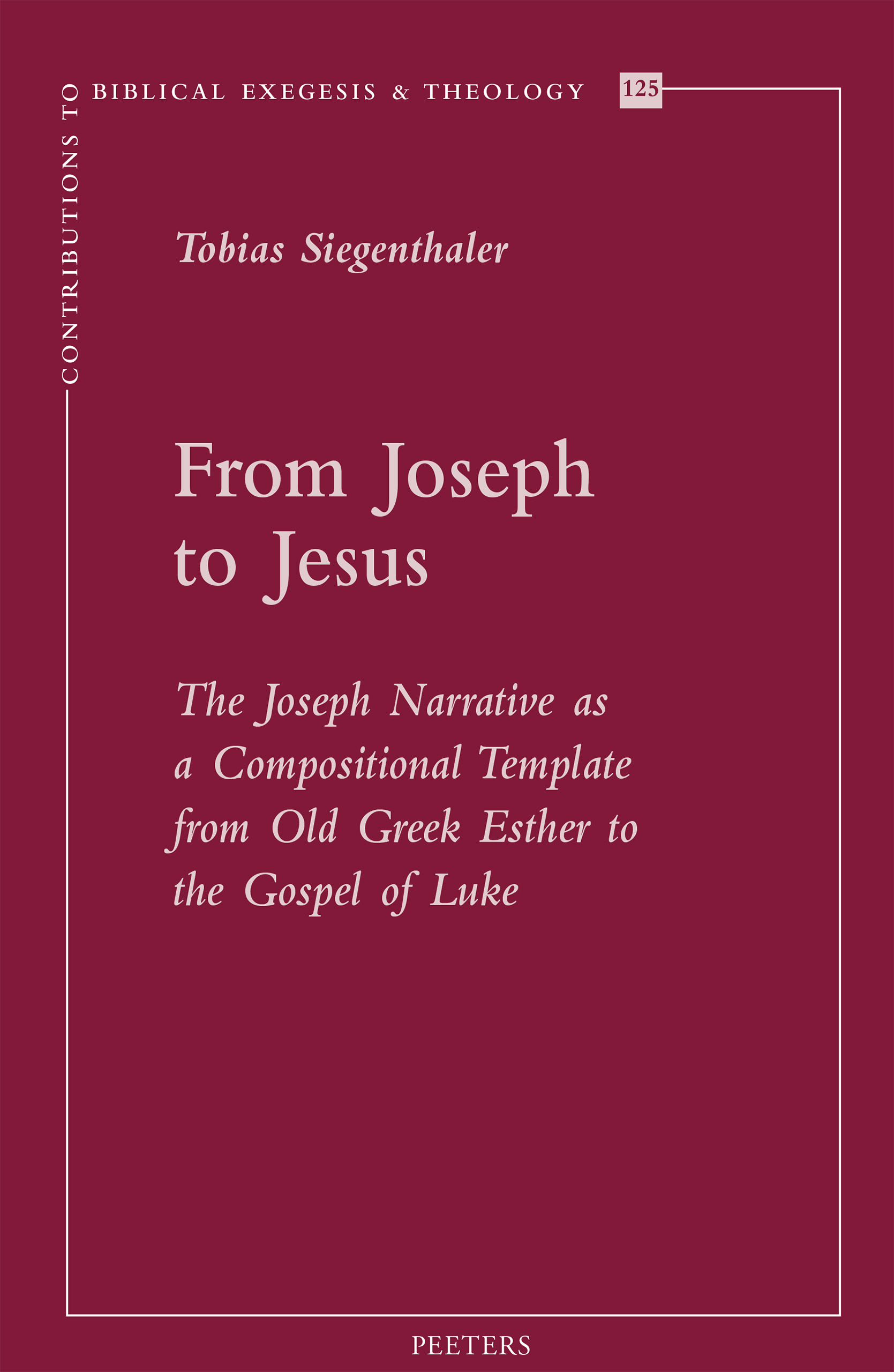 From Joseph to Jesus
The Joseph Narrative as a Compositional Template from Old Greek Esther to the Gospel of Luke
Volume 125


 Ḫattušaš utnē išḫameški
Hittite and Other Ancient Near Eastern Studies Presented to Piotr Taracha on the Occasion of His 65th Birthday


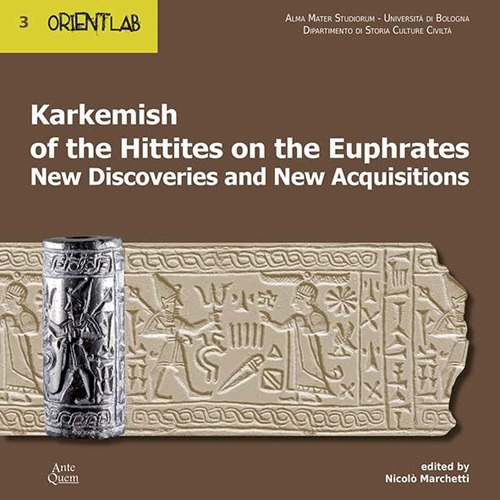


 New Research on Old Collections in Southwest Asian Archaeology
Proceedings of the Workshop Held at the British Museum, London, 31 July – 2 August, 2023
 Old Aramaic Inscriptions and their Contexts
An Epigraphic, Archaeological, and Historical Synthesis
Volume 63

 Paradise Lost in Transmission
The Return to Eden in the Apocalypse of Peter within Its Ethiopic and Early Christian Contexts


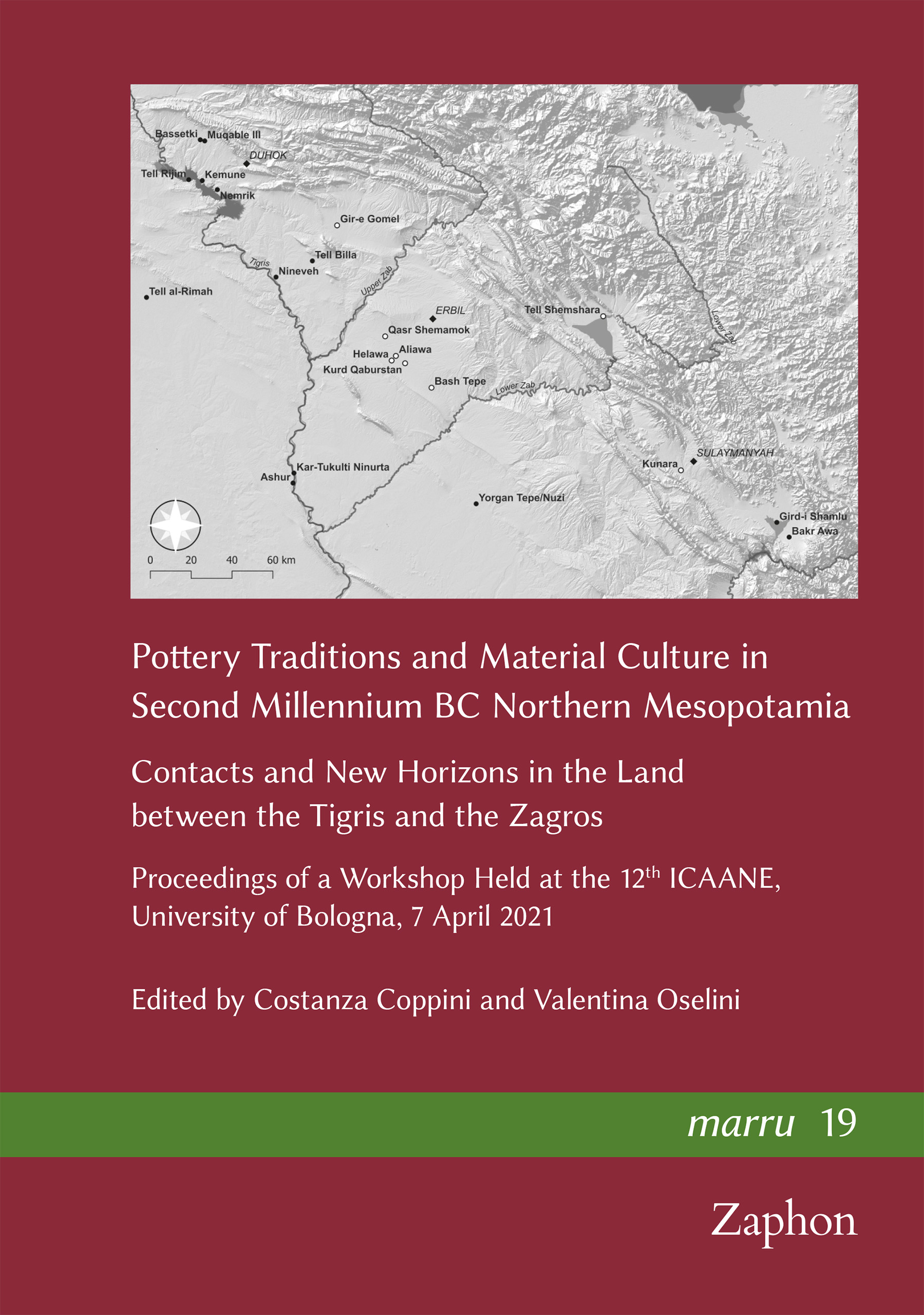 Pottery Traditions and Material Culture in Second Millennium BC Northern Mesopotamia
Contacts and New Horizons in the Land between the Tigris and the Zagros. Proceedings of a Workshop Held at the 12th ICAANE, University of Bologna, 7 April 2021
Volume 19
