
The Kingdom of God in Matthean Parables
Its Metaphors and Meaning
By (author) Rafał Strugiński Series edited by Rajmund Pietkiewicz Series edited by Piotr Burgoński
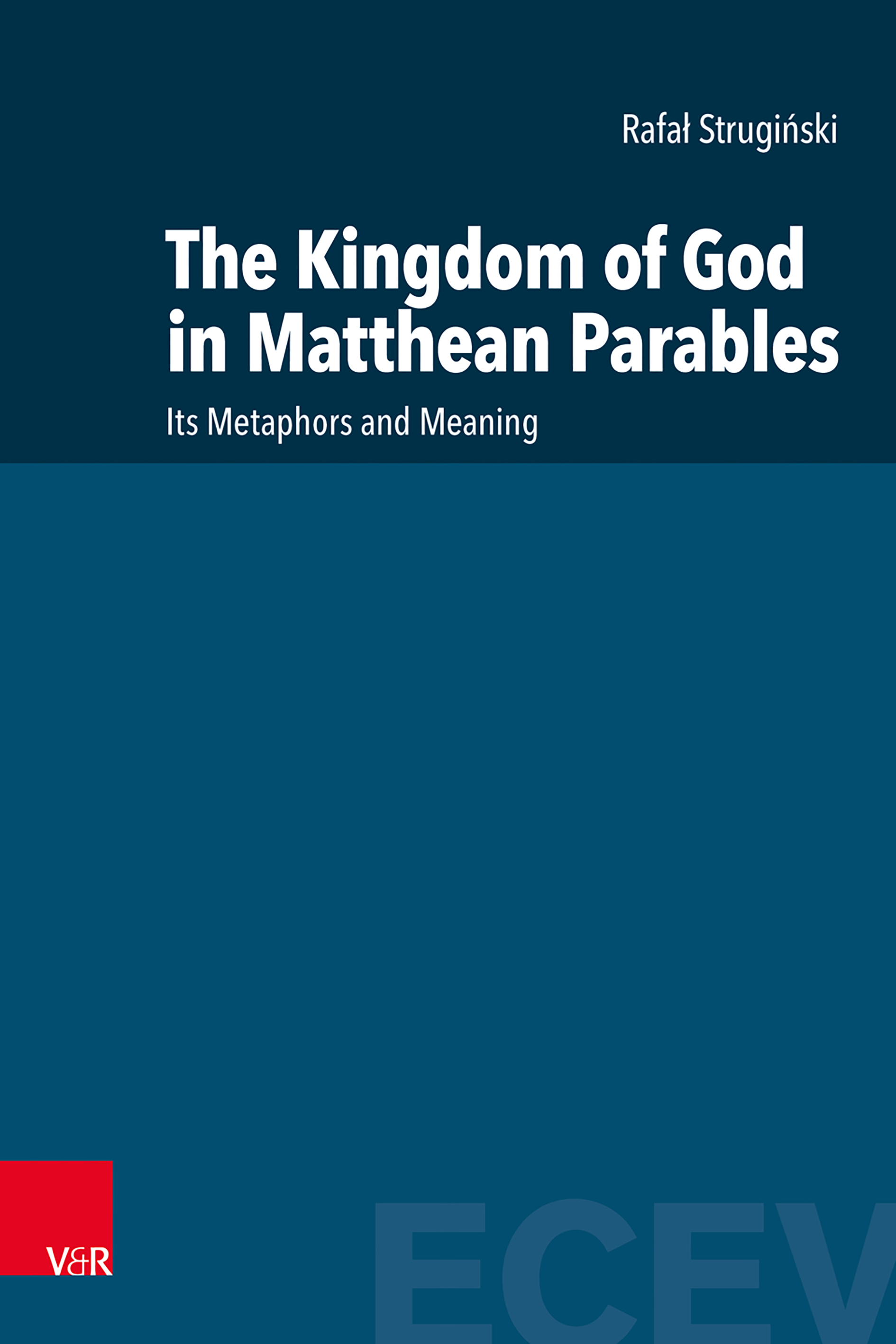
What is the Kingdom of the Heavens according to the parables of Matthew?
There is no single correct answer to the question, what is the Kingdom of the Heavens according to the parables of Matthew? The parables of the Kingdom are open-ended and no single interpretation will exhaust their meaning. They are poetic rather than narrative; symbolic and figurative rather than literal; and tend to inspire rather than provide a systematic explanation of faith. Matthew was more of a creative theologian than a technical engineer. It is, however, possible to come near to an answer. The conceptual metaphors of the Kingdom outline the framework of Matthew’s understanding. Hence the parables convey three paradigms. They are concerned with telling a story about the Kingdom’s progress in time and its closeness, its ultimate fulfilment which will bring a final assessment of each person’s righteousness, and the call for radical commitment which will culminate in an enormous gain. The call to commitment is multi-faceted. The Kingdom calls for forgiveness, merciful justice, acceptance of its demands (living righteously) and readiness to fulfil them. This quadruple call is its core message.
Rafał Strugiński SJ is an Assistant Professor, PhD, at the Catholic Academy in Warsaw – Collegium Bobolanum.
- By (author) Rafał Strugiński
- Series edited by Rajmund Pietkiewicz
- Series edited by Piotr Burgoński
Other Titles in this Series

 Liturgia semper reformanda
Adaptations and accommodations in the liturgy in light of canon 838 of the Code of Canon Law
 A Structural Commentary on the So-Called Antilegomena
Volume 1. The Letter of James: Wisdom that Comes from Above
 Buchpaket – A Structural Commentary on the So-Called Antilegomena
Vol. 3: The Second Letter of Peter: Proclaiming the Coming of the Lord

 A Structural Commentary on the So-Called Antilegomena
Volume 3: The Second Letter of Peter: Proclaiming the Coming of the Lord. Part 1. Eschatological Scepticism (2 Pet 1–2)

 A Structural Commentary on the So-Called Antilegomena
Volume 3: The Second Letter of Peter: Proclaiming the Coming of the Lord. Part 2. Eschatological Hermeneutics (2 Pet 3)


 New Shepherds
Priestly Vocations in the Catholic Church in Poland between 2000 and 2022. A Sociological Study
 Art and Mysticism in Silesia in the Baroque Period
Angelus Silesius, Bernhard Rosa, and Michael Willmann


Similar Books

 A Companion to Christianity and Sport in Europe and North America (19th-21st centuries)
Volume 1: Western and Eastern Europe
 A Connecting Polemic in the Medieval Mediterranean
The Correspondence of Leo III and ʿUmar II
Volume 6





 Ars Prophetica
Theology in the Poetry of Twentieth-Century Hebrew Poets Avraham Halfi, Shin Shalom, Amir Gilboa, and T. Carmi
 As Messianism Turns to Heresy
The Regenstein Chair Lectures On Lurianic Kabbalah and Shabbatai Tzevi at Hebrew Union College - Cincinnati


 Creating the Woman in Antiquity
Proceedings of the 16th Melammu Workshop, Innsbruck, 2–3 June 2022
Volume 13
 Cultic Kisses
Fruitful Encounters Between Deities and Humans. Festschrift for Angelika Berlejung on the Occasion of Her 65th Birthday
 De/colonizing Theologies
Glocal Histories, Contemporary Challenges, Theoretical Reflections
Volume 4
 Drunk the Potion, No Whit Charmed
The Doctrine of Pure and Perfect Souls from Iamblichus to Damascius






 Extracanonical Traditions and the Holy Land
Texts, Rituals, and Material Culture in Late Antique Palestine
 Fear, Fear of God, God-Fearers
Philological and Historical Perspectives on the World of Ancient Judaism and Christianity

