
The Herbedestan and Nerangestan, Vol. III
Nerangestan, Fragard 2
by D.F.M. Kotwal and P.G. Kreyenbroek

Le Nerangestan, ou Livre d’indication rituelles vient, dans les manuscrits, a la suite du Herbedestan mais represente un texte a part qui a essentiellement trait a l’education religieuse. Les deux textes appartiennent a la tradition savante du Zoroastrisme, et les longs passages du commentaire pehlevi sont souvent plus eclairants que le sont les phrases laconiques en avestique. Toujours est il que peu de passages sont faciles a lire parce que la plupart des iranistes occidentaux ont une connaissance peu approfondie des differents rituels zoroastriens, tandis que l’objectif du Nerangestan etait d’elucider des points qui semblaient obscurs meme aux pretres pratiquants de l’epoque. Le deuxieme Fragard du Nerangestan est fonde sur l’enseignement de Sosans, mais n’a probablement ete consigne dans sa forme actuelle que plusieurs generations apres ce grand commentateur. C’est de loin le chapitre le plus long du texte, et la richesse d’informations qu’il contient procure de nouveaux apercus dans differents aspects de la vie religieuse et rituelle de la communaute zoroastrienne. The Nerangestan, the Book of Ritual Directions, follows the Herbedestan in the manuscripts but is in fact a separate text, dealing with matters of ritual where the Herbedestan is mainly concerned with religious education. Both texts belong to the learned tradition of Zoroastrianism, and the lengthy passages of Pahlavi commentary are often more illuminating than the terse Avestan sentences. Still, few parts of the text make easy reading; most Western Iranists have at best a passing acquaintance with the various Zoroastrian rituals, while the Nerangestan was intended to elucidate points which seemed obscure even to the practising priests of its time. The Second Fragard of the Nerangestan is based on the Teachings of Sosans, but was probably written down in its present form several generations after this great Commentator. It is by far the longest extant chapter of the text, and the wealth of information it contains affords new insights into several aspects of the religious and ritual life of the Zoroastrian community.
- By (author) DFM Kotwal
- By (author) PG Kreyenbroek
Other Titles in this Series


 Iranian Languages and Literatures of Central Asia
From the Eighteenth Century to the Present
Volume 57


 Further Topics in Iranian Linguistics
Proceedings of the 5th International Conference on Iranian Linguistics, held in Bamberg on 24-26 August 2013
Volume 58

 Chrétiens en terre d’Iran VI: Les liens du sol
Images du pouvoir et identités des chrétiens sous Khusro Ier
Volume 63


 Études sur l’Iran médiéval: géographie historique et société
Édition indexée avec une introduction par Denise Aigle
Volume 60
 «Husraw i Kawadan ud Redag-e». Khosrow fils de Kawad et un page
Texte pehlevi édité et traduit
Volume 49


 Rabbo l’olmyn «Maitre pour l’Éternité»
Florilège offert à Philippe Gignoux pour son 80e anniversaire
Volume 43


 Mélanges d’ethnographie et de dialectologie irano-aryenne à la mémoire de Charles-Martin Kieffer
Volume 61

 Chretiens en terre d’Iran III: Vita e studi di Timoteo I, patriarca cristiano di Baghdad
Ricerche sull' epistolario e sulle fonti contigue
Volume 41

 Mediaeval and Modern Iranian Studies
Proceedings of the 6th European Conference of Iranian Studies (Vienna, 2007)
Volume 45


Similar Books


 Des mots aux actes
Traduction épistémique et littéraire. Nouvelles tendances en histoire et didactique
Volume 15


 Punning in Odd or Elegant Constructions in Jeremiah
The Convergence of Linguistics, Rhetoric, and Textuality in the Hebrew Text of Jeremiah


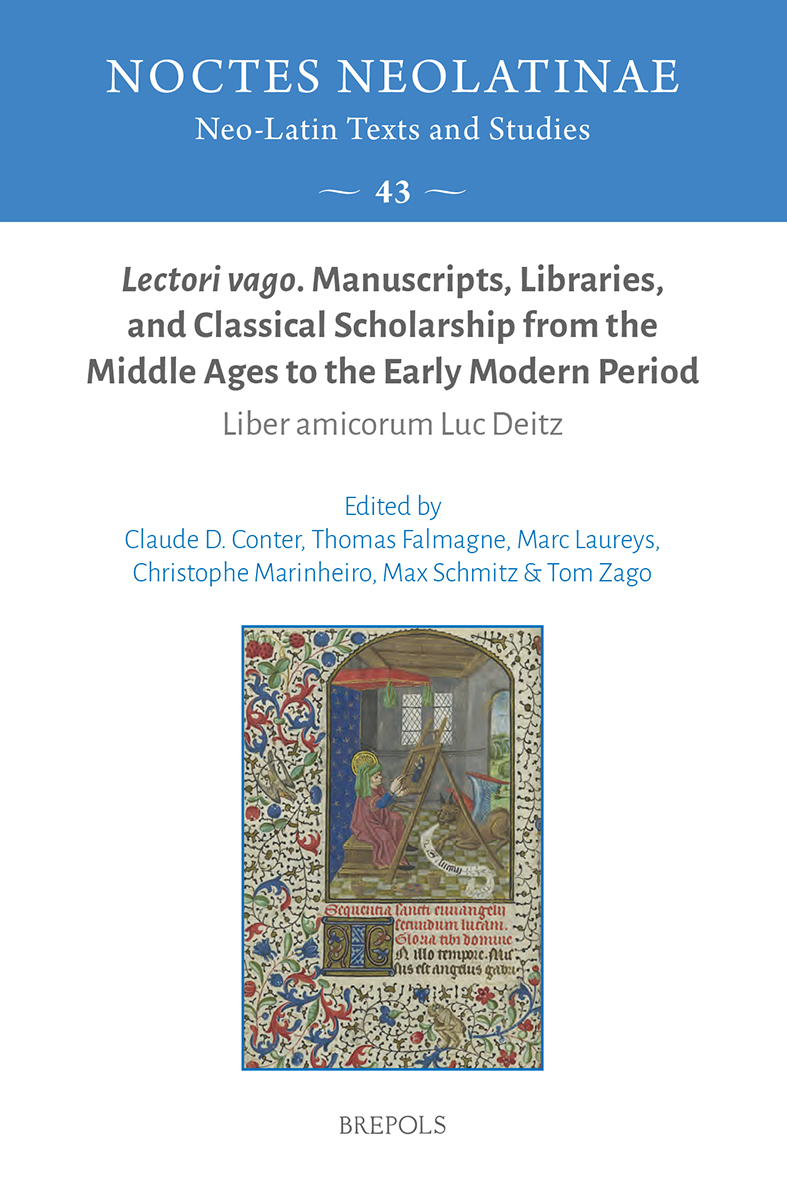 Lectori vago. Manuscripts, Libraries, and Classical Scholarship from the Middle Ages to the Early Modern Period
Liber amicorum Luc Deitz
Volume 43



 Ein Schatzhaus indischer Erzählkunst –– Die Erzählliteratur der Jainas
Band 2: Ein „Lesebuch“ originalsprachlicher Texte zur jainistischen „Universalgeschichte“ samt eines Jaina-Māhārāṣṭrī-Wörterbuchs zu allen Text- und Lesestücken.


