
«Husraw i Kawadan ud Redag-e». Khosrow fils de Kawad et un page
Texte pehlevi édité et traduit
By (author) S. Azarnouche

Our knowledge about the education of the Sasanian nobility and their courtly manners is mainly provided by the Pahlavi text entitled Husraw i Kawadan ud Redag-e, “Khosrow, son of Kawad, and a page.” In this volume, we present a new edition and commentary of the text, based on the manuscript MK, including for the first time a translation in French. This dialogical narrative tells the story of a young servant at the court of the Sasanian king Khosrow I (531-579 AD), who succeeded in regaining his hierarchic rank because of both his wisdom and his courage. This “manifesto” of aristocratic education appears in the form of numerous lexical lists, a form suitable for a detailed philological analysis.
English summary: Our knowledge about the education of the Sasanian nobility and their courtly manners is mainly provided by the Pahlavi text entitled Husraw i Kawadan ud Redag-e “Khosrow, son of Kawad, and a page”. In this volume, we present a new edition and commentary of the text, based on the manuscript MK, including for the first time a translation in French. This dialogical narrative tells the story of a young servant at the court of the Sasanian king Khosrow I (531-579 A.D.), who succeeded in regaining his hierarchic rank because of both his wisdom and his courage. This “manifesto” of aristocratic education appears in the form of numerous lexical lists, a form suitable for a detailed philological analysis. French description: Nos connaissances sur l’education de la noblesse sassanide et les moeurs de cour proviennent essentiellement du texte pehlevi intitule Husraw i Kawadan ud Redag-e Khosrow fils de Kawad et un page qui fait ici l’objet d’une nouvelle edition commentee d’apres le manuscrit MK, accompagnee pour la premiere fois d’une traduction francaise. Concu comme un dialogue, ce recit retrace l’histoire d’un jeune page a la cour du roi sassanide Khosrow Ier (531-579 de notre ere) qui, gryce a sa sagesse et son courage, parvient a regagner son rang hierarchique. Ce manifeste de l’education aristocratique a pretent volontiers a une analyse philologique detaillee.
- By (author) S. Azarnouche
Other Titles in this Series

 Rabbo l’olmyn «Maitre pour l’Éternité»
Florilège offert à Philippe Gignoux pour son 80e anniversaire
Volume 43


 Mélanges d’ethnographie et de dialectologie irano-aryenne à la mémoire de Charles-Martin Kieffer
Volume 61

 Chretiens en terre d’Iran III: Vita e studi di Timoteo I, patriarca cristiano di Baghdad
Ricerche sull' epistolario e sulle fonti contigue
Volume 41

 Mediaeval and Modern Iranian Studies
Proceedings of the 6th European Conference of Iranian Studies (Vienna, 2007)
Volume 45


 Iranian Languages and Literatures of Central Asia
From the Eighteenth Century to the Present
Volume 57

 Chrétiens en terre d’Iran VI: Les liens du sol
Images du pouvoir et identités des chrétiens sous Khusro Ier
Volume 63
 Further Topics in Iranian Linguistics
Proceedings of the 5th International Conference on Iranian Linguistics, held in Bamberg on 24-26 August 2013
Volume 58

Similar Books
 ‘For You I Study, For You I Work, For You I Live, For You I Am Ready To Even Give My Life’
Essays in Honour of Francis (Frank) J Moloney, SDB




 Ars Prophetica
Theology in the Poetry of Twentieth-Century Hebrew Poets Avraham Halfi, Shin Shalom, Amir Gilboa, and T. Carmi
 As Messianism Turns to Heresy
The Regenstein Chair Lectures On Lurianic Kabbalah and Shabbatai Tzevi at Hebrew Union College - Cincinnati


 Creating the Woman in Antiquity
Proceedings of the 16th Melammu Workshop, Innsbruck, 2–3 June 2022
Volume 13

 Drunk the Potion, No Whit Charmed
The Doctrine of Pure and Perfect Souls from Iamblichus to Damascius



 Extracanonical Traditions and the Holy Land
Texts, Rituals, and Material Culture in Late Antique Palestine
 Fear, Fear of God, God-Fearers
Philological and Historical Perspectives on the World of Ancient Judaism and Christianity




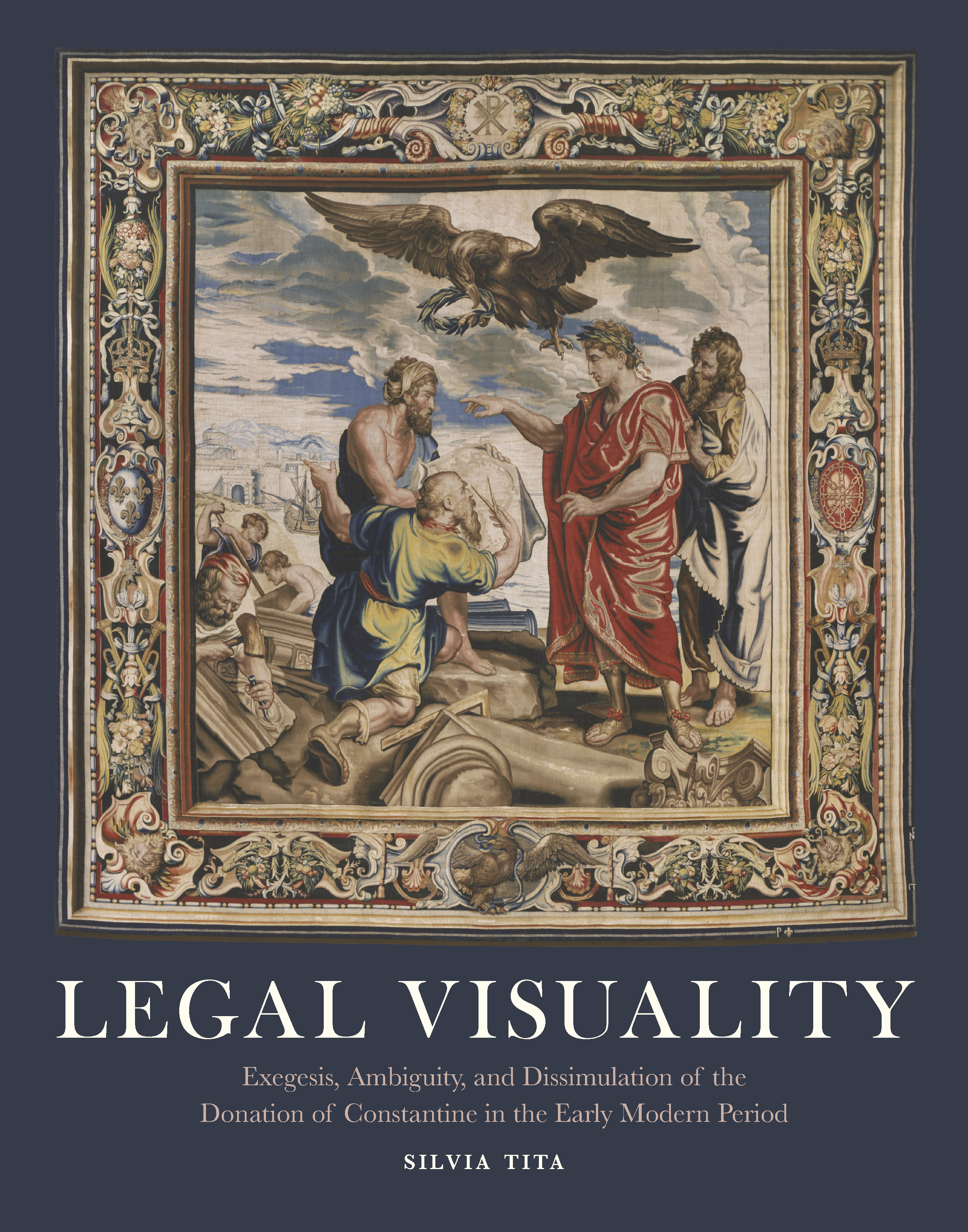 Legal Visuality
Exegesis, Ambiguity, and Dissimulation of the Donation of Constantine in the Early Modern Period
 Liturgia semper reformanda
Adaptations and accommodations in the liturgy in light of canon 838 of the Code of Canon Law
