
The Greek Superpower
Sparta in the Self-Definitions of Athenians
edited by Paul Cartledge and Anton Powell

Greeks-in later times-saw Athens as the Hellas of Hellas, but in the classical period many Athenians thought otherwise. Athens might be a school of Hellas, but the school of Hellas was Sparta. Militarily and morally, Sparta was supreme. This book explores how Athenians, ordinary citizens as well as writers and politicians, thought about Sparta’s superiority.
Greeks – in later times – saw Athens as ‘the Hellas of Hellas’, but in the classical period many Athenians thought otherwise. Athens might be a school of Hellas, but the school of Hellas was Sparta. Militarily and morally, Sparta was supreme. This book explores how Athenians – ordinary citizens as well as writers and politicians – thought about Sparta’s superiority. Nine new studies from a distinguished international cast examine how Athenians might revere Sparta even as they fought her. This respect led to Plato’s literary creation of fantasy cities (in the Republic and Laws) to imitate Spartan methods. And, after its military surrender in 404 BC, ruling Athenian politicians claimed that their city was to be remodelled as itself a New Sparta.
Introductory Note Anton Powell Foreword Paul Cartledge 1 Sparta in Pericles' Funeral Oration Paula Debnar 2 Athens, Sparta, and the tekhne of deliberation Ellen Millender 3 Athens as New Sparta? Lakonism and the Athenian revolution of 4043 BC Anton Powell 4 Viewing Sparta through Athenian engagement with art and architecture Michael Scott 5 Euripides, Sparta and the self-definition of Athens Edith Hall 6 Sparta and Spartans in Old Comedy Ralph M. Rosen 7 Imagined superpowers: Isocrates' opposition of Athens and Sparta Carol Atack 8 Spartan echoes in Plato's Republic Fritz-Gregor Herrmann 9 Aristotle's critique of Spartan imperialism Malcolm Schofield Index
- Edited by Paul Cartledge
- Edited by Anton Powell
Other Titles in this Series
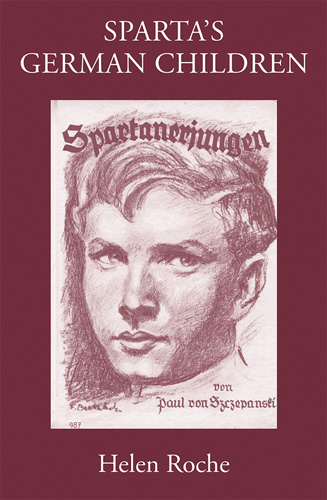 Sparta’s German Children
The ideal of ancient Sparta in the Royal Prussian Cadet-Corps, 1818-1920, and in National-Socialist elite schools (the Napolas), 1933-1945



Similar Books

 Drunk the Potion, No Whit Charmed
The Doctrine of Pure and Perfect Souls from Iamblichus to Damascius

 Epiphanies of the Divine in the Septuagint and the New Testament
Fifth International Symposium of the Corpus Judaeo-Hellenisticum Novi Testamenti (CJHNT), 14-17 May 2015, Nottingham


 Language and Power in the Roman Empire and Early India
Hierarchy, Ambiguity, and the Art of Reading the Signs in Cosmopolitan Cultures
 Late Antique villae in the Balkans (3rd–7th c. AD): Current Research Questions and Perspectives
HAEMUS Companion to the Late Antique Balkans 1
Volume 4
 Nurturing the Elite
Representations of Drinking, Eating, and Religious Vessels in Palmyrene Funerary Iconography
Volume 13


 The Compositional History of the Book of Kings
An Analysis of the Evaluative Frameworks in 1 Kings 14–2 Kings 25

 Contesting Labeled Identities
The Sociology of Gentilics in Biblical and Northwest Semitic Literature


 After Life in Roman Paganism. L’Égypte des astrologues. Les Mages hellénisés
Introductions historiographiques
Volume 7


 Diodor über den ersten Sklavenaufstand auf Sizilien
Ein philologischer und historischer Kommentar
Volume 67


 Frauen im römischen Erbrecht
Historische Entwicklungen, familiäre Rollenbilder und die erbrechtliche Reskriptenpraxis
Volume 241

 Frieden schaffen durch ein gemeinsames Bekenntnis?
Eine Predigtreihe zur Vergegenwärtigung des Nizänischen Glaubensbekenntnises von 325
Volume 7
 I Germani e l’Impero Romano. Storia e diritti
Saggi delle edizioni degli incontri 2024-2025
Volume 14


 Nach der Zerstörung
Die gewaltsame Einnahme von Städten von der Antike bis zum 20. Jahrhundert zwischen Disruption und Kontinuität

 Religiöse Erfahrung in Korinth
Paulus und die frühchristliche Bewegung im Kontext ihrer griechisch-römischen Erfahrungswelt


 But the Wise Shall Understand
Reuse of Prophecies, Chronotope, and Merging of Eschatological Horizons in Daniel 10-12

