
Sparta
New Perspectives
by Stephen Hodkinson and Anton Powell
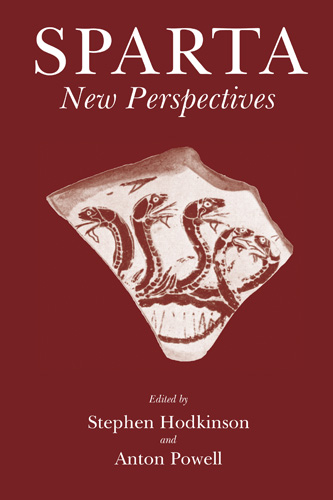
Paperback (Published)
(December 2009)
ISBN: 9781905125319
6.1 x 9.17 inches
Price: $35.00
On back order
The history of Sparta is increasingly seen as important, not only for its own sake but also for understanding Athenian literature and the political history of numerous Greek states. Traditional approaches to Sparta are now being supplemented by contributions from archaeology and the social sciences. The renewed interest in Sparta is international. The volume includes, for the first time, original contributions from most of the world’s leading authorities on Spartan history.
Introduction - Stephen Hodkinson PART I. SPARTIATE INSTITUTIONS AND SOCIETY 1. Tyrtaeus' Eunomia: Nothing to do with the Great Rhetra - Hans van Wees 2. Perspectives on Spartan education in the classical period - Jean Ducat Translated by Emma Stafford 3. Admission to the syssitia in fifth-century Sparta - H.W. Singor 4. Aidos at Sparta - Nicolas Richer Translated by Emma Stafford 5. Sparta's kosmos of silence - Ephraim David PART II: SPARTANS AND THE OUTSIDE WORLD 6. An agonistic culture? Athletic competition in archaic and classical Spartan society - Stephen Hodkinson 7. From Perioikoi to Poleis: The Laconian cities in the late hellenistic period - Nigel Kennell 8. The evolution of the Messenian identity - Thomas Figueira 9. From Sparta to Taras: Nomima, ktiseis and relationships between colony and mother city - Massimo Nafissi 10. Olympiad chronography and 'Early' Spartan history - P.-J. Shaw PART III: REPRESENTATIONS OF SPARTAN SOCIETY 11. The Socratics' Sparta and Rousseau's - Paul Cartledge 12. Sophrosyne and the Spartans in Xenophon - Noreen Humble 13. Athenian ideology and the empowered Spartan woman - Ellen Greenstein Millender 14. Spartan women assertive in politics? Plutarch's Lives of Agis and Kleomenes - Anton Powell Index
Stephen Hodkinson has established himself internationally as an authority on the economy and society of Sparta. He is the author of numerous academic articles, and of the volume Property and Wealth in Classical Sparta (CPW/Duckworth, 2000). Anton Powell has played a leading role in the development and co-ordination of Spartan studies. He is the author of Athens and Sparta (1988) and editor of the Classical Sparta (1989). Hodkinson and Powell are also joint editors of The Shadow of Sparta (1994).
- By (author) Stephen Hodkinson
- By (author) Anton Powell
Other Titles in this Series
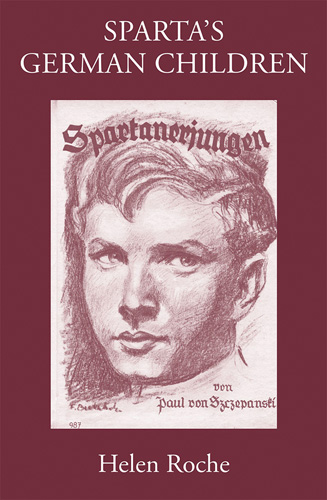 Sparta’s German Children
The ideal of ancient Sparta in the Royal Prussian Cadet-Corps, 1818-1920, and in National-Socialist elite schools (the Napolas), 1933-1945


Similar Books


 Contesting Labeled Identities
The Sociology of Gentilics in Biblical and Northwest Semitic Literature

 Drunk the Potion, No Whit Charmed
The Doctrine of Pure and Perfect Souls from Iamblichus to Damascius

 Epigraphic “Shades” from Hellenistic Thrace
Contextualizing Inscriptions in Greek from Thracian Tombs

 Epiphanies of the Divine in the Septuagint and the New Testament
Fifth International Symposium of the Corpus Judaeo-Hellenisticum Novi Testamenti (CJHNT), 14-17 May 2015, Nottingham


 Gold, Silver and Glass: Power Networks, Cultural Identities, Technology Transfers and Agency across the Old World (7th Century BC – 1st Century AD)
Proceedings of a Conference Held at the British Museum, 16–18 June 2023
 Language and Power in the Roman Empire and Early India
Hierarchy, Ambiguity, and the Art of Reading the Signs in Cosmopolitan Cultures
 Late Antique villae in the Balkans (3rd–7th c. AD): Current Research Questions and Perspectives
HAEMUS Companion to the Late Antique Balkans 1
Volume 4


 Nurturing the Elite
Representations of Drinking, Eating, and Religious Vessels in Palmyrene Funerary Iconography
Volume 13





 Roman Copies, Collecting, and Culture in the Bay of Naples and Beyond
Papers in Honor of Eugene J. Dwyer




 The Compositional History of the Book of Kings
An Analysis of the Evaluative Frameworks in 1 Kings 14–2 Kings 25




 Zooarchaeology of Ancient Greek Sanctuaries in Southwestern Sicily
Faunal Analysis from Selinus and Akragas as Evidence of Differences in the Treatment of Animals for Ritual Purposes