
The Damascus Psalm Fragment
Middle Arabic and the Legacy of Old Higazi
by Ahmad Al-Jallad, with contributions by Ronny Vollandt

Paperback (Published)
(May 2020)
ISBN: 9781614910527
6.97 x 10 inches
Price: $39.95
On back order
The Damascus Palm Fragment investigates Arabic’s transformative historical phase, the passage from the pre-Islamic to the Islamic period, through a new approach. It presents a scenario for the emergence of standard Classical Arabic as the literary language of the late eighth century and beyond.
This new Oriental Institute series – Late Antique and Medieval Islamic Near East (LAMINE) – aims to publish a variety of scholarly works, including monographs, edited volumes, critical text editions, translations, studies of corpora of documentsin short, any work that offers a significant contribution to understanding the Near East between roughly 200 and 1000 CE. LAMINE 2 investigates Arabic’s transformative historical phase, the passage from the pre-Islamic to the Islamic period, through a new approach. It asks, What would Arabic’s early history look like if we wrote it based on the documentary evidence? The book frames this question through the linguistic investigation of the Damascus Psalm Fragment (PF), the longest Arabic text composed in Greek letters from the early Islamic period. It is argued that its language is a witness to the Arabic vernacular of the early Islamic period, and then moves to understand its relationship with Arabic of the pre-Islamic period, the Qur’anic Consonantal Text, and the first Islamic century papyri, arguing that all of this material belongs to a dialectal complexed we call Old Higazi. The book concludes by presenting a scenario for the emergence of standard Classical Arabic as the literary language of the late eighth century and beyond.
- By (author) Ahmad Al-Jallad
- Contributions by Ronny Vollandt
Other Titles in this Series


Similar Books


 Connecting the Dots: Counting, Writing, and the Beginnings of Civilization
The Secret Lives of Clay Tokens: A Memoir
 Des mots aux actes
Traduction épistémique et littéraire. Nouvelles tendances en histoire et didactique
Volume 15


 Exploring Gender Dynamics across the Ancient Near East
Collected Essays of Gender and Methodology in the Ancient Near East (GeMANE) 4 and 5
Volume 7


 Ḫattušaš utnē išḫameški
Hittite and Other Ancient Near Eastern Studies Presented to Piotr Taracha on the Occasion of His 65th Birthday




 New Research on Old Collections in Southwest Asian Archaeology
Proceedings of the Workshop Held at the British Museum, London, 31 July – 2 August, 2023
 Old Aramaic Inscriptions and their Contexts
An Epigraphic, Archaeological, and Historical Synthesis
Volume 63


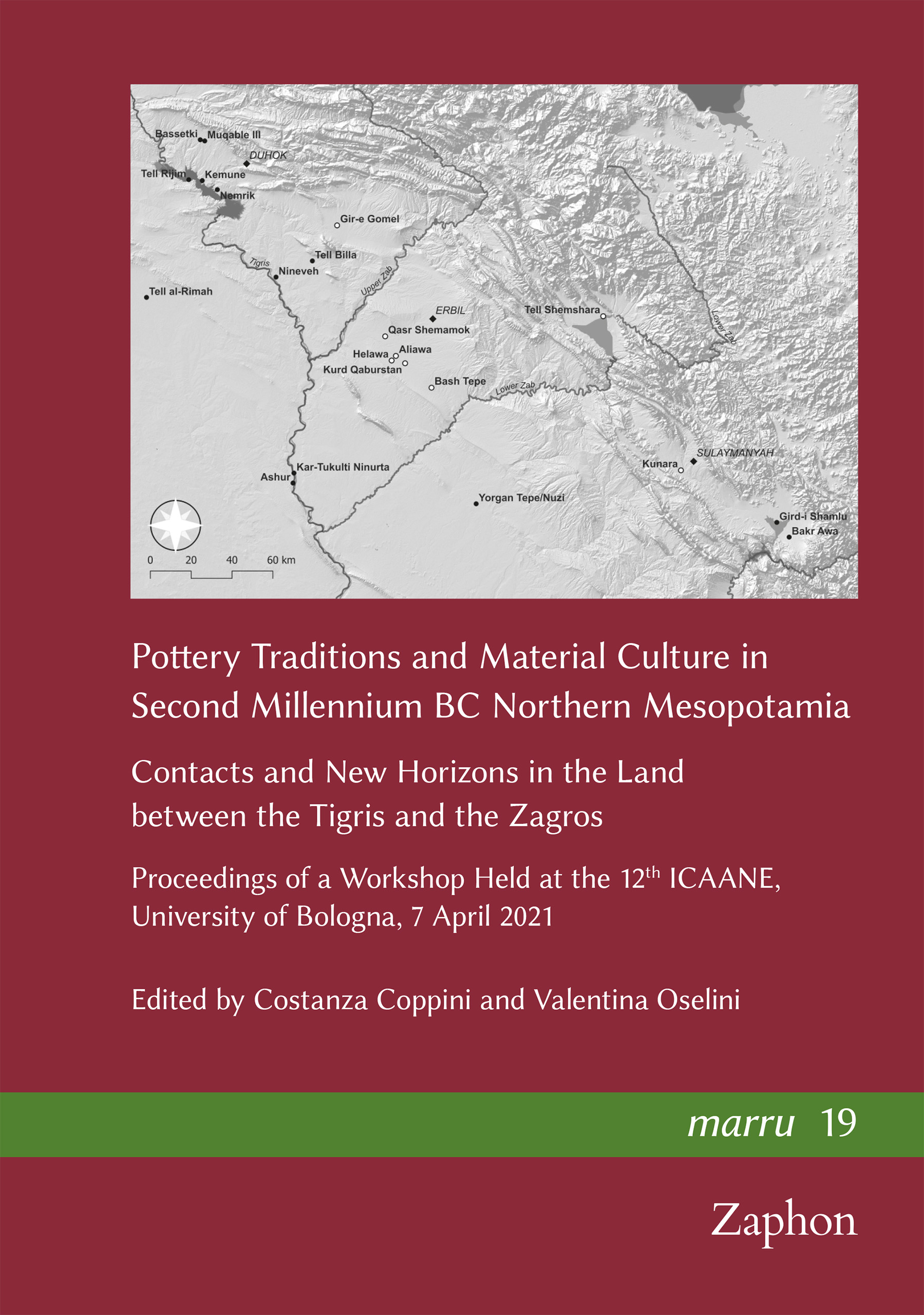 Pottery Traditions and Material Culture in Second Millennium BC Northern Mesopotamia
Contacts and New Horizons in the Land between the Tigris and the Zagros. Proceedings of a Workshop Held at the 12th ICAANE, University of Bologna, 7 April 2021
Volume 19
 Punning in Odd or Elegant Constructions in Jeremiah
The Convergence of Linguistics, Rhetoric, and Textuality in the Hebrew Text of Jeremiah
 Shame in the Worlds of the Hebrew Bible and Akkadian Texts
A Linguistic Study and Its Implications
Volume 33


 Telling Contexts
Archaeological and Textual Studies in Honor of Elizabeth Bloch-Smith and Mark S. Smith
 The Body
Lived, Cultured, Adorned: Essays on Dress and the Body in the Bible and Ancient Near East in Honor of Nili S. Fox
 The Discourse of Rites
Shaping and Reshaping the (Counter-)Priestly Rituals Conducted Outside the Tabernacle
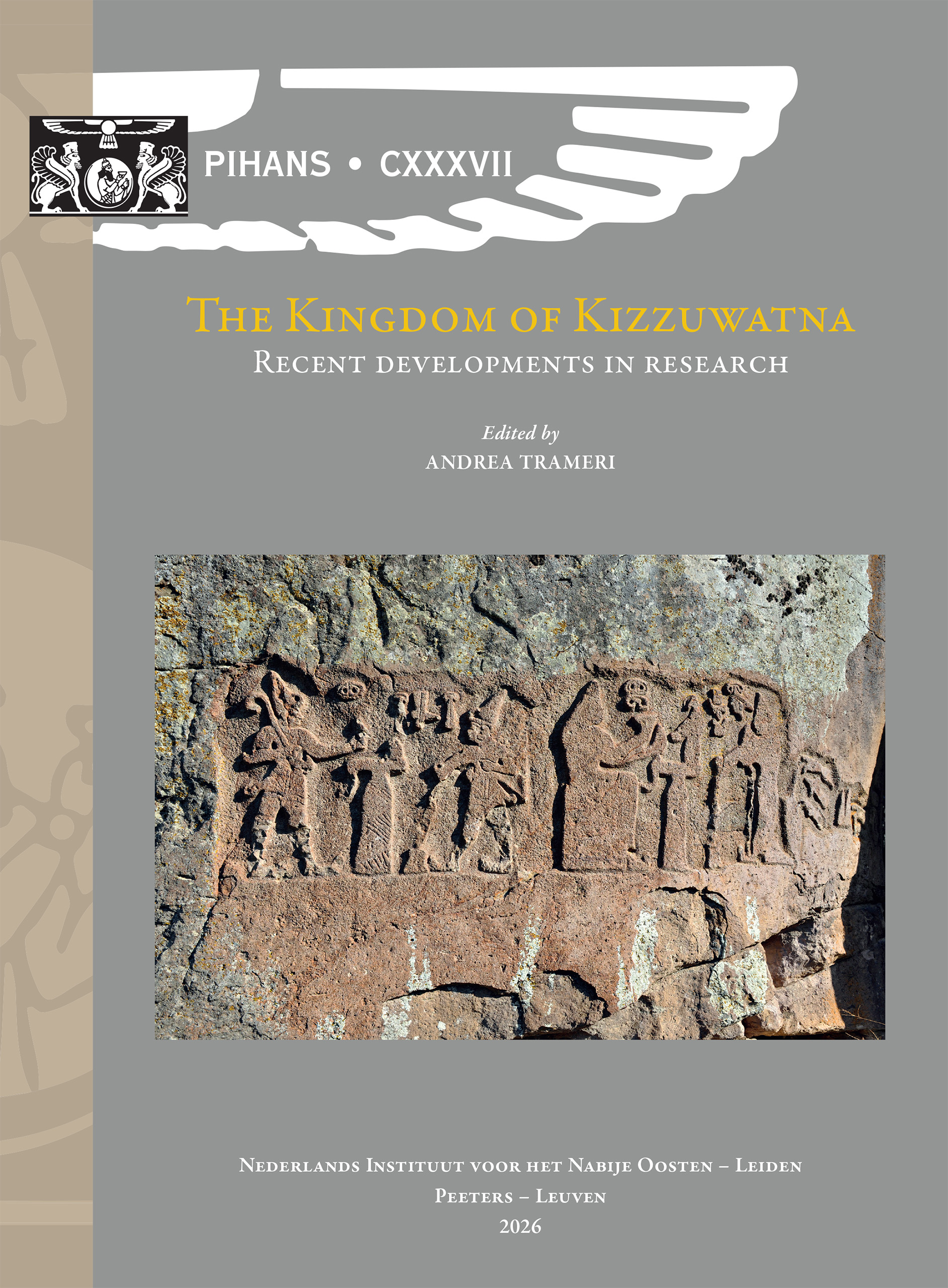 The Kingdom of Kizzuwatna: Recent Developments in Research
Proceedings of the Third NINO Postdoctoral Research Fellow Annual Conference, Leiden, 23rd-25th March 2023
Volume 137
