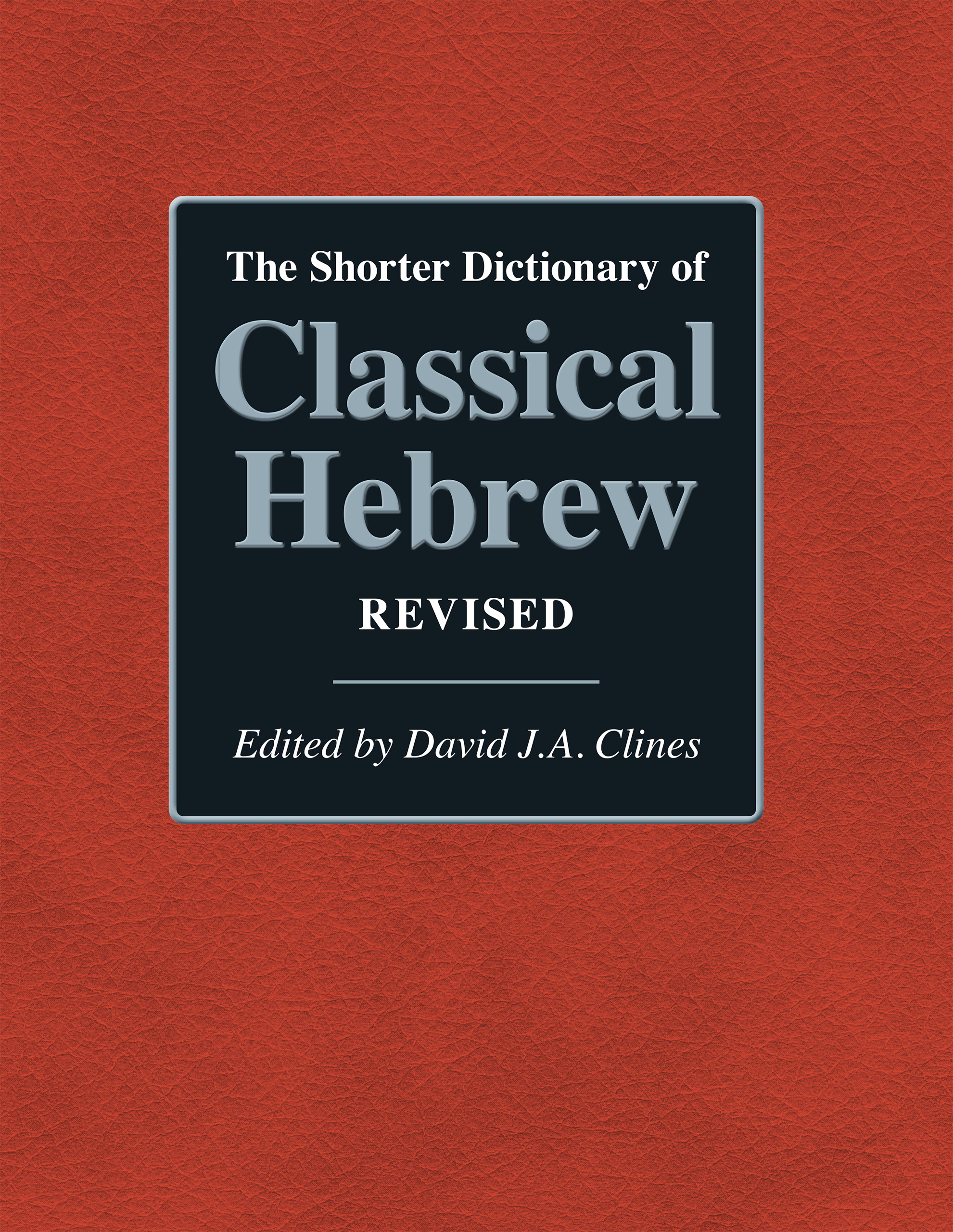
The Commentary of Abraham ibn Ezra on the Book of Job
translated with commentary by Jason Kalman
An annotated translation of the foremost Jewish biblical scholar of the Middle Ages on the Book of Job.
The book of Job was among the most popular books of study for Jewish scholars in the Middle Ages. With its themes of suffering, providence, and theodicy it attracted much attention despite the difficulty of its language. Abraham ibn Ezra (1089-1164) was born in Muslim Spain, but composed his commentaries while residing in Christian Europe. His commentaries meld what was the most advanced thinking of his day to identify the distinction between biblical genres, to show sensitivity to rhetoric and poetry, to establish a model for defining hapax legomena, and to bring scientific and astrological knowledge to the reading of the Bible. By innovatively composing the commentary in Hebrew, rather than Arabic, he also transmitted the intellectual life of the Jews of the Muslim world North, making it available to new audiences.
Jason Kalman is Professor of Classical Hebrew Literature and Interpretation at HUC-JIR, Cincinnati and a research fellow in the Department of Old and New Testament Studies, Faculty of Theology and Religion, University of the Free State, South Africa. He is the author of Hebrew Union College and the Dead Sea Scrolls (HUC, 2012), The Book of Job in Jewish Life and Thought: Critical Essays (HUCP, 2021), and co-author with Jaqueline S. Du Toit of Canada’s Big Biblical Bargain: How McGill University Bought the Dead Sea Scrolls (MQUP, 2010).
- By (author) Jason Kalman
- Translated with commentary by Jason Kalman
Other Titles in this Series

 Rabbi Ezra ben Solomon of Gerona, Commentary on the Song of Songs and Other Kabbalistic Commentaries

 Nicholas of Lyra’s Commentaries on the Gospels of Matthew and Luke
Franciscan Exegesis in a Time of Crisis




Similar Books


 Ars Prophetica
Theology in the Poetry of Twentieth-Century Hebrew Poets Avraham Halfi, Shin Shalom, Amir Gilboa, and T. Carmi
 As Messianism Turns to Heresy
The Regenstein Chair Lectures On Lurianic Kabbalah and Shabbatai Tzevi at Hebrew Union College - Cincinnati




 John Dunstaple Reading Boethius
John Dunstaple’s Annotations to Boethius’s “De institutione musica” in the Manuscript Oxford, Corpus Christi College Library, MS 118

 Lobbying for Equality
Jacques Godard and the Struggle for Jewish Equality during the French Revolution
 Medieval Debates on Foreknowledge: Future Contingents, Prophecy, and Divination
Acts of the XXVII Annual Colloquium of the SIEPM, Trento 12-15 September 2023
Volume 31

 Nicholas of Lyra’s Commentaries on the Gospels of Matthew and Luke
Franciscan Exegesis in a Time of Crisis



 Punning in Odd or Elegant Constructions in Jeremiah
The Convergence of Linguistics, Rhetoric, and Textuality in the Hebrew Text of Jeremiah



 The Body
Lived, Cultured, Adorned: Essays on Dress and the Body in the Bible and Ancient Near East in Honor of Nili S. Fox


 The Embodied Court in the Premodern World
Understanding the Physicality, Performativity and Lifecycle of Bodies at Court in Europe and Beyond, 1400-1800
Volume 4