
The Church-Union of the Armenians in Transylvania (1685–1715)
By (author) Kornél Nagy Associate editor Christopher B. Brown Associate editor Günter Frank Associate editor Barbara Mahlmann-Bauer Associate editor Tarald Rasmussen Associate editor Violet Soen Associate editor Zsombor Tóth Associate editor Günther Wassilowsky Associate editor Siegrid Westphal

Hardback (Published)
(August 2021)
ISBN: 9783525503546
6.34 x 9.25 inches
Price: $150.00
In stock
The Armenians in the Motherland and Diaspora and the Catholic Renewal in the 17th and 18th Centuries
The 17th and 18th centuries have been regarded as one of the most exciting periods in the history of Hungary and Transylvania. The wars of liberation to terminate the Ottoman occupation, the integration of the Transylvanian Principality into the Habsburg Empire after 150-years’ relative independence, the colonisation of the uncultivated lands during the Ottoman rule, the re-organisation of daily life and Prince Francis (Ferenc) RAkczi’s independence war (1703-1711) indicated serious challenges for the Habsburg Court in Vienna. This period (1686-1711) felled serious duties to the Hungarian Catholic Church, too. Prior to these duties, the process of Counter-Reformation in Hungary’s eastern and northern regions was getting increasingly under way: Orthodox Ruthenians and Romanians in Transylvania united with the Roman Catholic Church. The bishops, who were highly supported by the missionaries delegated from Rome in order to re-organise the Hungarian Catholic Church’s religious life, re-appeared at the seats of the abandoned dioceses after the 150-years’ Ottoman occupation and nearly 110-years’ pressure from the strong Protestantism supported by the Princes of Transylvania. The Armenians’ church-union in Transylvania must be, in fact, analysed in this church-historical context. The history of Armenians in Transylvania, escaping from Moldavia and Podolia between 1668 and 1672, should be regarded practically as an undiscovered area from both the Hungarian and international church-historical point of view. The church-union of the Armenians in Transylvania is primarily associated with Bishop Oxendio Virziresco’s (1654-1715), an Armenian Uniate cleric educated at Collegium Urbanum in Rome, missionary efforts. In this work, I have tried to look for evident responses to these afore-mentioned problems, resting on the partly discovered and undiscovered sources as well as analysing critically a few of secondary literature.
PhD Kornél Nagy is Historian, Armenologist and Research Fellow.
- By (author) Kornél Nagy
- Associate editor Christopher B. Brown
- Associate editor Günter Frank
- Associate editor Barbara Mahlmann-Bauer
- Associate editor Tarald Rasmussen
- Associate editor Violet Soen
- Associate editor Zsombor Tóth
- Associate editor Günther Wassilowsky
- Associate editor Siegrid Westphal
"The merits of this work include its chronological sweep, careful evaluation of archives in seven countries and publications in many languages (the bibliography is thirty pages in length), and the admirably clear and convincing conclusions." Niessen, James P., Church History, December 11, 2023
—
Other Titles in this Series
 Konfessionelle Vielfalt als Herausforderung und Perspektive
Zur Verschränkung von Religion und Politik im frühneuzeitlichen Ostmitteleuropa
 Konsolidierung des reformierten Bekenntnisses im Reich der Stephanskrone
Ein Beitrag zur Kommunikationsgeschichte zwischen Ungarn und der Schweiz in der frühen Neuzeit (1500–1700)
 The Doctrine of Election in Reformed Perspective
Historical and Theological Investigations of the Synod of Dordt 1618–1619
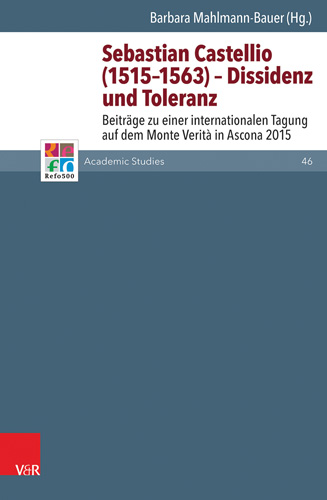 Sebastian Castellio (1515–1563) – Dissidenz und Toleranz
Beiträge zu einer internationalen Tagung auf dem Monte Verità in Ascona 2015


 Was there a Lutheran Metaphysics?
The interpretation of communicatio idiomatum in Early Modern Lutheranism

 Petrus Dathenus und der Heidelberger Katechismus
Eine traditionsgeschichtliche Untersuchung zum konfessionellen Wandel in der Kurpfalz um 1563

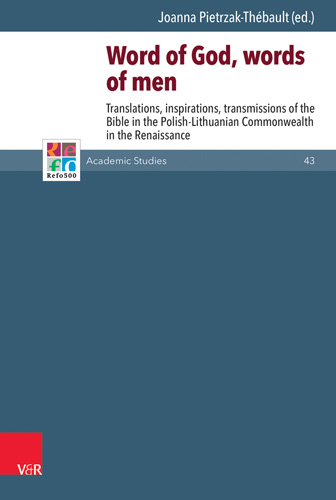 Word of God, words of men
Translations, inspirations, transmissions of the Bible in the Polish-Lithuanian Commonwealth in the Renaissance
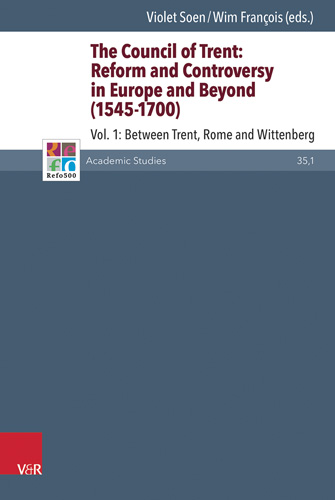 The Council of Trent: Reform and Controversy in Europe and Beyond (1545-1700)
Vol. 1: Between Trent, Rome and Wittenberg
 Der Erlebnisraum Lutherstadt Wittenberg
Genese, Entwicklung und Bestand eines protestantischen Erinnerungsortes
 Ringen um den einen Gott
Eine politische Geschichte des Antitrinitarismus in Siebenbürgen im 16. Jahrhundert
 Protestant Majorities and Minorities in Early Modern Europe
Confessional Boundaries and Contested Identities
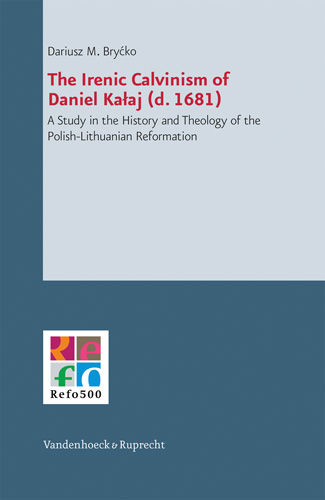 The Irenic Calvinism of Daniel Kalaj (d. 1681)
A Study in the History and Theology of the Polish-Lithuanian Reformation
 Common Man, Society and Religion in the 16th century/Gemeiner Mann, Gesellschaft und Religion im 16. Jahrhundert
Piety, morality and discipline in the Carpathian Basin/Frömmigkeit, Moral und Sozialdisziplinierung im Karpatenbogen
 Managing Melancholy
Dynamics of theology, medicine and law in early modern Nordic Lutheran societies


 The Council of Trent: Reform and Controversy in Europe and Beyond (1545-1700)
Vol. 2: Between Bishops and Princes

 The Holy Crown and the Hungarian Estates
Constructing Early Modern Identity in the Kingdom of Hungary


Similar Books

 A Companion to Christianity and Sport in Europe and North America (19th-21st centuries)
Volume 1: Western and Eastern Europe
 A Connecting Polemic in the Medieval Mediterranean
The Correspondence of Leo III and ʿUmar II
Volume 6





 Ars Prophetica
Theology in the Poetry of Twentieth-Century Hebrew Poets Avraham Halfi, Shin Shalom, Amir Gilboa, and T. Carmi
 As Messianism Turns to Heresy
The Regenstein Chair Lectures On Lurianic Kabbalah and Shabbatai Tzevi at Hebrew Union College - Cincinnati
 Balthasar Caymox of Nuremberg
Early Modern German Print Publishers: Popular Prints of the Seventeenth Century


 Beyond Sovereign Courts
Agents and Practices in Early Modern Spanish and Habsburg Diplomacy
Volume 3



 Circulation, Use, Impact
The Consumption of Architectural Books in the Early Modern Eastern Adriatic
Volume 1


 Councils, Conflicts, Correspondence
Urban Diplomacy in Reval (Tallinn) and Lübeck (c. 1470–1570)
Volume 67
 Creating the Woman in Antiquity
Proceedings of the 16th Melammu Workshop, Innsbruck, 2–3 June 2022
Volume 13
 Cultic Kisses
Fruitful Encounters Between Deities and Humans. Festschrift for Angelika Berlejung on the Occasion of Her 65th Birthday
 De/colonizing Theologies
Glocal Histories, Contemporary Challenges, Theoretical Reflections
Volume 4

 Drunk the Potion, No Whit Charmed
The Doctrine of Pure and Perfect Souls from Iamblichus to Damascius
