
Symphonia Catholica
The Merger of Patristic and Contemporary Sources in the Theological Method of Amandus Polanus (1561-1610)
by Byung Soo Han

Byung Soo Han intends to answer, by investigating the merger of patristic and contemporary sources in the theological method of Amandus Polanus, a significant question concerning the way in which the intellectual and methodological eclecticism of the Reformed was able to establish a coherent “system” of thought capable of defense as not only confessional but also orthodox in its theology and broadly catholic, drawing both on the thought of the Reformers and on the resources of the great tradition of Christian thought that extended back to the church fathers. From a methodological perspective, Polanus’s development from the Ramistically-organized doctrinal framework of the early Partitiones, through the increasingly detailed and specialized efforts of the commentaries, disputations, and Symphonia, indicates a fairly clear, concerted effort to build toward a detailed systematic presentation – and in fact, each of these earlier efforts provided as it were building-blocks that would be incorporated into the Syntagma. This constructive labor itself serves to set aside the claim that Polanus based his theology on a deductive principle. The specific focus of the book is on the place and function of backgrounds and sources, traditional and contemporary, with particular emphasis on the place of the church fathers in Reformed orthodoxy. Polanus’s patristic work, Symphonia, and its eventual impact on his full systematic work, the Syntagma, provides a singular case, within the sixteenth and seventeenth centuries, of the reformulation of patristic thought in a fully systematized form, suitable for combination with the results of biblical exegesis and contemporary doctrinal argumentation in the formulation of Reformed orthodox theology. This study attempts to assess the claim of catholicity and orthodoxy by Reformed theology, demonstrating the formative function of patristic thought in Polanus’s theology. Further, the study illustrates the place of this traditionary exercise within the methodologically eclectic approach followed by Polanus and his contemporaries as they created a theology that drew not only on Scripture and contemporary philosophical assumptions but also on patristic, medieval, Reformation-era, traditionary Aristotelian, Platonic, and Ramist sources. This study, therefore, reappraises the development of Reformed orthodoxy. In Polanus’s case, an older scholarship that read his theology as based on central dogmas or as an exercise of rationalism will be set aside in favor of a more nuanced view of his sources and method. Within this larger framework, Polanus’s use of the fathers builds on and confirms the Reformers’s assumption of catholicity in the face of the detailed polemics of Robert Bellarmine as well as confirming the point that his approach to formulation was traditionary and somewhat eclectic. Finally, the book identifies the theological cohesion of the early orthodox Reformed model, as exemplified by Polanus’s thought, especially in its method of drawing together of traditionary materials from varied sources. In short, the book demonstrates the importance of the church fathers to the formulation of a Reformed orthodox and catholic theology in the context of showing, contrary to previous studies of Polanus’s thought and contrary to the older stereotypes of “Calvinist” orthodoxy, that Reformed orthodoxy was neither a rigid monolith nor a matter of philosophical speculation but the product of a carefully conceived exercise in the compilation and assessment of biblical and traditionary materials.
Byung Soo Han, Ph.D., is Director of The Institute for Reformed Theology at Jesus Family Church, and Assistant Prof. of Systematic Theology.
- By (author) Byung Soo Han
"Han's book on Polanus helps readers understand better the process of making a Reformed system in its classic expression. This is precisely what is needed in historical and continuing investigations in Reformed theology." --Ryan M. McGraw, Greenville Presbyterian Theological Seminary Westminster Theological Journal 78.2
—
Other Titles in this Series
 Calvinus Pastor Ecclesiae
Papers of the Eleventh International Congress on Calvin Research
Volume 39

 Reprobation: from Augustine to the Synod of Dort
The Historical Development of the Reformed Doctrine of Reprobation
Volume 63

 Reformed Evangelicalism and the Search for a Usable Past
The Historiography of Arnold Dallimore, Pastor-Historian
Volume 61

 Calvinus sacrarum literarum interpres
Papers of the International Congress on Calvin Research
Volume 5
 Christ and the Old Covenant
Francis Turretin (1623-1687) on Christ's Suretyship under the Old Testament
Volume 51


 Histories that Mansoul and Her Wars Anatomize
The Drama of Redemption in John Bunyan's Holy War
Volume 15

 Reformed Covenantal Eudaimonism
Wilhelmus à Brakel (1635–1711) on Highest Good, Virtue, and Law
Volume 87


 John Edwards (1637-1716) on Human Free Choice and Divine Necessity
The Debate on the Relation between Divine Necessity and Human Freedom in Late Seventeenth-Century and Early Eighteenth-Century England
Volume 22
 Learning to Pray
The Heidelberg Catechism's Teaching on Prayer in its Sixteenth-Century Context
Volume 82


 Reforming Good Works in Geneva
Bénédict Pictet’s Doctrine of Good Works and His Place in Late Reformed Orthodoxy
Volume 85
 Johannes Cocceius and the Exegetical Roots of Federal Theology
Reformation Developments in the Interpretation of Hebrews 7-10
Volume 7
 A Knot Worth Unloosing
The Interpretation of the New Heavens and Earth in Seventeenth-Century England
Volume 53

 The Jews in English Baptist Eschatology
Conversion, Restoration, and National Identity, 1649-1815
Volume 84


 Union with God
An Assessment of Deification (Theosis) in the Theologies of Robert Jenson and John Calvin
Volume 69

Similar Books

 A Companion to Christianity and Sport in Europe and North America (19th-21st centuries)
Volume 1: Western and Eastern Europe
 A Connecting Polemic in the Medieval Mediterranean
The Correspondence of Leo III and ʿUmar II
Volume 6





 Ars Prophetica
Theology in the Poetry of Twentieth-Century Hebrew Poets Avraham Halfi, Shin Shalom, Amir Gilboa, and T. Carmi
 As Messianism Turns to Heresy
The Regenstein Chair Lectures On Lurianic Kabbalah and Shabbatai Tzevi at Hebrew Union College - Cincinnati


 Creating the Woman in Antiquity
Proceedings of the 16th Melammu Workshop, Innsbruck, 2–3 June 2022
Volume 13
 Cultic Kisses
Fruitful Encounters Between Deities and Humans. Festschrift for Angelika Berlejung on the Occasion of Her 65th Birthday
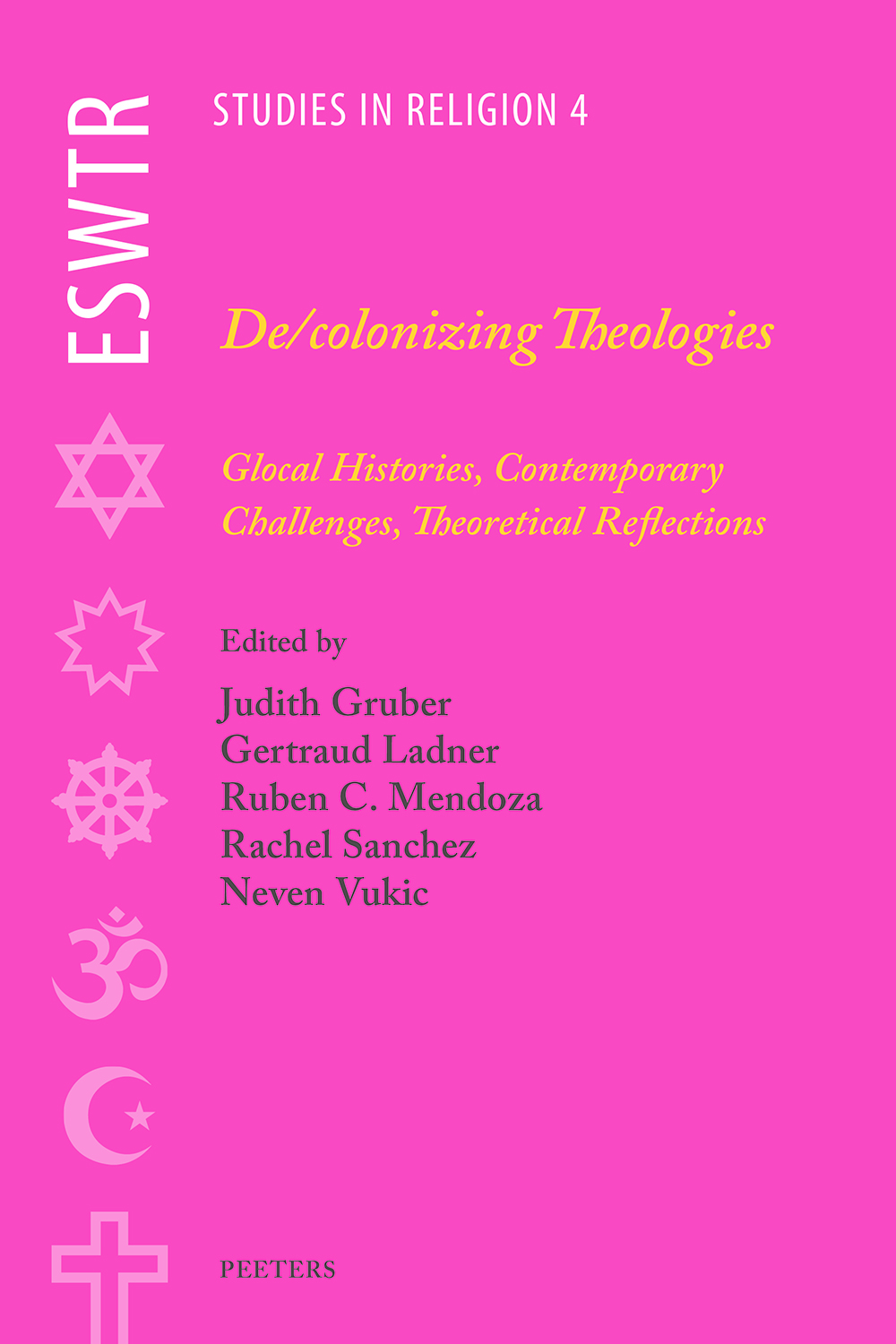 De/colonizing Theologies
Glocal Histories, Contemporary Challenges, Theoretical Reflections
Volume 4
 Drunk the Potion, No Whit Charmed
The Doctrine of Pure and Perfect Souls from Iamblichus to Damascius






 Extracanonical Traditions and the Holy Land
Texts, Rituals, and Material Culture in Late Antique Palestine
 Fear, Fear of God, God-Fearers
Philological and Historical Perspectives on the World of Ancient Judaism and Christianity

