
Samaritan Scribes and Manuscripts
by Alan D. Crown

This book aims to provide the critical tools to help scholars in their use of Samaritan manuscripts. The basic codicological tools is a series of complementary data-bases compiled from typological studies of the physical properties of manuscripts. Each typology is in effect a diachronic profile created by painstaking comparison and analysis of the physical properties of manuscripts of known provenance and/or date. Using these typologies or diachronic profiles it is possible to evaluate the chronology of the physical characteristics of any manuscript – the quire or gathering structure, ink, ruling, spacing of the text on the folio, sewing of the sections … Naturally, the more information available about the physical properties of any manuscript the better the chance of making correlations between the typologies of different properties. The basic rule in palaeography and codicology is that the researcher works on an inductive basis from as wide a sample as possible of dated manuscripts. It is hoped that in the studies in this volume, evidence has been provided which will serve as a guide both to the appearance and the nature of Samaritan manuscripts and to the evaluative process that one would employ in examining them for codicological purposes. The reader should be able to apply the criteria provided here to the evaluation of whatever data can be retrieved from any undated Samaritan manuscripts with which he is confronted. Alan D. Crown in the preface
This book aims to provide the critical tools to help scholars in their use of Samaritan manuscripts. The basic codicological tools is a series of complementary data-bases compiled from typological studies of the physical properties of manuscripts. Each typology is in effect a diachronic profile created by painstaking comparison and analysis of the physical properties of manuscripts of known provenance and/or date. Using these typologies or diachronic profiles it is possible to evaluate the chronology of the physical characteristics of any manuscript – the quire or gathering structure, ink, ruling, spacing of the text on the folio, sewing of the sections … Naturally, the more information available about the physical properties of any manuscript the better the chance of making correlations between the typologies of different properties. The basic rule in palaeography and codicology is that the researcher works on an inductive basis from as wide a sample as possible of dated manuscripts. It is hoped that in the studies in this volume, evidence has been provided which will serve as a guide both to the appearance and the nature of Samaritan manuscripts and to the evaluative process that one would employ in examining them for codicological purposes. The reader should be able to apply the criteria provided here to the evaluation of whatever data can be retrieved from any undated Samaritan manuscripts with which he is confronted. Alan D. Crown in the preface
- By (author) Alan D Crown
Other Titles in this Series


 Between Temple and Torah
Essays on Priests, Scribes, and Visionaries in the Second Temple Period and Beyond


 Sages and Commoners in Late Antique ‘Erez Israel
A Philological Inquiry into Local Traditions in Talmud Yerushalmi
Similar Books





 Athanasius of Alexandria, Epistula ad episcopos Aegypti et Libyae
Old Slavonic Version and English Translation
Volume 261

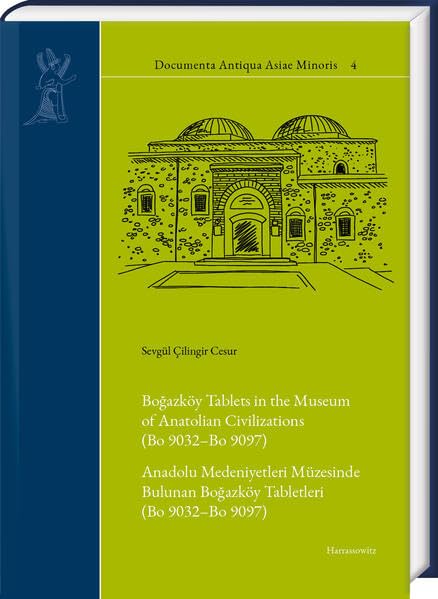 Boğazköy Tablets in the Museum of Anatolian Civilizations (Bo 9032–Bo 9097)
Anadolu Medeniyetleri Müzesinde Bulunan Boğazköy Tabletleri (Bo 9032–Bo 9097)
Volume 4



 Connecting the Dots: Counting, Writing, and the Beginnings of Civilization
The Secret Lives of Clay Tokens: A Memoir
 Contesting Labeled Identities
The Sociology of Gentilics in Biblical and Northwest Semitic Literature

 Curating the Prehistoric Past
Studies on West Asian Archaeology and Beyond in Honour of Yoshihiro Nishiaki
 Cyril of Alexandria’s Christological Exegesis
Explorations of Partitive Exegesis in the Dialogues on the Trinity
Volume 70


 Epiphanies of the Divine in the Septuagint and the New Testament
Fifth International Symposium of the Corpus Judaeo-Hellenisticum Novi Testamenti (CJHNT), 14-17 May 2015, Nottingham


 Exploring Gender Dynamics across the Ancient Near East
Collected Essays of Gender and Methodology in the Ancient Near East (GeMANE) 4 and 5
Volume 7
 Extracanonical Traditions and the Holy Land
Texts, Rituals, and Material Culture in Late Antique Palestine

 From Joseph to Jesus
The Joseph Narrative as a Compositional Template from Old Greek Esther to the Gospel of Luke
Volume 125


 Ḫattušaš utnē išḫameški
Hittite and Other Ancient Near Eastern Studies Presented to Piotr Taracha on the Occasion of His 65th Birthday





