
Reconstructing the Variant Generation Process of Hadith
Based on the Quantitative and the Isnād-cum-Matn Analysis
by Hiroyuki Yanagihashi

This monograph is dedicated to the analysis of hadiths for the purpose of reconstructing the process of variant generation. Medieval authors seemingly did not devote many pages to the question of textual variation, certainly because they had little interest in the question of how individual hadiths were historically formed. Methodologically, the most successful is the isn?d-cum-matn analysis, which consists of determining whether a correlation lies between the transmission process of a hadith, obtained from the analysis of isn?ds (chains of transmission), and its textual development, obtained from the examination of its matn (text), sometimes complemented by biographical sources.
This monograph is dedicated to the analysis of hadiths for the purpose of reconstructing the process of variant generation. Medieval authors seemingly did not devote many pages to the question of textual variation, certainly because they had little interest in the question of how individual hadiths were historically formed. Several contemporary researchers have shown interest in the issue of textual variation in hadith. They agree that many hadiths were reformulated since their initial circulation and aim to trace the process of reformulation with regard to individual hadiths. Methodologically, the most successful is the isnād-cum-matn analysis proposed by Harald Motzki and Gregor Schoeler. This method consists of determining whether a correlation lies between the transmission process of a hadith, obtained from the analysis of isnāds (chains of transmission), and its textual development, obtained from the examination of its matn (text), sometimes complemented by biographical sources. However, despite the existence of many excellent studies based on this method, presenting the general pattern of variant generation with accuracy is far from being achieved. This study, which contains four chapters, seeks to precisely reconstruct the process of variant generation by analyzing isnāds from various quantitative perspectives, in addition to using the isnād-cum- matn analysis.
- By (author) Hiroyuki Yanagihashi
Other Titles in this Series
 The Limits of Discursive Interpretation
A Translation of Kitab i'jaz al-bayan fi tafsir Umm al-Kitab by Sadr al-Din Qunawi


 Exonerating the Distinguished Jurists
Ibn Taymiyya's Raf‘ al-Malām ‘an al-A'imma al-A'lām in Translation


Similar Books
 ‘For You I Study, For You I Work, For You I Live, For You I Am Ready To Even Give My Life’
Essays in Honour of Francis (Frank) J Moloney, SDB




 Ars Prophetica
Theology in the Poetry of Twentieth-Century Hebrew Poets Avraham Halfi, Shin Shalom, Amir Gilboa, and T. Carmi
 As Messianism Turns to Heresy
The Regenstein Chair Lectures On Lurianic Kabbalah and Shabbatai Tzevi at Hebrew Union College - Cincinnati


 Cities through Time
Glimpses into Urbanity and Community in Mediaeval to Modern West Asia and Egypt
Volume 1
 Cuneiform Artefacts from Archaeological Contexts: New Research on Ancient Iraq
Proceedings of a Conference Held at the Bavarian Academy of Sciences and Humanities, July 4–5, 2024
Volume 2

 Drunk the Potion, No Whit Charmed
The Doctrine of Pure and Perfect Souls from Iamblichus to Damascius



 Extracanonical Traditions and the Holy Land
Texts, Rituals, and Material Culture in Late Antique Palestine
 Fear, Fear of God, God-Fearers
Philological and Historical Perspectives on the World of Ancient Judaism and Christianity


 Global Gulf
Geo-Economic, Geo-Political, and Geo-Technological Transformation in Saudi Arabia, the United Arab Emirates, and Qatar



 Ismail Hakki Bursevi’s translation of and commentary on Fusus al-Hikam By Muhyiddin Ibn ‘Arabi
Volumes 1-4

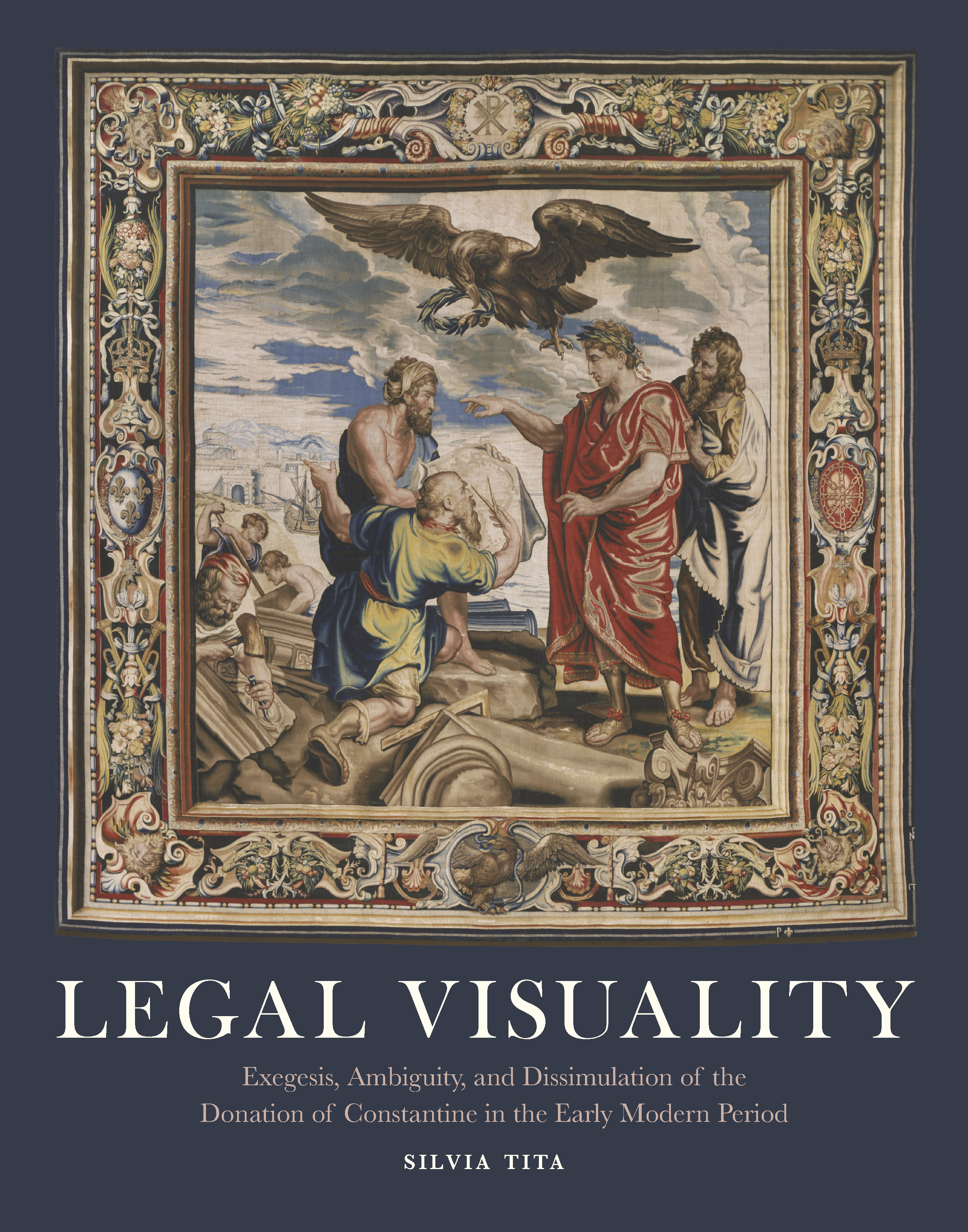 Legal Visuality
Exegesis, Ambiguity, and Dissimulation of the Donation of Constantine in the Early Modern Period