
Exonerating the Distinguished Jurists
Ibn Taymiyya's Raf‘ al-Malām ‘an al-A'imma al-A'lām in Translation
by Abdul-Hakim al-Matroudi

Hardback (Published)
(January 2023)
ISBN: 9781800501713
6.65 x 9.57 inches
Price: $100.00
In stock
In Raf‘ al-Malām ‘an al-A’imma al-A’lām Ibn Taymiyya pursues the argument as to why a mujtahid might depart from directly acting upon textual evidences. This forms the basis of his discussion regarding the causes underlying disagreements found among Muslim scholars in general and their holding differing legal opinions and proffering divergent arguments in support of those opinions. In this work, Ibn Taymiyya calls for tolerance and understanding of the conclusions arrived at by eminent Muslim scholars. Additionally, he insists that even if a scholar was to err in their judgement, it should not be assumed that they intentionally ignored textual evidence as there could be various reasons for what others consider to be a departure from textual evidences. Hence, according to Ibn Taymiyya, such scholars should not be seen as blameworthy and liable to punishment but rather they should be revered as scholars who exercised their right of ijtihad. Thus, even if such a scholar was thought to have erred, there would most certainly be a methodological reason behind such a departure, rather than an intentional contradiction of the relevant textual evidences. Additionally, Ibn Taymiyya asserts that liability for the punishment depends on the existence of certain conditions and the non-existence of impediments and he affirms that reaching certainty in this regard is almost impossible as this is clearly a very complex and complicated process. In this work it is evident that Ibn Taymiyya benefited from various traditions of learning in which he excelled, including jurisprudence, Hadith and philosophy and hence produced a remarkable work which has proved relevant from the time it was authored about eight centuries ago until our present day. This work contains the Arabic text Raf‘ al-Malām ‘an al-A’imma al A’lām and its translation.
Preface Introduction 1. Translation of Raf‘
al-Malā
m ‘
an al-A'imma al-A'lā
m 2. Reasons behind the Divergence of a Scholar's Opinion from a Hadith 3. The Opinions of Scholars and the Question of Error 4. Can a Scholar who Fails to Adhere to the Implications of a Text be Chastened? 5. The Purpose of Threats of Punishment within Textual Evidence 6. The Implications of Categorical and Probable Hadiths 7. General and Specific Threats of Punishment 8. Categorical Proof and the Threat of Punishment 9. Threat(s) of Punishment in Case of Difference of Opinion 10. The Domain of Hadiths Comprising Threats of Punishment 11. Are the Independent Scholar (Mujthid) and the Imitator (Muqallid) beyond the Jurisdiction of Punishment? 12. Conclusion
- By (author) Abdul-Hakim al-Matroudi
Other Titles in this Series
 Reconstructing the Variant Generation Process of Hadith
Based on the Quantitative and the Isnād-cum-Matn Analysis

 The Limits of Discursive Interpretation
A Translation of Kitab i'jaz al-bayan fi tafsir Umm al-Kitab by Sadr al-Din Qunawi


Similar Books
 ‘For You I Study, For You I Work, For You I Live, For You I Am Ready To Even Give My Life’
Essays in Honour of Francis (Frank) J Moloney, SDB




 Ars Prophetica
Theology in the Poetry of Twentieth-Century Hebrew Poets Avraham Halfi, Shin Shalom, Amir Gilboa, and T. Carmi
 As Messianism Turns to Heresy
The Regenstein Chair Lectures On Lurianic Kabbalah and Shabbatai Tzevi at Hebrew Union College - Cincinnati


 Cities through Time
Glimpses into Urbanity and Community in Mediaeval to Modern West Asia and Egypt
Volume 1
 Cuneiform Artefacts from Archaeological Contexts: New Research on Ancient Iraq
Proceedings of a Conference Held at the Bavarian Academy of Sciences and Humanities, July 4–5, 2024
Volume 2

 Drunk the Potion, No Whit Charmed
The Doctrine of Pure and Perfect Souls from Iamblichus to Damascius



 Extracanonical Traditions and the Holy Land
Texts, Rituals, and Material Culture in Late Antique Palestine
 Fear, Fear of God, God-Fearers
Philological and Historical Perspectives on the World of Ancient Judaism and Christianity


 Global Gulf
Geo-Economic, Geo-Political, and Geo-Technological Transformation in Saudi Arabia, the United Arab Emirates, and Qatar



 Ismail Hakki Bursevi’s translation of and commentary on Fusus al-Hikam By Muhyiddin Ibn ‘Arabi
Volumes 1-4

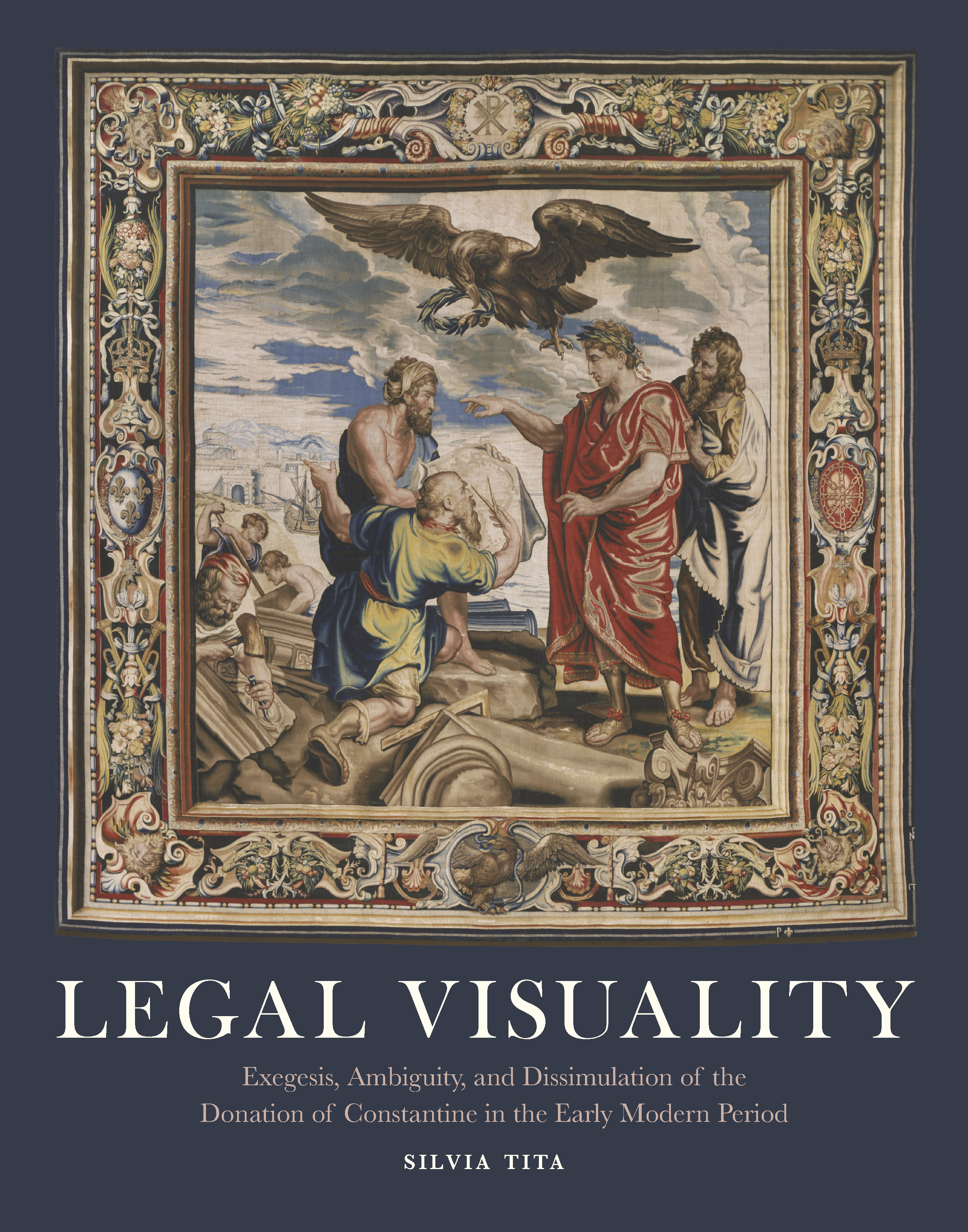 Legal Visuality
Exegesis, Ambiguity, and Dissimulation of the Donation of Constantine in the Early Modern Period