
Reading Images and Texts
Medieval Images and Texts as Forms of Communication. Papers from the Third Utrecht Symposium on Medieval Literacy, Utrecht, 7-9 December 2000
Edited by Marielle Hageman Edited by Marco Mostert

In recent years the relations between images and texts have benefitted from an increase in scholarly attention. In medieval studies, art historians, historians, codicologists, philologists and others have applied their methods to the study of illuminated manuscripts and other works of art. These studies have shifted from a concern about the contents of the messages contained in the artefacts (e.g. in iconography) to an interest in the ways in which they were communicated to their intended audiences. The perception of texts and images, their reception by contemporaries and by later generations have become topics in their own right. The analysis of individual manuscripts and works of art remains the basis for any consideration of their transmission and uses. Yet the time has come for an evaluation of the results of recent work on medieval communication. The interactions between non-verbal and verbal forms of communication, more in particular the relations between visual symbols other than writing and the recording of speech in writing, are important for the evaluation of both images and texts. According to some, medieval images may be ‘read’. According to others, the perception of images is fundamentally different from that of texts. Do images have a morphology (colours, lines, planes), a syntax and semantics of their own? In other words: do both texts and images have a ‘grammar’? Is it useful to speak of ‘visual literacy’? Can texts be considered as images? How are texts and images perceived? Do they communicate different kinds of messages? Can an image’s message be put into words? In which social contexts does medieval man prefer the visual to the textual? What about the interplay of texts and images (e.g. in rituals and ceremonies)? Do we observe an evolution in the perception of images due to the development of a literate mentality? These are some of the questions discussed in the contributions to this volume.
In recent years the relations between images and texts have benefitted from an increase in scholarly attention. In medieval studies, art historians, historians, codicologists, philologists and others have applied their methods to the study of illuminated manuscripts and other works of art. These studies have shifted from a concern about the contents of the messages contained in the artefacts (e.g. in iconography) to an interest in the ways in which they were communicated to their intended audiences. The perception of texts and images, their reception by contemporaries and by later generations have become topics in their own right. The analysis of individual manuscripts and works of art remains the basis for any consideration of their transmission and uses. Yet the time has come for an evaluation of the results of recent work on medieval communication. The interactions between non-verbal and verbal forms of communication, more in particular the relations between visual symbols other than writing and the recording of speech in writing, are important for the evaluation of both images and texts. According to some, medieval images may be ‘read’. According to others, the perception of images is fundamentally different from that of texts. Do images have a morphology (colours, lines, planes), a syntax and semantics of their own? In other words: do both texts and images have a ‘grammar’? Is it useful to speak of ‘visual literacy’? Can texts be considered as images? How are texts and images perceived? Do they communicate different kinds of messages? Can an image’s message be put into words? In which social contexts does medieval man prefer the visual to the textual? What about the interplay of texts and images (e.g. in rituals and ceremonies)? Do we observe an evolution in the perception of images due to the development of a literate mentality? These are some of the questions discussed in the contributions to this volume.
- Edited by Marielle Hageman
- Edited by Marco Mostert
Other Titles in this Series

 Ruling the Script in the Middle Ages
Formal Aspects of Written Communication (Books, Charters, and Inscriptions)
Volume 35

 Diplomatics in the Netherlands
The Use, Editing, and Study of Charters by Dutch Historians from the Middle Ages to the Present
Volume 63
 Epigraphic Literacy and Christian Identity
Modes of Written Discourse in the Newly Christian European North
Volume 4


 Sins of the Tongue in the Medieval West
Sinful, Unethical, and Criminal Words in Middle Dutch (1300-1550)
Volume 36


 Strategies of Writing
Studies on Text and Trust in the Middle Ages: Papers from Trust in Writing in the Middle Ages (Utrecht, 28-29 November 2002)
Volume 13


 Looking Back from the Invention of Printing
Mothers and the Teaching of Reading in the Middle Ages
Volume 40
 Medieval Women in Letters
Letters by Women, to Women, and about Women in Medieval Literatures
Volume 66

 Homo Legens
Styles et pratiques de lecture: Analyses comparees des traditions orales et ecrites au Moyen Age / Styles and Practices of Reading: Comparative Analyses of Oral and Written Traditions in the Middle Ages
Volume 26
 Writing Names in Medieval Sacred Spaces
Inscriptions in the West, from Late Antiquity to the Early Middle Ages
Volume 56


Similar Books
 A Collaborative Tapestry in Honour of Shirley Ann Brown / Une fresque brodée en l’honneur de Shirley Ann Brown
The Bayeux Tapestry Seen by her Colleagues and Friends / La Tapisserie de Bayeux vue par ses collègues et amis
 Behind the Scenes of Medieval Roofs
An Overview of the Roofing Systems of Italian Churches
Volume 90






 Innovation and Medieval Communities
The Circulation of Ideas and Practices in and out of the Town (1200-1500)
Volume 63
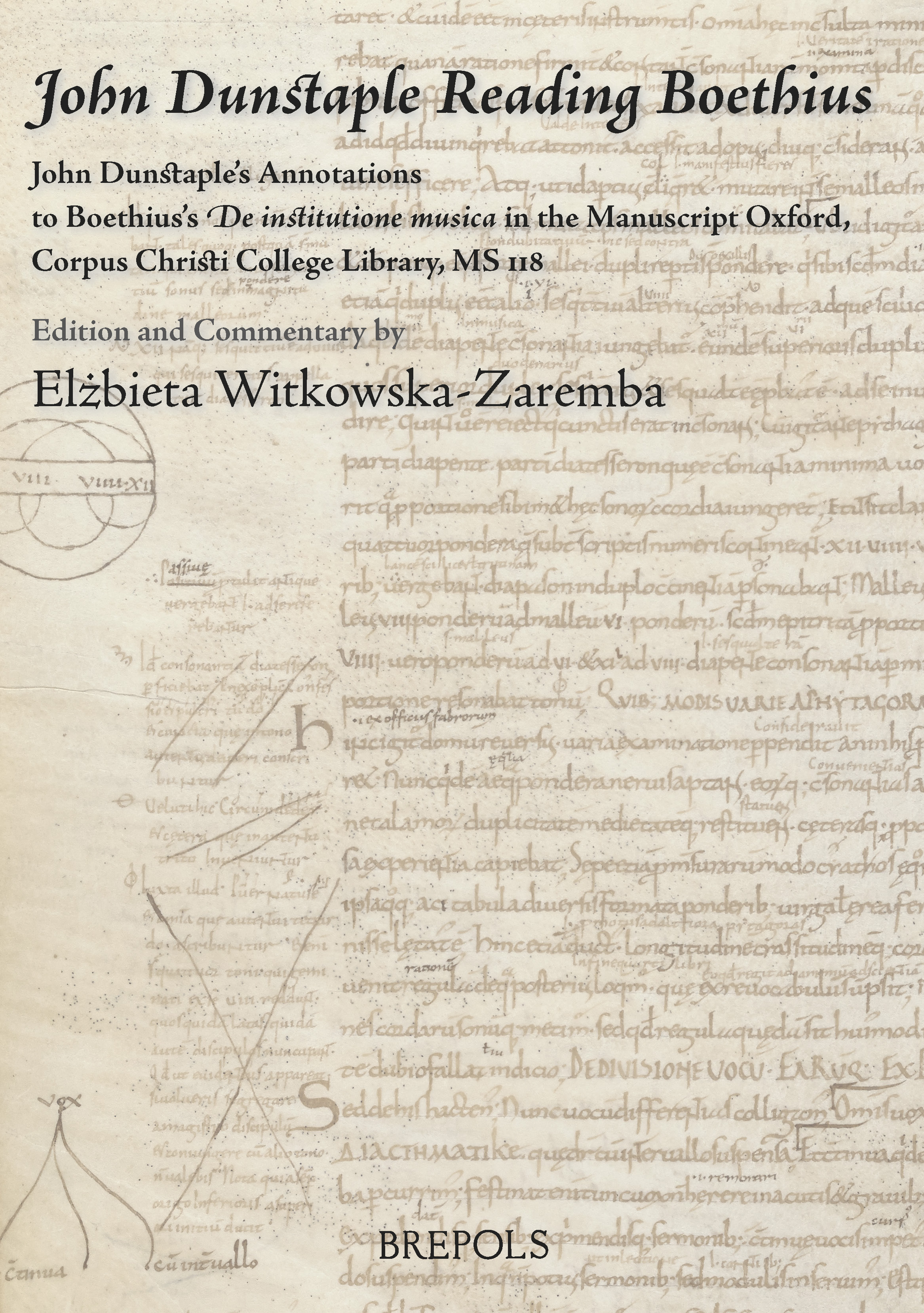 John Dunstaple Reading Boethius
John Dunstaple’s Annotations to Boethius’s “De institutione musica” in the Manuscript Oxford, Corpus Christi College Library, MS 118
 Linguistic and Cultural Dynamics in a Frontier Society
New Perspectives on Northeastern Bavaria and Western Bohemia in the Early Middle Ages
Volume 9
 Medieval Debates on Foreknowledge: Future Contingents, Prophecy, and Divination
Acts of the XXVII Annual Colloquium of the SIEPM, Trento 12-15 September 2023
Volume 31
 Medieval Yeghegis, Armenia
History, Archaeology, Society. Local Multiplicities and Global Connections of a Rural Centre on the Silk Road(s)


 Power and Women in Southeast and Central Europe in Late Medieval and Early Modern Period (1300-1600)
Volume 10


 The Anglo-Norman Bible’s Books of Kings, a Critical Edition
(BL Royal 1 C III, fols 234r-274v)
Volume 37


 The Embodied Court in the Premodern World
Understanding the Physicality, Performativity and Lifecycle of Bodies at Court in Europe and Beyond, 1400-1800
Volume 4


 The Middle English ‘Medicines for Horses’
Edited from the Manuscript formerly at Kensington Palace, HRH Duke of Gloucester MS s.n. (olim York House MS 45)
Volume 69
