
Occasionalism
From Metaphysics to Science
Edited by Matteo Favaretti Camposampiero Edited by Mariangela Priarolo Edited by Emanuela Scribano

Traditionally interpreted as an outcome of Cartesian dualism, in recent years occasionalism has undergone serious reassessment. Scholars have shifted their focus from the post-Cartesian debates on the mind-body problem to earlier discussions of body-body issues or even to the problem of causation as such. Occasionalism appears less and less a cheap solution to the mind-problem and more and more a family of theories on causation, which share the fundamental claim that all genuine causal powers belong to God. So why did the most spectacular emergence of occasionalism take place precisely in the post-Cartesian era? How did the scientific revolution and the need to fight back against the early modern resurgence of naturalism contribute to the success of occasionalist doctrines? This book provides a historical and theoretical map of occasionalism in all its various forms, with a special focus on its seventeenth-century supporters, adversaries, and polemical targets. These include not only canonical authors such as Cordemoy, La Forge, Malebranche, Spinoza, and Leibniz, but also less explored figures such as Clauberg, Clerselier, Fenelon, Fernel, Regis, and Regius. Furthermore, the book covers the earlier Arabic and Scholastic sources of occasionalism and its later developments in Berkeley, Wolff, and Hume.
Traditionally interpreted as an outcome of Cartesian dualism, in recent years occasionalism has undergone serious reassessment. Scholars have shifted their focus from the post-Cartesian debates on the mind-body problem to earlier discussions of body-body issues or even to the problem of causation as such. Occasionalism appears less and less a cheap solution to the mind-problem and more and more a family of theories on causation, which share the fundamental claim that all genuine causal powers belong to God. So why did the most spectacular emergence of occasionalism take place precisely in the post-Cartesian era? How did the scientific revolution and the need to fight back against the early modern resurgence of naturalism contribute to the success of occasionalist doctrines? This book provides a historical and theoretical map of occasionalism in all its various forms, with a special focus on its seventeenth-century supporters, adversaries, and polemical targets. These include not only canonical authors such as Cordemoy, La Forge, Malebranche, Spinoza, and Leibniz, but also less explored figures such as Clauberg, Clerselier, Fenelon, Fernel, Regis, and Regius. Furthermore, the book covers the earlier Arabic and Scholastic sources of occasionalism and its later developments in Berkeley, Wolff, and Hume.
- Edited by Matteo Favaretti Camposampiero
- Edited by Mariangela Priarolo
- Edited by Emanuela Scribano
Other Titles in this Series


 Physiology of the Soul
Mind, Body and Matter in the Galenic Tradition of Late Renaissance (1550-1630)
Volume 3
Similar Books


 Drunk the Potion, No Whit Charmed
The Doctrine of Pure and Perfect Souls from Iamblichus to Damascius

 Libertinage et philosophie à l’époque classique (XVIe-XVIIIe siècle)
Athéisme, Modernité et Sécularisation / Atheism, Modernity and Secularization
Volume 23

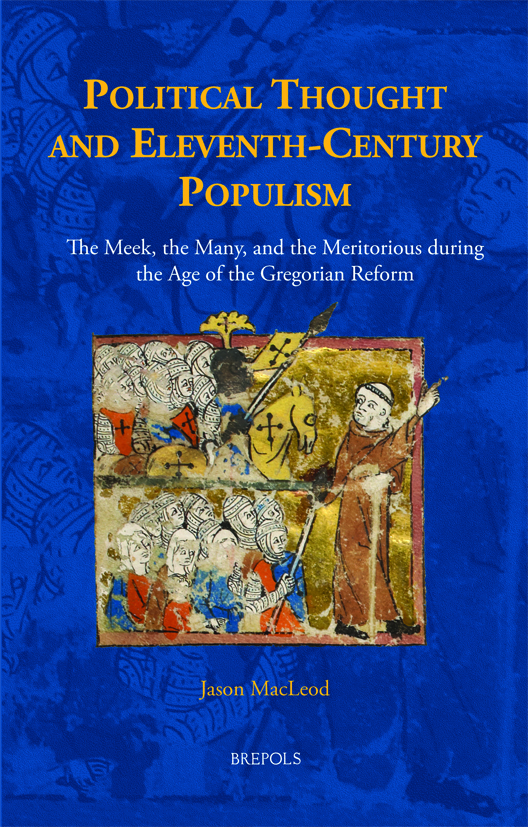 Political Thought and Eleventh-Century Populism
The Meek, the Many, and the Meritorious during the Age of the Gregorian Reform
Volume 38


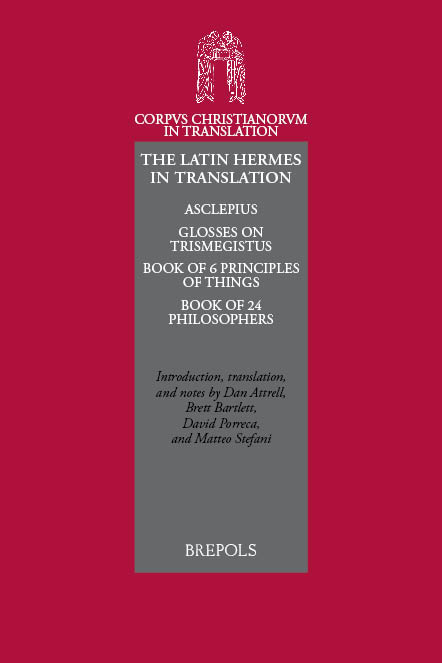 The Latin Hermes in Translation
Asclepius, Glosses on Trismegistus, Book of Six Principles of Things, Book of 24 Philosophers
Volume 50



 Éthique, politique, religions
Superstition (XVIIe - XXIe siècles). Sémantique, histoires et cultures


 Lehrreiche Literatur
Die didaktische Gestaltung von Plutarchs Quaestiones Graecae und Romanae und Gellius' Noctes Atticae


 Sitten zwischen Moralphilosophie und Politischer Okonomie am Ende des 18. Jahrhunderts
Mit einer zweisprachigen Edition von Ludwig Heinrich Jakobs Preisschrift Quelles sont les institutions les plus propres a fonder la morale d'un peuple

 Theologische Anthropologie in G. E. Lessings Frühwerk
Literarische Bilder von Gemeinschaft und Nonkonformität, Glück und Sünde

