
Physiology of the Soul
Mind, Body and Matter in the Galenic Tradition of Late Renaissance (1550-1630)
By (author) Fabrizio Bigotti

In spite of the commonly held opinion according to which Galen’s authority was gradually superseded by Vesalius and his followers, a close look at the influence that Galen’s psychological works exerted on physicians and philosophers of the early modern period reveals quite a different picture. Not only were Galenists often keen to embrace the new anatomical discoveries, eventually they even contributed to shaping a series of new analytical, practical and experimental tools that started an in-depth transformation of the traditional rationale, with far-reaching and unexpected consequences in domains such as theory of matter, philosophical anthropology and medical experimentation. Through the lens provided by mental disease and its connection to the soul, a new concept of the body and the human animal ultimately emerges: a concept that accompanies the development of early modern ideas on subjectivity and the self.
In spite of the commonly held opinion according to which Galen’s authority was gradually superseded by Vesalius and his followers, a close look at the influence that Galen’s psychological works exerted on physicians and philosophers of the early modern period reveals quite a different picture. Not only were Galenists often keen to embrace the new anatomical discoveries, eventually they even contributed to shaping a series of new analytical, practical and experimental tools that started an in-depth transformation of the traditional rationale, with far-reaching and unexpected consequences in domains such as theory of matter, philosophical anthropology and medical experimentation. Through the lens provided by mental disease and its connection to the soul, a new concept of the body and the human animal ultimately emerges: a concept that accompanies the development of early modern ideas on subjectivity and the self.
- By (author) Fabrizio Bigotti
Other Titles in this Series


Similar Books


 Balthasar Caymox of Nuremberg
Early Modern German Print Publishers: Popular Prints of the Seventeenth Century
 Beyond Sovereign Courts
Agents and Practices in Early Modern Spanish and Habsburg Diplomacy
Volume 3


 Circulation, Use, Impact
The Consumption of Architectural Books in the Early Modern Eastern Adriatic
Volume 1

 Councils, Conflicts, Correspondence
Urban Diplomacy in Reval (Tallinn) and Lübeck (c. 1470–1570)
Volume 67


 Drunk the Potion, No Whit Charmed
The Doctrine of Pure and Perfect Souls from Iamblichus to Damascius


 Innovationes Lovanienses: Arts, Law and Theology at the University of Louvain (1425–1797)
Studium Lovaniense: Learning across Borders, 2
Volume 18
 Legal Visuality
Exegesis, Ambiguity, and Dissimulation of the Donation of Constantine in the Early Modern Period
 Libertinage et philosophie à l’époque classique (XVIe-XVIIIe siècle)
Athéisme, Modernité et Sécularisation / Atheism, Modernity and Secularization
Volume 23

 Naples as Laboratory / Laboratorium Neapel
Style Options, Artistic Rivalry and Self Fashioning in Neapolitan Baroque Painting / Plurale Stilbildung, Kunstlerkonkurrenz und Self Fashioning in der neapolitanischen Barockmalerei

 Political Thought and Eleventh-Century Populism
The Meek, the Many, and the Meritorious during the Age of the Gregorian Reform
Volume 38
 Power and Women in Southeast and Central Europe in Late Medieval and Early Modern Period (1300-1600)
Volume 10




 Staging the Spectacle of Majesty
Ceremonial, Courtly Space, and Collecting under the Spanish Habsburgs
Volume 9
 Students, Scholars and Their Books at the University of Louvain (1425-1797)
Studium Lovaniense: Learning across Borders, 1
Volume 17


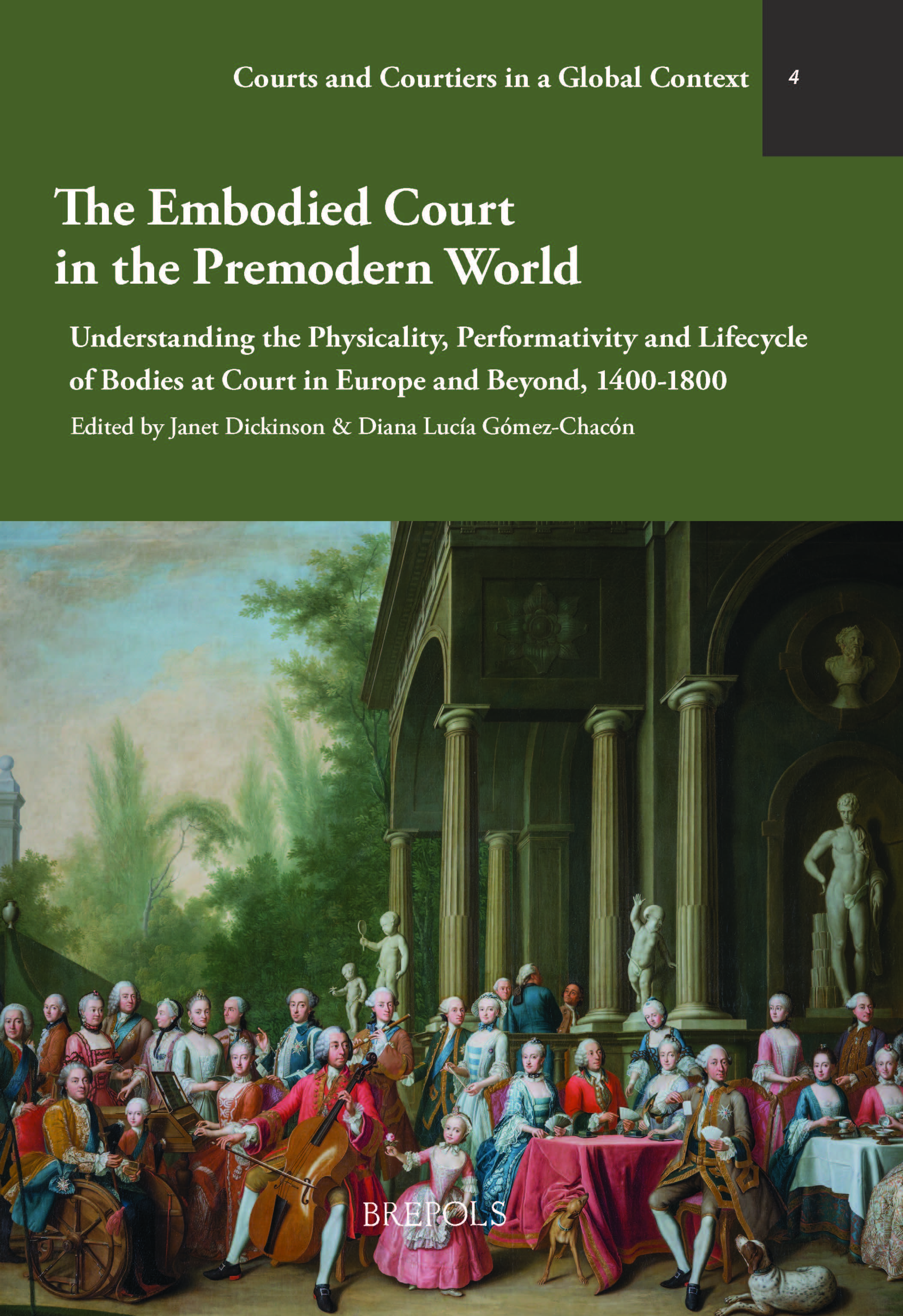 The Embodied Court in the Premodern World
Understanding the Physicality, Performativity and Lifecycle of Bodies at Court in Europe and Beyond, 1400-1800
Volume 4


 The Latin Hermes in Translation
Asclepius, Glosses on Trismegistus, Book of Six Principles of Things, Book of 24 Philosophers
Volume 50