
Negation in Arabic
A Study in Linguistic History
by Werner Diem

Hardback (Published)
(February 2014)
ISBN: 9783447101172
6.65 x 9.45 inches
Price: $82.00
On back order
The present monograph is devoted to what is probably the most interesting development in the history of negation in Arabic. This development, which began in Classical Arabic and continued in the post-classical period of the language, consists of the combination of the inherited preverbal particles of negation and a newly developed postverbal element. In Negation in Arabic it is shown how this postverbal negative element developed from the adverbial expression say’an, “a bit” – which in Classical Arabic was originally confined to certain verbs marked +[quantifiable] -, and how this emphasising negation was gradually generalised for any verbs and, subsequently, other word classes until it finally became the normal, unmarked negation. Further developments consisting in the weakening or the deletion of the first element, which is the old inherited negation, are also treated. Certain details of this development resemble the development of the circumfixal negations of the type ne ? pas in French, and therefore the history of negation in French is referred to where this is helpful in order to understand the specific Arabic development. Theoretical approaches concerning the development and function of negative polarity items (NPI) are also taken into consideration.
The present monograph is devoted to what is probably the most interesting development in the history of negation in Arabic. This development, which began in Classical Arabic and continued in the post-classical period of the language, consists of the combination of the inherited preverbal particles of negation and a newly developed postverbal element. In Negation in Arabic it is shown how this postverbal negative element developed from the adverbial expression say’an, “a bit” – which in Classical Arabic was originally confined to certain verbs marked +[quantifiable] -, and how this emphasising negation was gradually generalised for any verbs and, subsequently, other word classes until it finally became the normal, unmarked negation. Further developments consisting in the weakening or the deletion of the first element, which is the old inherited negation, are also treated. Certain details of this development resemble the development of the circumfixal negations of the type ne ? pas in French, and therefore the history of negation in French is referred to where this is helpful in order to understand the specific Arabic development. Theoretical approaches concerning the development and function of negative polarity items (NPI) are also taken into consideration.
- By (author) Werner Diem
Similar Books


 Cities through Time
Glimpses into Urbanity and Community in Mediaeval to Modern West Asia and Egypt
Volume 1
 Cuneiform Artefacts from Archaeological Contexts: New Research on Ancient Iraq
Proceedings of a Conference Held at the Bavarian Academy of Sciences and Humanities, July 4–5, 2024
Volume 2
 Des mots aux actes
Traduction épistémique et littéraire. Nouvelles tendances en histoire et didactique
Volume 15


 Global Gulf
Geo-Economic, Geo-Political, and Geo-Technological Transformation in Saudi Arabia, the United Arab Emirates, and Qatar


 Ismail Hakki Bursevi’s translation of and commentary on Fusus al-Hikam By Muhyiddin Ibn ‘Arabi
Volumes 1-4


 Monastic Manuscripts from the Eastern Mediterranean (Sinai, Jerusalem, Antioch)
Production, Use, and Contexts


 Punning in Odd or Elegant Constructions in Jeremiah
The Convergence of Linguistics, Rhetoric, and Textuality in the Hebrew Text of Jeremiah
 Qatar’s Societal Security
Towards the Inclusive National Concept of ‘Baladna’ Identity, Migration and External Threats Since 2017


 The Biblical Tale of Judah and Tamar in Fourteenth-Century Iran
A Judeo-Persian Versified Account by Shāhīn with Scholarly Edition, Annotated Translation and Persian Transliteration
Volume 94, 951
 The Discourse of Rites
Shaping and Reshaping the (Counter-)Priestly Rituals Conducted Outside the Tabernacle



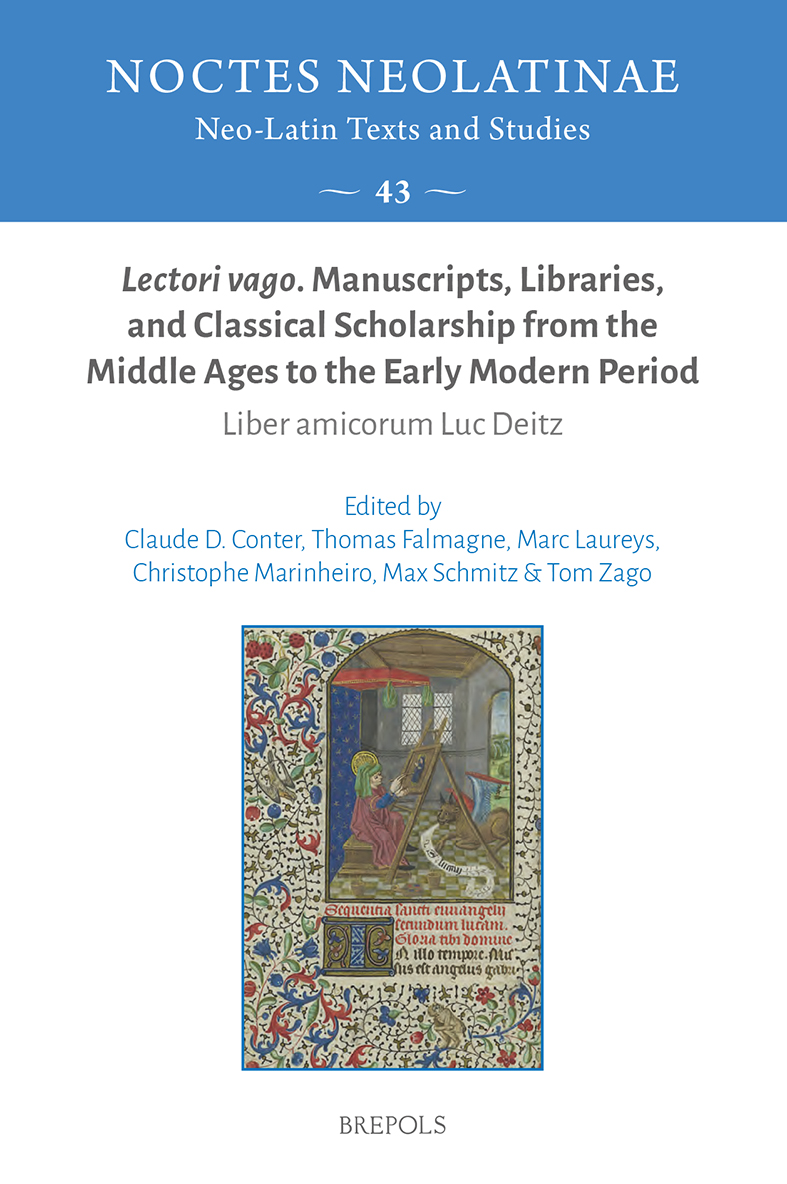 Lectori vago. Manuscripts, Libraries, and Classical Scholarship from the Middle Ages to the Early Modern Period
Liber amicorum Luc Deitz
Volume 43


 »Ein elend-schönes Land«
Gattung und Gedächtnis in Lea Goldbergs hebräischer Literatur. Aus dem Hebräischen von Rainer Wenzel

