
Les variations du mouvement
Abu al-Barakat, un physicien a Bagdad (VIe/XIIe siecle)
By (author) IFAO

Paperback (Published)
(December 2016)
ISBN: 9782724706802
Price: $35.00
On back order
Why does a stone thrown into the air keep going, even after it has left the thrower’s hand? Why does it slow down before speeding up again? Could it be thrown in a void without end? Is there a rest at the peak of its flight? Interpreting this movement has aroused impassioned debate since antiquity; the controversy was still ongoing at the time when the Jewish philosopher Ab? al-Barak?t (d. 1152), physician to the Caliph of Baghdad, provided a new approach to it. This book takes the reader through a labyrinth of texts dealing with notions of space, emptiness, time, infinity, and continuity; it sheds light on mediaeval Arabic contributions to physics. The author also explores the barriers that have hitherto obstructed complete understanding of the subject. The history of science, which sometimes fixates on the study of continuities finds it hard to get to grips with disruptive theories if they do not seem to follow the larger trajectory of history.
Why does a stone thrown into the air keep going, even after it has left the thrower’s hand? Why does it slow down before speeding up again? Could it be thrown in a void without end? Is there a rest at the peak of its flight? Interpreting this movement has aroused impassioned debate since antiquity; the controversy was still ongoing at the time when the Jewish philosopher Ab? al-Barak?t (d. 1152), physician to the Caliph of Baghdad, provided a new approach to it. This book takes the reader through a labyrinth of texts dealing with notions of space, emptiness, time, infinity, and continuity; it sheds light on mediaeval Arabic contributions to physics. The author also explores the barriers that have hitherto obstructed complete understanding of the subject. The history of science, which sometimes fixates on the study of continuities finds it hard to get to grips with disruptive theories if they do not seem to follow the larger trajectory of history.
- By (author) IFAO
Other Titles in this Series


 Écrire, initier et transmettre
Identité locale et tradition confrérique dans la Ḥāfiẓiyya Ḫalwatiyya, une confrérie soufie de Moyenne-Égypte (XIXe et XXe siècles)
Volume 45


Similar Books


 Cities through Time
Glimpses into Urbanity and Community in Mediaeval to Modern West Asia and Egypt
Volume 1
 Cuneiform Artefacts from Archaeological Contexts: New Research on Ancient Iraq
Proceedings of a Conference Held at the Bavarian Academy of Sciences and Humanities, July 4–5, 2024
Volume 2

 Drunk the Potion, No Whit Charmed
The Doctrine of Pure and Perfect Souls from Iamblichus to Damascius

 Global Gulf
Geo-Economic, Geo-Political, and Geo-Technological Transformation in Saudi Arabia, the United Arab Emirates, and Qatar
 Ismail Hakki Bursevi’s translation of and commentary on Fusus al-Hikam By Muhyiddin Ibn ‘Arabi
Volumes 1-4
 Libertinage et philosophie à l’époque classique (XVIe-XVIIIe siècle)
Athéisme, Modernité et Sécularisation / Atheism, Modernity and Secularization
Volume 23
 Monastic Manuscripts from the Eastern Mediterranean (Sinai, Jerusalem, Antioch)
Production, Use, and Contexts


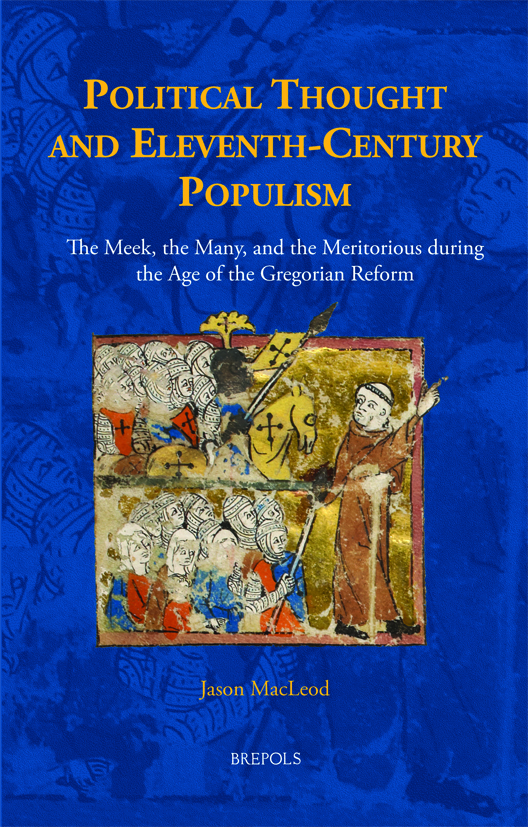 Political Thought and Eleventh-Century Populism
The Meek, the Many, and the Meritorious during the Age of the Gregorian Reform
Volume 38
 Qatar’s Societal Security
Towards the Inclusive National Concept of ‘Baladna’ Identity, Migration and External Threats Since 2017


 The Biblical Tale of Judah and Tamar in Fourteenth-Century Iran
A Judeo-Persian Versified Account by Shāhīn with Scholarly Edition, Annotated Translation and Persian Transliteration
Volume 94, 951
 The Discourse of Rites
Shaping and Reshaping the (Counter-)Priestly Rituals Conducted Outside the Tabernacle

 The Latin Hermes in Translation
Asclepius, Glosses on Trismegistus, Book of Six Principles of Things, Book of 24 Philosophers
Volume 50





 »Ein elend-schönes Land«
Gattung und Gedächtnis in Lea Goldbergs hebräischer Literatur. Aus dem Hebräischen von Rainer Wenzel


 Éthique, politique, religions
Superstition (XVIIe - XXIe siècles). Sémantique, histoires et cultures


