
Le culte des pierres à Emar à l’époque hittite
By (author) Patrick M. Michel
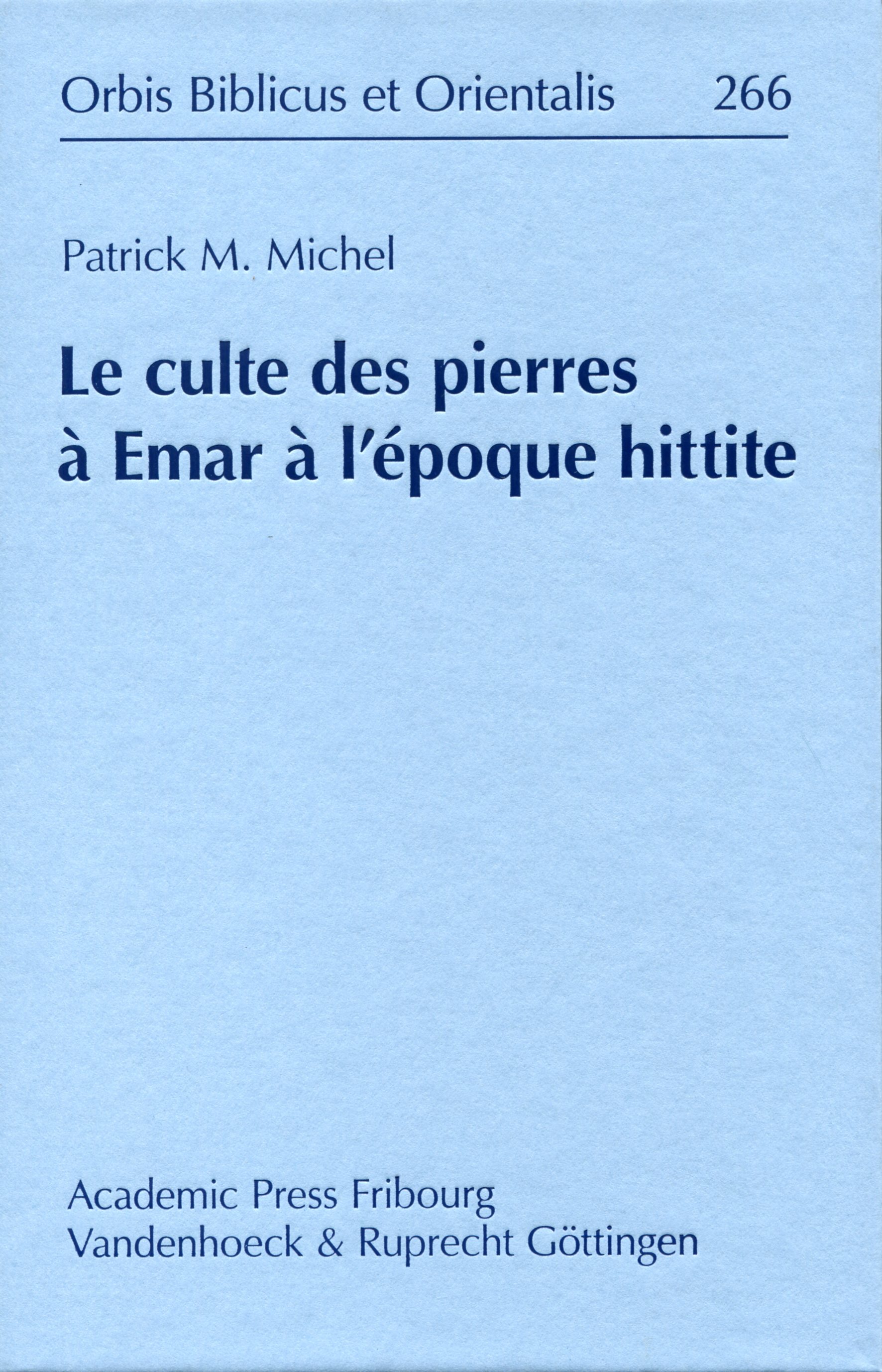
Hardback (Out of print)
(June 2014)
ISBN: 9783525543917
6.34 x 9.33 inches
Price: $113.00
In stock
The Hittite conquest of Aštata had repercussions also on local religious life.
The purpose of this book is to shed new light on the aniconic cults of the ancient Near East, where previously standing stone cults of Semitic and Anatolian populations were invariably studied separately. The study offers a synthetic view of all the information currently available and then proceeds to a renewed interpretation of cultic standing stones in Late Bronze Age Emar. At the end of the fourteenth century BCE, Aštata and Emar entered the Hittite sphere of influence. While previous scholars have discussed matters of Hittite administration in Emar, they have little studied religious aspects, considering that the Hittites were tolerant in these matters. However, a close analysis of various Emar rites related to cultic standing stones leads us to acknowledge that the Hittite conquest of Aštata had repercussions also on local religious life.The impact of the Hittite conquest on local religious life is also underscored by more indirect proof beyond the religious texts. A very important letter, Emar 271, describes how a local boy is to feed Hittite deities at Emar. One subsequently understands that all the deities are to be worshipped in a Hittite way, not so unusual as it were since the Hittites considered Emar as part of their Empire. Administrative documents further depict the Hittites’ involvement in Hittite cults at Emar, and some cult inventories written in Akkadian show that some of the diviners’ activities were similar to those of the Bel Madgalti.
- By (author) Patrick M. Michel
Other Titles in this Series
 Bilder als Quellen – Images as Sources
Studies on ancient Near Eastern artefacts and the Bible inspired by the work of Othmar Keel
 Prééminence de YHWH ou autonomie du prophète
Etude comparative et critique des confessions de Jèrèmie dans le Texte hèbreu Massorétique et la "Septante"
 Le Décalogue et l’histoire du texte
Etudes des formes textuelles du Décalogue et leurs implications dans l’histoire du texte de l’Ancien Testament
 Divine Names on the Spot
Towards a Dynamic Approach of Divine Denominations in Greek andSemitic Contexts
Volume 293
 Le jeune héros
Recherches sur la formation et la diffusion d’un thème littéraire au Proche-Orient ancien
 »Kultprostitution« im Alten Testament?
Die Qedeschen der Hebräischen Bibel und das Motiv der Hurerei

 Die Selbstbehauptung Israels in der Welt des Alten Orients
Religionsgeschichtlicher Vergleich anhand von Gen 15/22/28, dem Aufenthalt Israels in Ägypten, 2. Sam 7, 1.Kön 19 und Psalm 104

 Handel als Medium von Kulturkontakt
Akten des Interdisziplinären altertumswissenschaftlichen Kolloquiums (Basel, 30.–31. Oktober 2009)

 Oral et écrit dans l’Antiquité orientale: les processus de rédaction et d’édition
Actes du colloque organisé par le Collège de France, Paris, les 26 et 27 mai 2016
Volume 291


 Gottes Zorn in den Psalmen
Eine Studie zur Rede vom Zorn Gottes in den Psalmen im Kontext des Alten Testaments

 Älteste Textgeschichte der Königsbücher
Die hebräische Vorlage der ursprünglichen Septuaginta als älteste Textform der Königsbücher
 All the Wisdom of the East
Studies in Near Eastern Archaeology and History in Honor of Eliezer D. Oren
 La double transmission du texte biblique
Etudes d’histoire du texte offertes en hommage à Adrian Schenker

