
La France allemande et ses journaux (1940-1944)
by Pierre-Marie Dioudonnat

Paperback (Published)
(September 2025)
ISBN: 9782251457734
6.34 x 9.49 inches
Price: $57.00
In stock
On June 14, 1940, the Wehrmacht entered Paris. For four years, the capital became the capital of German France and the scene of rivalries between the powers that established themselves there in the name of the victor: military administration, propaganda services, police and SS, embassy. Germany’s plan was to exploit the defeated country to the best of its war aims and to colonize it, with anti-Semitic persecution asserting itself, over the months, as a major concern. Abundant before the war, the press was a power that the occupiers targeted with relish. The trust they built with sometimes surprising assistance, headed by a Nazi official, Gerhard Hibbelen, included more than twenty companies under French law: linked by cross-shareholdings and managed by a staff of trusted French men, they offered a wide range of publications, the tangle of which Pierre-Marie Dioudonnat meticulously unraveled. His detailed analysis of the world of the press and its characters with contrasting destinies opens the discussion to the overall history of the 20th century in France. It shows that the period of the Occupation is not a parenthesis in the history of France but is part of its continuum. It allows us to paint a colorful picture of the interwar period, where Pierre Laval already positioned himself as the man of all possibilities, and which experienced a bustling press where the Franco-American millionaire Raymond Patenotre played a unique role with mysterious stakes, where a society changed profoundly through the modernization of technologies, the transformation of lifestyles, the movement of ideas and their confrontation. Reinserting the history of the dark years into the long term, Pierre-Marie Dioudonnat reminds us that, in occupied France, the autonomy of the indigenous powers was shrinking like shagreen leather: it was the occupier who set the rules, even if the supreme authority he held was fragmented between competing decision-making centers.
- By (author) Pierre-Marie Dioudonnat
Similar Books



 Dis/United States of Vulnerability
Literary and Cultural Transgressions in U.S. Poetry Since the 1960s
Volume 330


 European Drama and Performance Studies
Dramatisations politiques. Théâtre, politique et idéologie au XIXe siècle (1806-1914)
Volume 27


 Lobbying for Equality
Jacques Godard and the Struggle for Jewish Equality during the French Revolution

 Modernization, Crises, Cultural Revolutions
Yugoslavia’s 1960s and 1970s through the amateur film lens



 Visual Memory and Oblivion
Monuments and Conflicts in Urban Spaces in Central and Eastern Europe from the Nineteenth Century to the Present Day



 “Tod durch Erschießen”
Generaloberst Nikolaus von Falkenhorst. Wehrmachtsbefehlshaber in Norwegen 1940–1945. Erinnerungen – Verhörprotokolle – Urteilssprüche
Volume 63
 “Zum Siege unserer menschenfreundlichen Prinzipien”
Ungarische Freimaurernetzwerke im „Orient“ 1886-1920


 À la recherche des normes de traduction
Textes spécialisés dans le monde hispanophone et francophone (1450–1850)


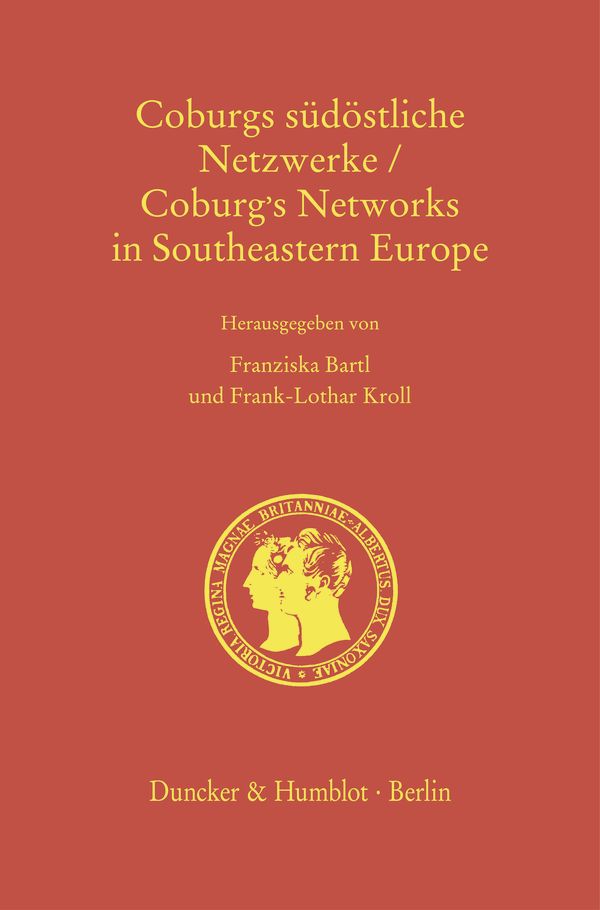 Coburgs südöstliche Netzwerke – Coburg’s Networks in Southeastern Europe
Bulgarien, Rumänien und Ostmitteleuropa im 19. und 20. Jahrhundert. Hrsg. von Franziska Bartl und Frank-Lothar Kroll mit einem Grußwort Seiner Majestät des Königs der Bulgaren Simeon II.
Volume 39


