
Key Categories in the Study of Religion
Contexts and Critiques
edited by Rebekka King
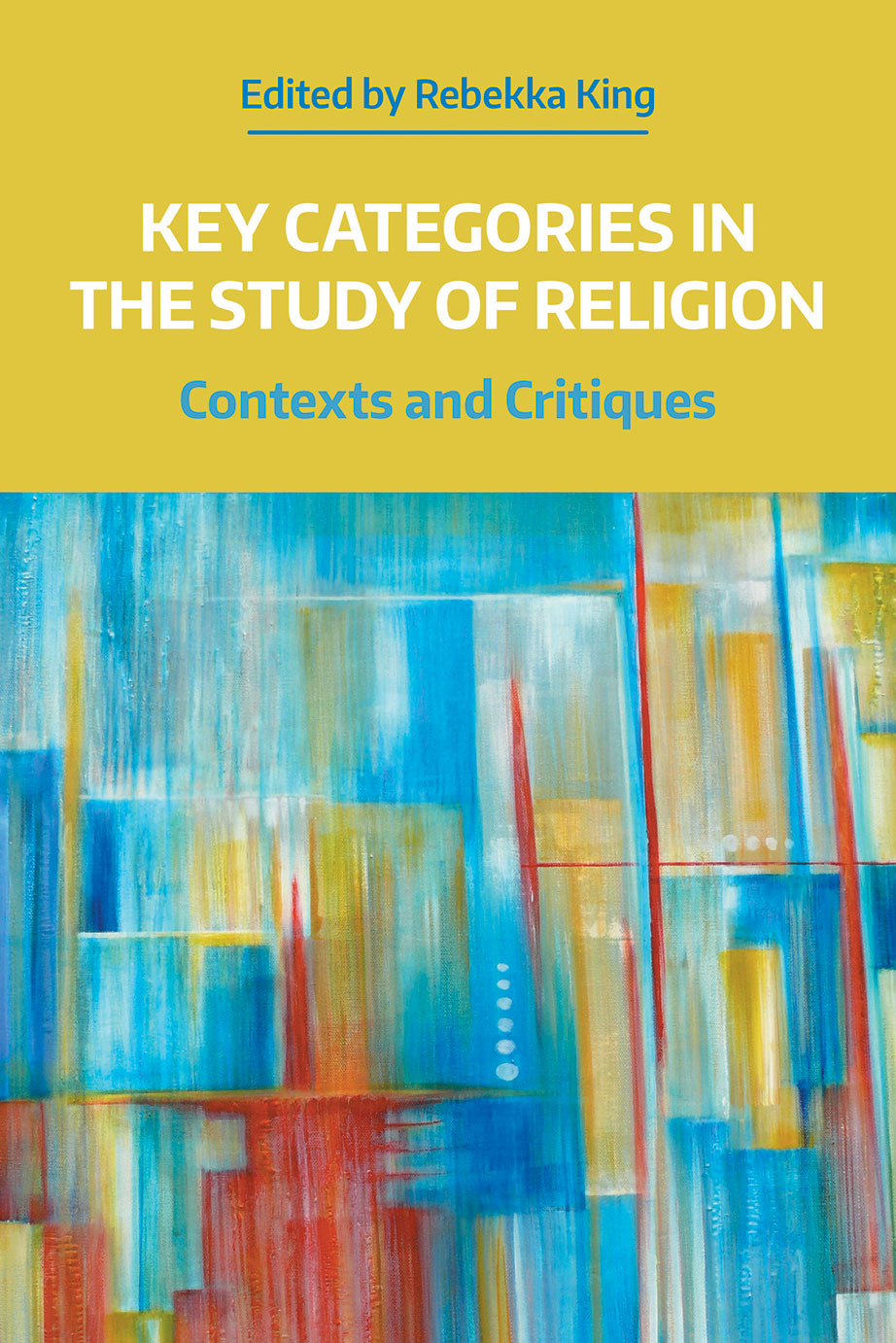
Key Categories in the Study of Religion builds upon the groundwork laid by previous NAASR Working Papers titles in order to bring us full circle to the symbiotic relationship between context and critique. This volume assembles diverse sets of data to consider pertinent categories in which critique occurs. By looking at intentionally disparate case studies, the volume centers on four key contextual categories which stand at the heart of the academic study of religion: Citizenship and Politics, Class and Economy, Gender and Sexuality, and Race and Ethnicity.
Key Categories in the Study of Religion builds upon the groundwork laid by previous NAASR Working Papers titles in order to bring us full circle to the symbiotic relationship between context and critique. This volume assembles diverse sets of data to consider pertinent categories in which critique occurs. By looking at intentionally disparate case studies, the volume centers on four key contextual categories which stand at the heart of the academic study of religion: Citizenship and Politics, Class and Economy, Gender and Sexuality, and Race and Ethnicity. The contributors to this volume explore questions concerning how scholars construct such categories and/or critique scholars who do? Who decides how to approach the critical study of these topics? What impact does the context of a scholar’s research have on the means and method of a given critique? Using these enquiries as a starting point, Key Categories in the Study of Religion investigates the ways that method, theory, and data are mobilized via context as the primary impetus for critical analysis. Each section begins with an orienting essay that explores its category. These introductory chapters include: i) an analysis of the construction of categories in academic literature; ii) an argument either advocating or critiquing scholarship carried out in that vein; and iii) an exploration of its implications for the study of religion. Each chapter is followed by four responses authored by scholars intentionally selected to highlight diverse contexts: subjects, fields, and methods. They extend the orienting essay’s conclusions by offering novel analysis vis-a-vis their own scholarly expertise and subject matter. These chapters underscore instances of both congruence and difference to further refine our understanding of possible forms of critique relevant to each category.
- Edited by Rebekka King
Other Titles in this Series


Similar Books

 A Companion to Christianity and Sport in Europe and North America (19th-21st centuries)
Volume 1: Western and Eastern Europe
 A Connecting Polemic in the Medieval Mediterranean
The Correspondence of Leo III and ʿUmar II
Volume 6





 Ars Prophetica
Theology in the Poetry of Twentieth-Century Hebrew Poets Avraham Halfi, Shin Shalom, Amir Gilboa, and T. Carmi
 As Messianism Turns to Heresy
The Regenstein Chair Lectures On Lurianic Kabbalah and Shabbatai Tzevi at Hebrew Union College - Cincinnati


 Creating the Woman in Antiquity
Proceedings of the 16th Melammu Workshop, Innsbruck, 2–3 June 2022
Volume 13
 Cultic Kisses
Fruitful Encounters Between Deities and Humans. Festschrift for Angelika Berlejung on the Occasion of Her 65th Birthday
 De/colonizing Theologies
Glocal Histories, Contemporary Challenges, Theoretical Reflections
Volume 4
 Drunk the Potion, No Whit Charmed
The Doctrine of Pure and Perfect Souls from Iamblichus to Damascius






 Extracanonical Traditions and the Holy Land
Texts, Rituals, and Material Culture in Late Antique Palestine
 Fear, Fear of God, God-Fearers
Philological and Historical Perspectives on the World of Ancient Judaism and Christianity


 Gender and Iconography in Antiquity
Femininities, Masculinities, Ambiguities, and Beyond in the Ancient Levant, Near East, and Mediterranean