
Jewish Christians in Puritan England
by Aidan Cottrell-Boyce
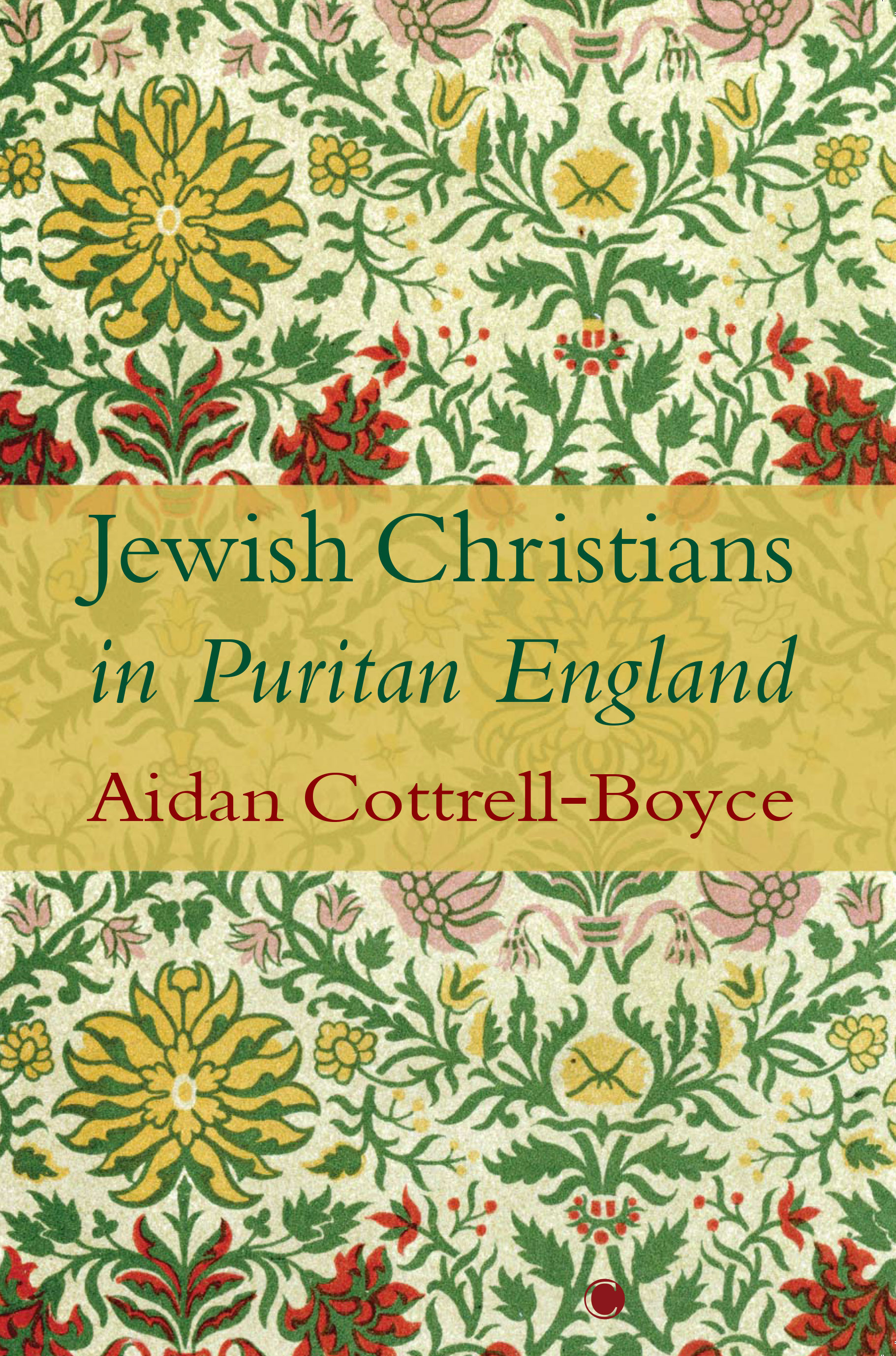
A new analysis of the phenomenon of Judaizing Christianity in seventeenth-century England
Among the proliferation of Protestant sects across England in the seventeenth century, a remarkable number began adopting demonstratively Jewish ritual practices. From circumcision to Sabbath-keeping and dietary laws, their actions led these movements were labelled by their contemporaries as Judaizers, with various motives proposed. Were these Judaizing steps an excrescence of over-exuberant biblicism? Were they a by-product of Protestant apocalyptic tendencies? Were they a response to the changing status of Jews in Europe? In Jewish Christians in Puritan England, Aidan Cottrell-Boyce shows that it was instead another aspect of Puritanism that led to this behaviour: the need to be recognised as a ‘singular’, positively distinctive, Godly minority. This quest for demonstrable uniqueness as a form of assurance united the Judaizing groups with other Protestant movements, while the depiction of Judaism in Christian rhetoric at the time made them a peculiarly ideal model upon which to base the marks of their salvation.
Aidan Cottrell-Boyce is a research fellow at St Mary’s University in London. He is the author of Israelism in Modern Britain (2020).
- By (author) Aidan Cottrell-Boyce
"An original and innovative contribution to our understanding of a neglected tendency within Puritanism. A compelling work that has implications that go well beyond its subject matter and opens up new ways of thinking about Christian interpretations and appropriations of Judaism." Justin Meggitt, Senior Lecturer in the Study of Religion, University of Cambridge, and Visiting Researcher, Stockholm University "Aidan Cottrell-Boyce takes his readers on a fascinating journey, exploring the significance of 'Judaizing' trends among English Puritans. Operating at the intersection of theological and sociological analysis, he presents an innovative and convincing account in which the adoption of 'Jewish' practices enabled individuals to take on a stance of distinctiveness and separation from the surrounding culture of the dominant majority. The book's argument has implications beyond its seventeenth-century focus, illuminating a broader historical pattern of scripturally shaped resistance-identity that can be traced through early Christianity, rabbinic Judaism, the rise of Protestantism, and the Radical Reformation." Daniel H. Weiss, Polonsky-Coexist Senior Lecturer in Jewish Studies, University of Cambridge
—
Similar Books
 ‘For You I Study, For You I Work, For You I Live, For You I Am Ready To Even Give My Life’
Essays in Honour of Francis (Frank) J Moloney, SDB

 A Connecting Polemic in the Medieval Mediterranean
The Correspondence of Leo III and ʿUmar II
Volume 6





 Ars Prophetica
Theology in the Poetry of Twentieth-Century Hebrew Poets Avraham Halfi, Shin Shalom, Amir Gilboa, and T. Carmi
 As Messianism Turns to Heresy
The Regenstein Chair Lectures On Lurianic Kabbalah and Shabbatai Tzevi at Hebrew Union College - Cincinnati



 Creating the Woman in Antiquity
Proceedings of the 16th Melammu Workshop, Innsbruck, 2–3 June 2022
Volume 13
 Cultic Kisses
Fruitful Encounters Between Deities and Humans. Festschrift for Angelika Berlejung on the Occasion of Her 65th Birthday
 De/colonizing Theologies
Glocal Histories, Contemporary Challenges, Theoretical Reflections
Volume 4
 Drunk the Potion, No Whit Charmed
The Doctrine of Pure and Perfect Souls from Iamblichus to Damascius




 Extracanonical Traditions and the Holy Land
Texts, Rituals, and Material Culture in Late Antique Palestine
 Fear, Fear of God, God-Fearers
Philological and Historical Perspectives on the World of Ancient Judaism and Christianity


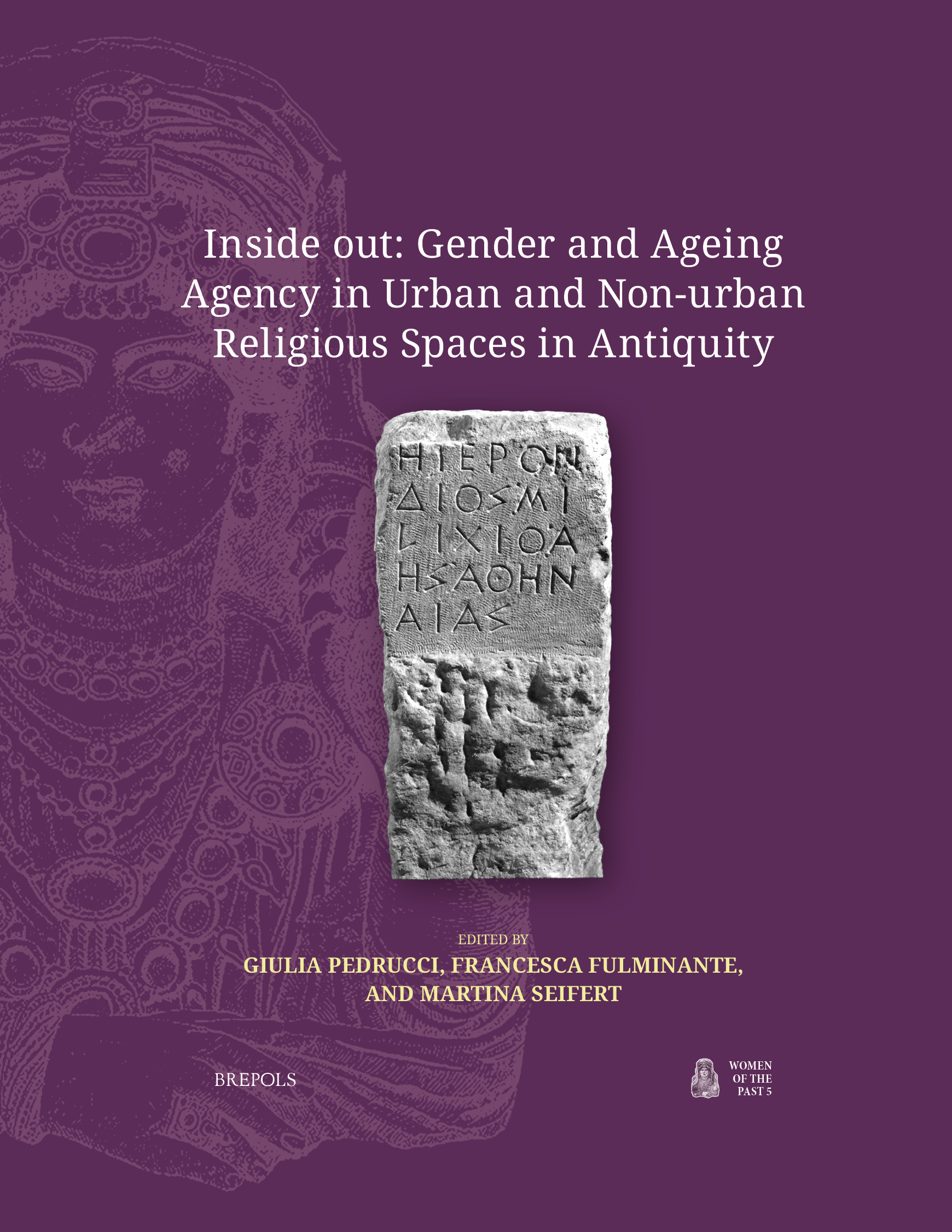
 Gender and Iconography in Antiquity
Femininities, Masculinities, Ambiguities, and Beyond in the Ancient Levant, Near East, and Mediterranean


 Hoghe minne es deen vor dander
Essays on the Christian Mystical Tradition in Honour of Rob Faesen SJ
Volume 122

 International Comparison and Transfer in Religious Education
The Projects “RE at Schools in Europe” and “International Knowledge Transfer” in Dialogue
 Isaiah in the Fourth Gospel
Use of the Citations of Isaiah in John’s Gospel in Comparison to the Synoptics and Other Places in the New Testament