
Indogermanische Grammatik / Band IV
Wortbildungslehre (Derivationsmorphologie) / Teil 1: Komposition / Fasc. 3: [Lieferung 3]
by Thomas Lindner

Paperback (Out of print)
(September 2013)
ISBN: 9783825362577
5.91 x 9.06 inches
Price: $29.00
On back order
The “Indogermanische Grammatik” (Indo-Germanic grammar), founded in the late 1960s by linguist and Indo-Germanic scholar Jerzy Kurylowicz and further developed by Manfred Mayrhofer and Alfred Bammesberger, is a monumental project meant to present and set out the results of recent, and more importantly, still current Indo-Germanic research based on grammatical categories (phonology, morphology, word formation, syntax) in the form of a handbook. The sub-volume “Komposition” (composition of words), published in individual fascicles since March 2011, covers the basics of Indo-Germanic composition, the significance of composition in the context of word formation and aspects related to definition as well as terminology, with a key issue being the morphology and semantics of the composition’s individual parts. German text.
English summary: The “Indogermanische Grammatik” (Indo-Germanic grammar), founded in the late 1960s by linguist and Indo-Germanic scholar Jerzy Kurylowicz and further developed by Manfred Mayrhofer and Alfred Bammesberger, is a monumental project meant to present and set out the results of recent, and more importantly, still current Indo-Germanic research based on grammatical categories (phonology, morphology, word formation, syntax) in the form of a handbook. The sub-volume “Komposition” (composition of words), published in individual fascicles since March 2011, covers the basics of Indo-Germanic composition, the significance of composition in the context of word formation and aspects related to definition as well as terminology, with a key issue being the morphology and semantics of the composition’s individual parts. German description: Die ‘Indogermanische Grammatik’, die in den spaten 1960er-Jahren vom Sprachwissenschaftler und Indogermanisten Jerzy Kurylowicz begrundet und sodann von Manfred Mayrhofer und Alfred Bammesberger weitergefuhrt wurde, ist ein monumentales Unternehmen, das die Forschungsergebnisse der jungeren und vorrangig derzeit aktuellen Indogermanistik nach den grammatischen Ebenen (Lautlehre, Formenlehre, Wortbildung, Syntax) handbuchartig darlegen und fixieren soll. Der Teilband ‘Komposition’ (Wortzusammensetzung), der in Einzellieferungen seit Marz 2011 erscheint, behandelt die Grundlagen der indogermanischen Komposition, den Stellenwert der Zusammensetzungen innerhalb der Wortbildungslehre und definitorische sowie terminologische Aspekte; ein wesentlicher Punkt ist dabei die Morphologie und Semantik der Kompositionsglieder. Mit der Perspektive eines Referenzwerks spielen dabei die moglichst luckenlose Darstellung des relevanten Materials aus den verschiedenen indogermanischen Sprachen, die forschungsgeschichtlichen Zusammenhange sowie die Diskussion der diversen wissenschaftlichen Meinungen eine zentrale Rolle. Dazu kommt, dass auch die moderne linguistische Forschung im Sinne einer theoretisch-methodischen Scharfung mit einfliesst und den indogermanistischen Blickwinkel um allgemeine Erkenntnisse im neusprachlichen Bereich erweitert. Gerade die Analyse der Komposition in der deutschen Gegenwartssprache hat eine funktionelle Typologie herausgearbeitet, die eine beachtliche Tiefenscharfe aufweist und durchaus auch auf altsprachliche Gegebenheiten angewandt werden kann.
- By (author) Thomas Lindner
Other Titles in this Series


 Indogermanische Grammatik / Band IV
Wortbildungslehre (Derivationsmorphologie) / Teil 1: Komposition / Fasc. 2: [Lieferung 2]


 The Gathas of Zarathushtra and the Other Old Avestan Texts, Part I
Introduction - Text and Translation
 Die keltischen Sprachen und Literaturen
Bd. 1: Vergleichende Grammatik der keltischen Sprachen, Bd. 2: Die Einzelsprachen und ihre Literaturen


 Indogermanische Grammatik / Band IV
Wortbildungslehre (Derivationsmorphologie) / Teil 1: Komposition / Fasc. 4: [Lieferung 4]

 Indogermanische Grammatik / Band IV
Wortbildungslehre (Derivationsmorphologie) / Teil 1: Komposition / Fasc. 1: [Lieferung 1]


 Indogermanische Grammatik / Band IV
Wortbildungslehre (Derivationsmorphologie) / Teilband 2: Komposition im Aufriss
Similar Books


 Des mots aux actes
Traduction épistémique et littéraire. Nouvelles tendances en histoire et didactique
Volume 15


 Punning in Odd or Elegant Constructions in Jeremiah
The Convergence of Linguistics, Rhetoric, and Textuality in the Hebrew Text of Jeremiah


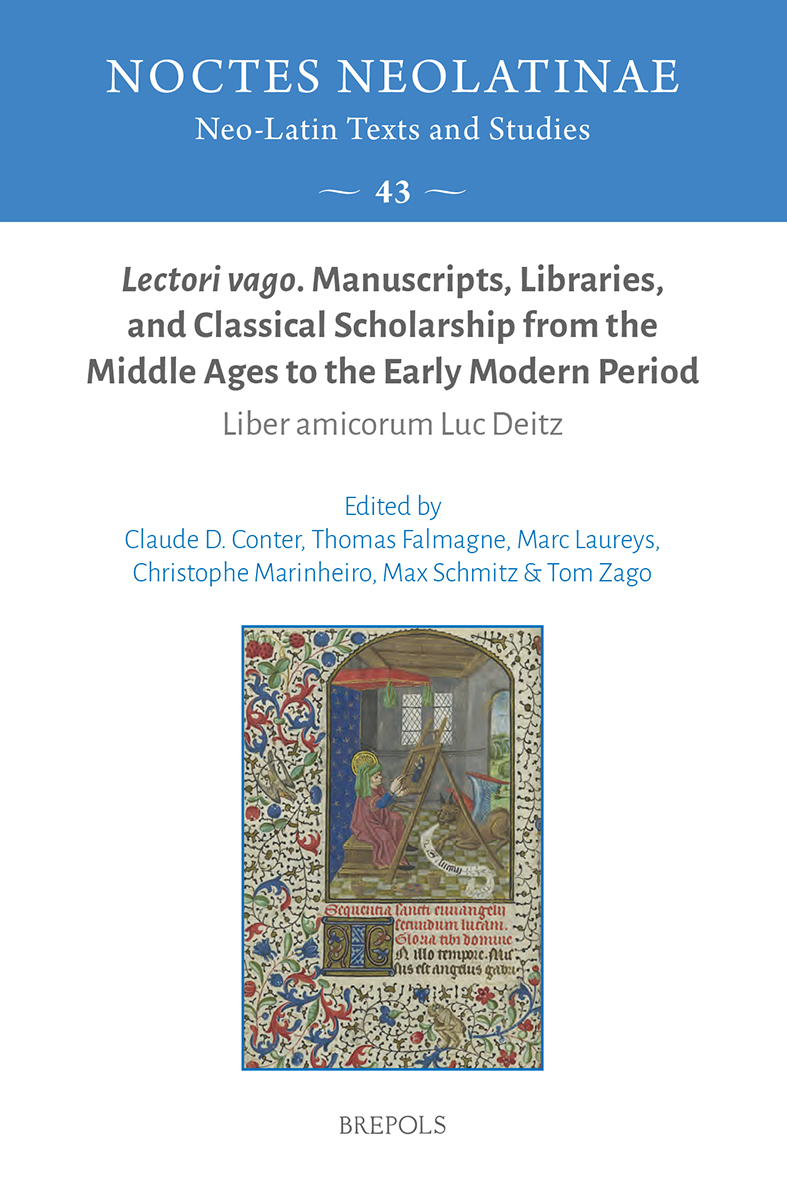 Lectori vago. Manuscripts, Libraries, and Classical Scholarship from the Middle Ages to the Early Modern Period
Liber amicorum Luc Deitz
Volume 43


 Ein Schatzhaus indischer Erzählkunst –– Die Erzählliteratur der Jainas
Band 2: Ein „Lesebuch“ originalsprachlicher Texte zur jainistischen „Universalgeschichte“ samt eines Jaina-Māhārāṣṭrī-Wörterbuchs zu allen Text- und Lesestücken.


