
Florentinus
Institutiones Libri XII
by Lauretta Maganzani

Hardback (Published)
(May 2022)
ISBN: 9788891326010
6.65 x 9.45 inches
Price: $195.00
On back order
English summary: Under the name of Florentinus, forty-one fragments taken from a twelve volume Institutiones work appear in Justinian’s Digesta. The only certainty about the dating of A. is the terminus post quem at 161 AD, the date of Antoninus Pius’s death, which can be obtained from the citation of a constitution by this Emperor mentioned in one of the fragments of the sixth book (D. 41.1.16, L. Flor. 9) referring to him with the title of ‘divus’. However, a series of clues obtainable from single fragments, as well as a number of ethical-philosophical contents of the manual close to those of Stoic philosophy and widespread among Severan jurists (e.g. the idea of natural equality among all men), tend towards an attribution to the Severan Age. The breadth of the work, the complexity of some of the issues dealt with, the originality of many of the solutions found, the technicality of the language, as well as the conceptual depth of the various arguments, render it probable that the Institutiones Florentini, although intended for use by students, were, at the same time, altogether much more in-depth than the Gaian Institutiones, and were developed for a more specialised audience. The work, therefore, must have been an extensive manual of technical-legal content which, although starting from the basics, reached a high level of specialisation. Italian description: Sotto il nome di Florentinus compaiono nei Digesta di Giustiniano 41 frammenti tratti da un’opera di Institutiones in 12 libri. Unico punto fermo circa la datazione dell’A. e il terminus post quem al 161 d.C., data di morte di Antonino Pio, ricavabile dalla citazione di una costituzione di questo imperatore ricordato in uno dei frammenti del VI libro (D. 41.1.16, L. Flor. 9) con l’appellativo di ‘divus’. Tuttavia, una serie di indizi ricavabili da singoli frammenti nonche alcuni contenuti etico-filosofici del manuale vicini a quelli della filosofia stoica e diffusi fra i giuristi severiani (ad es. l’idea dell’eguaglianza naturale fra tutti gli uomini) fanno propendere per l’eta severiana. L’ampiezza dell’opera, la complessita di alcune tematiche trattate, l’originalita di molte soluzioni, il tecnicismo del linguaggio, la profondita concettuale di svariati ragionamenti rendono probabile che le Institutiones Florentini, pur destinate ad un pubblico di studenti, fossero nell’insieme ben piu approfondite di quelle gaiane e siano state elaborate per un uditorio piu specializzato. Si doveva dunque trattare di un ampio manuale di contenuto tecnico-giuridico che, pur partendo dalle basi, giungeva a un elevato livello di approfondimento.
- By (author) Lauretta Maganzani
Other Titles in this Series


 Aemilius Macer
De officio praesidis. Ad legem XX hereditatium. De re militari. De appellationibus
Volume 7

Similar Books


 Contesting Labeled Identities
The Sociology of Gentilics in Biblical and Northwest Semitic Literature

 Drunk the Potion, No Whit Charmed
The Doctrine of Pure and Perfect Souls from Iamblichus to Damascius
 East Meets West: Justice, Law, and Politics
The 13th Kobe Lecture and the 2nd IVR Japan International Conference, Chiba, September 2023

 Epigraphic “Shades” from Hellenistic Thrace
Contextualizing Inscriptions in Greek from Thracian Tombs

 Epiphanies of the Divine in the Septuagint and the New Testament
Fifth International Symposium of the Corpus Judaeo-Hellenisticum Novi Testamenti (CJHNT), 14-17 May 2015, Nottingham


 False Friends in Comparative Law
Advantages and Risks of Legal Transplants in Civil Law – the Polish-German Perspective


 Gold, Silver and Glass: Power Networks, Cultural Identities, Technology Transfers and Agency across the Old World (7th Century BC – 1st Century AD)
Proceedings of a Conference Held at the British Museum, 16–18 June 2023
 Language and Power in the Roman Empire and Early India
Hierarchy, Ambiguity, and the Art of Reading the Signs in Cosmopolitan Cultures
 Late Antique villae in the Balkans (3rd–7th c. AD): Current Research Questions and Perspectives
HAEMUS Companion to the Late Antique Balkans 1
Volume 4
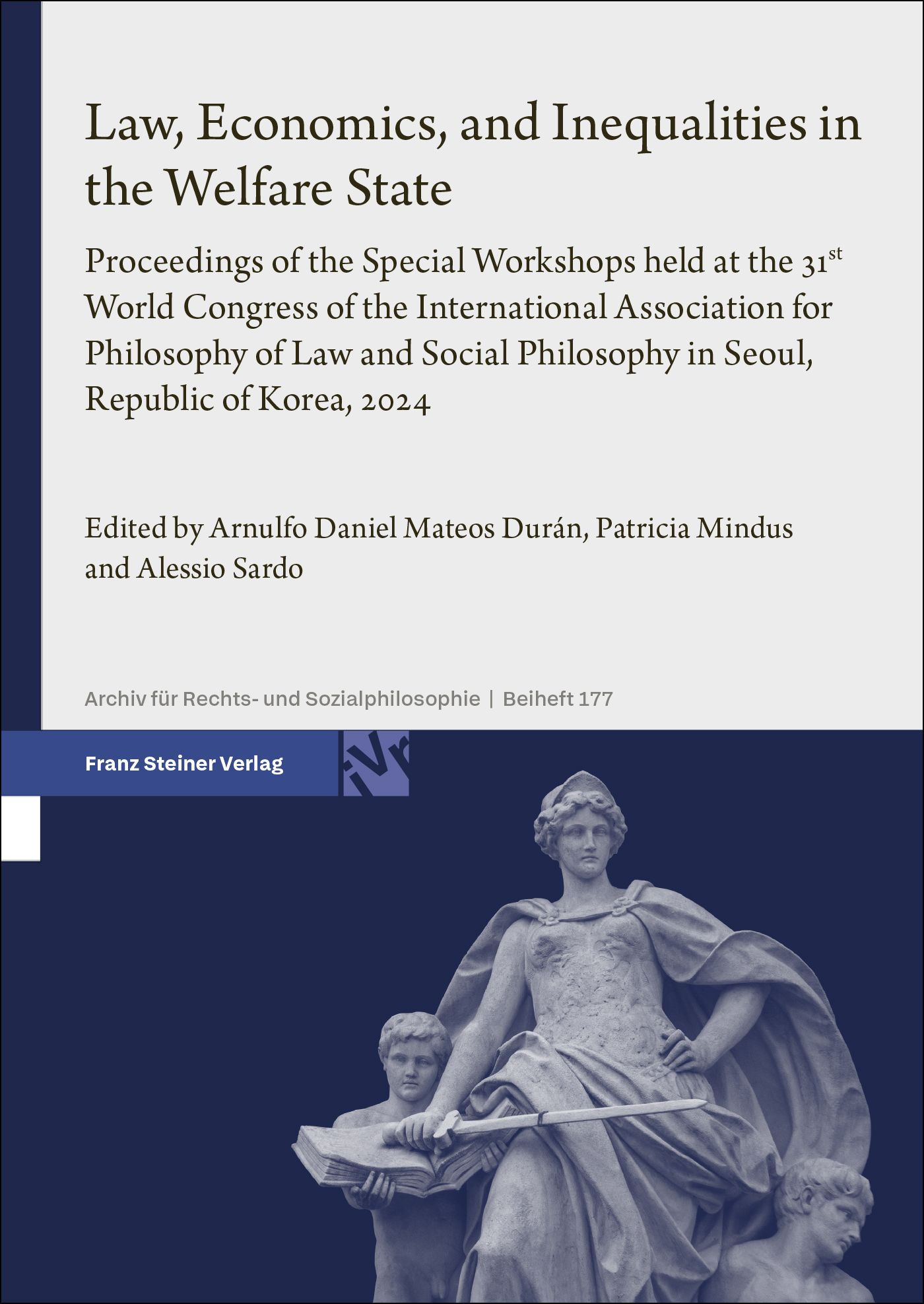 Law, Economics, and Inequalities in the Welfare State
Proceedings of the Special Workshops held at the 31st World Congress of the International Association for Philosophy of Law and Social Philosophy in Seoul, Republic of Korea, 2024
 Legal Pluralism and the Tajik Experience of Xinjiang
Between Custom and the Chinese State: An Ethnographic Perspective
 Liturgia semper reformanda
Adaptations and accommodations in the liturgy in light of canon 838 of the Code of Canon Law


 Nurturing the Elite
Representations of Drinking, Eating, and Religious Vessels in Palmyrene Funerary Iconography
Volume 13





 Roman Copies, Collecting, and Culture in the Bay of Naples and Beyond
Papers in Honor of Eugene J. Dwyer



