
Cnaeus Domitius Ulpianus
Institutiones. De censibus
by Jean-Louis Ferrary, Valerio Marotta and Aldo Schiavone

Hardback (Published)
(July 2021)
ISBN: 9788891321893
6.65 x 9.45 inches
Price: $223.00
On back order
This volume is the first in the SIR series dedicated to the work of Domitius Ulpianus, the most widely used jurist in the Digesta Iustiniani, which contains about 3000 fragments taken from his works. In addition to his studies, Ulpianus also held prestigious political positions, and was, for about a year, between 222 and 223 until his murder, perhaps the most powerful character of the empire and certainly the closest to the young emperor, Severus Alexander, of whom he was a kind of guardian. His death, in a conspiracy of praetorians, symbolically marks the end of the great Roman legal thought. This volume presents two of his works: the Institutiones and the De Censibus. The first identifies a crucial moment in the intellectual biography of its author and his political- cultural program: the construction of a model of legality in which the universal empire could be recognized, and which could act as an embankment against a despotic-military drift of which all dangers were glimpsed.
- By (author) Jean-Louis Ferrary
- By (author) Valerio Marotta
- By (author) Aldo Schiavone
Other Titles in this Series


 Aemilius Macer
De officio praesidis. Ad legem XX hereditatium. De re militari. De appellationibus
Volume 7


Similar Books


 Contesting Labeled Identities
The Sociology of Gentilics in Biblical and Northwest Semitic Literature

 Drunk the Potion, No Whit Charmed
The Doctrine of Pure and Perfect Souls from Iamblichus to Damascius
 East Meets West: Justice, Law, and Politics
The 13th Kobe Lecture and the 2nd IVR Japan International Conference, Chiba, September 2023

 Epigraphic “Shades” from Hellenistic Thrace
Contextualizing Inscriptions in Greek from Thracian Tombs

 Epiphanies of the Divine in the Septuagint and the New Testament
Fifth International Symposium of the Corpus Judaeo-Hellenisticum Novi Testamenti (CJHNT), 14-17 May 2015, Nottingham


 False Friends in Comparative Law
Advantages and Risks of Legal Transplants in Civil Law – the Polish-German Perspective


 Gold, Silver and Glass: Power Networks, Cultural Identities, Technology Transfers and Agency across the Old World (7th Century BC – 1st Century AD)
Proceedings of a Conference Held at the British Museum, 16–18 June 2023
 Language and Power in the Roman Empire and Early India
Hierarchy, Ambiguity, and the Art of Reading the Signs in Cosmopolitan Cultures
 Late Antique villae in the Balkans (3rd–7th c. AD): Current Research Questions and Perspectives
HAEMUS Companion to the Late Antique Balkans 1
Volume 4
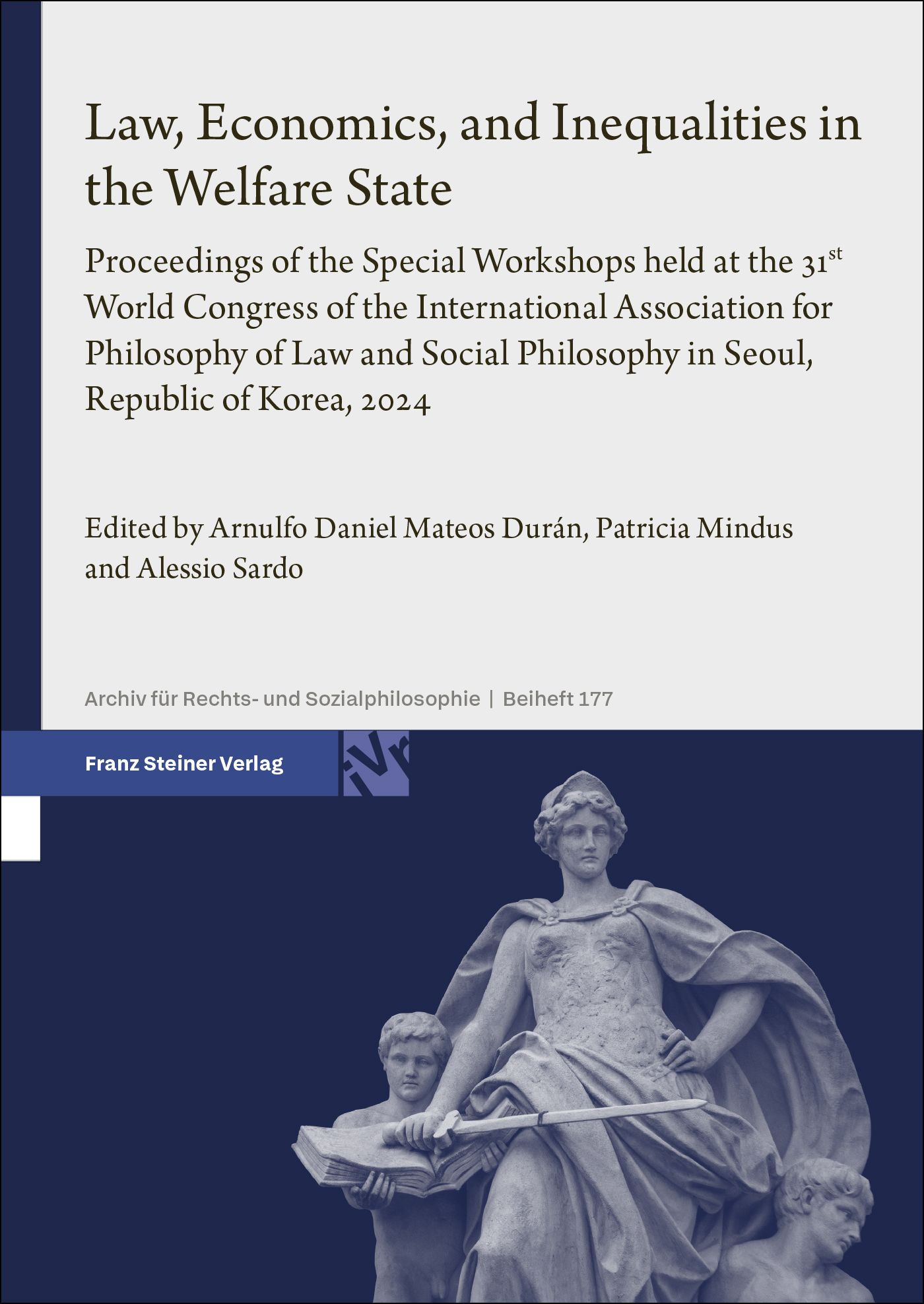 Law, Economics, and Inequalities in the Welfare State
Proceedings of the Special Workshops held at the 31st World Congress of the International Association for Philosophy of Law and Social Philosophy in Seoul, Republic of Korea, 2024
 Legal Pluralism and the Tajik Experience of Xinjiang
Between Custom and the Chinese State: An Ethnographic Perspective
 Liturgia semper reformanda
Adaptations and accommodations in the liturgy in light of canon 838 of the Code of Canon Law


 Nurturing the Elite
Representations of Drinking, Eating, and Religious Vessels in Palmyrene Funerary Iconography
Volume 13





 Roman Copies, Collecting, and Culture in the Bay of Naples and Beyond
Papers in Honor of Eugene J. Dwyer



