Film als Midrasch
Der Golem, Dybbuks und andere kabbalistische Elemente im populären Kino
By (author) Klaus S. Davidowicz

Hardback (Published)
(December 2016)
ISBN: 9783847106739
6.34 x 9.33 inches
Price: $69.00
In stock
The book explores the conscious usage of Jewish mystical themes and motifs in popular (as well as arthouse) cinema from the silent film era to the present. This historical, as well as geographic, arc spanning from Paul Wegener’s Golem (1920) to films such as David Goyer’s The Unborn (2009), Ang Lee’s Life of Pi (2012) or David Aronofsky’s Noah (2014), is held together by a tightly argued and detailed discussion of both the kabbalist elements themselves and their presence in film and television.Organized in four interrelated parts, the study focuses on mystical secrets of the Hebrew alphabet (where each letter is attributed a numerical value and each number has a hidden meaning), the idea of the Dybbuk as an exiled soul looking for a bodily home, the Lurianic concepts of Tzimtzum (contraction) and Tikkun olam (repair of the world) and, finally, the legend of the Golem, whose Prague origins have been reworked not only in numerous movies but also in popular US television shows including the X-Files and The Simpsons. Wie fanden kabbalistische Literatur und ihre Elemente ihren Weg auf die Leinwand? Wie wurden judische mystische Themen und Motive in Spielfilmen – von der Stummfilmzeit bis zur Gegenwart – weltweit verarbeitet? Diese Studie zeigt, dass Filme genauso eine Quelle zum Judentum sind wie ein mittelalterlicher Midrasch. Der Schwerpunkt dieser Untersuchung liegt auf dem amerikanischen Kino, von Paul Wegeners Golem-Filmen bis zu David Aronofskys Noah (2014). In den vorgestellten Filmen ist die judische Mystik keineswegs nur Beiwerk. Vielmehr stellen die Filme in ihrer Auseinandersetzung mit den kabbalistischen Texten auf intertextuelle Weise einen durch und durch modernen Kommentar zur judischen Kultur dar und haben das Bild judischer Religion in der Popular-Kultur entscheidend gepragt.
Prof. Dr. Klaus S. Davidowicz lehrt Judaistik an der Universitat Wien.
- By (author) Klaus S. Davidowicz
Other Titles in this Series
 Transformationen der Zedaka
Eine Erzählung von Wohlfahrt, Armenfürsorge und Sozialer Arbeit der Israelitischen Kultusgemeinde zwischen 1945 und 2012 in Wien


 Das Phantasma der Assimilation
Interpretationen des »Jüdischen« in der deutschen Phantastik 1890–1930


 Hat der jüdisch-christliche Dialog Zukunft?
Gegenwärtige Aspekte und zukünftige Perspektiven in Mitteleuropa

 Jung, weiblich, jüdisch – deutsch?
Autofiktionale Identitätskonstruktionen in der zeitgenössischen deutschsprachig-jüdischen Literatur

 Narratology, Hermeneutics, and Midrash
Jewish, Christian, and Muslim Narratives from the Late Antiquity through to Modern Times
 You who live in the shelter of the Most High (Ps. 91:1)
The Use of Psalms in Jewish and Christian Traditions
 “The Souls They Had Made …”: A Journey Through Jewish Becoming
Genesis 12:5 in Jewish Law and Theology
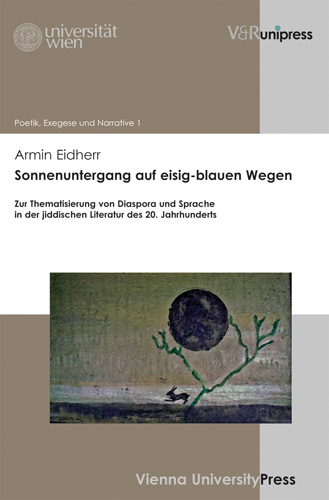 Sonnenuntergang auf eisig-blauen Wegen
Zur Thematisierung von Diaspora und Sprache in der jiddischen Literatur des 20. Jahrhunderts
 Briefe als Laboratorium der Literatur im deutsch-jüdischen Kontext
Schriftliche Dialoge, epistolare Konstellationen und poetologische Diskurse

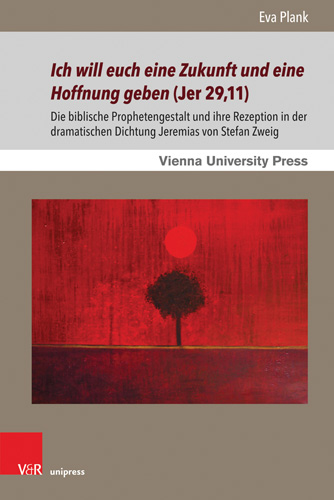 Ich will euch eine Zukunft und eine Hoffnung geben (Jer 29,11)
Die biblische Prophetengestalt und ihre Rezeption in der dramatischen Dichtung Jeremias von Stefan Zweig


 Das Märchen vom Märchen
Eine kultur- und literaturwissenschaftliche Untersuchung des deutschsprachigen jüdischen Volks- und Kindermärchens

 Generation und Strategie
Barbara Honigmann im literarischen Feld der deutschsprachigen Gegenwartsliteratur 1986–2015

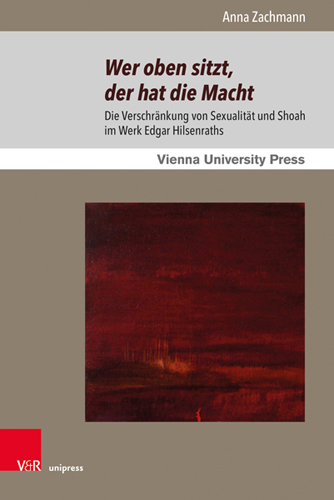 Wer oben sitzt, der hat die Macht
Die Verschränkung von Sexualität und Shoah im Werk Edgar Hilsenraths
Similar Books



 Ars Prophetica
Theology in the Poetry of Twentieth-Century Hebrew Poets Avraham Halfi, Shin Shalom, Amir Gilboa, and T. Carmi
 As Messianism Turns to Heresy
The Regenstein Chair Lectures On Lurianic Kabbalah and Shabbatai Tzevi at Hebrew Union College - Cincinnati





 Extracanonical Traditions and the Holy Land
Texts, Rituals, and Material Culture in Late Antique Palestine




 John Dunstaple Reading Boethius
John Dunstaple’s Annotations to Boethius’s “De institutione musica” in the Manuscript Oxford, Corpus Christi College Library, MS 118

 Lobbying for Equality
Jacques Godard and the Struggle for Jewish Equality during the French Revolution


 Music and Colonialism in Fascist Italy
Identity, Propaganda, and Ethnographic Representation
Volume 13