
Excavations at the Palatial Complex
Kerkenes Final Reports 2
by Geoffrey Summers, with contributions by Susanne Berndt, Ahmet Cinici, Yilmaz Selim Erdal, Evangelia Piskin, Noel Siver and Francoise Summers, introduction by Nicholas D. Cahill and summary translated into Turkish by Guzin Eren

The city on the Kerkenes Dağ in the high plateau of central Turkey was a new Iron Age capital, very probably Pteria. Founded in the later seventh century BC, the city was put to the torch in the mid-sixth century and then abandoned. Excavations at what we have identified as the Palatial Complex were conducted between 1999 and 2005. The stone glacis supporting the Fortified Structure at the eastern end of the complex was revealed in its entirety while the greater portion of the Monumental Entrance was uncovered. Portions of buildings within the complex were also excavated, notably one-half of the heavily burned Ashlar Building, one corner of the Audience Hall, and parts of other structures. This volume documents as fully as possible the results of those excavations with the exception of sculpture, some bearing Paleo-Phrygian inscription, already published (OIP 135). The location of the complex, its development from foundation to destruction, and its architecture are discussed and illustrated. Within the Monumental Entrance were extraordinary, unexpected, semi-iconic stone idols, and other embellishments that include stone blocks with bolsters, bases for large freestanding wooden columns, and stone plinths. Extensive use was made of iron in combination with timber-framed facades and large double-leafed doors. Objects of gold, silver, copper alloys, and iron attest to former splendor. Organization of the volume is roughly chronological, beginning with the Fortified Structure, and concluding with the Monumental Entrance. Presentation of material culture is organized with an emphasis on context. Specialist chapters report on alphabetic and nonalphabetic graffiti and masons’ marks, animal bones among which was found the jawbone of a dolphin, and a Byzantine-period burial. This volume provides further dramatic and surprising new evidence for the power, wealth, and sophistication of an eastward expansion of Phrygian culture exemplified by architecture, cultic imagery, Paleo-Phrygian inscriptions and graffiti, pottery, and artifacts. The brief existence of this extraordinary city, hardly more than one hundred years, together with the excellent stratigraphic context provided by the destruction level, offer an unparalleled window onto the first half of the sixth century BC on the Anatolian Plateau.
- By (author) Geoffrey Summers
Other Titles in this Series
 The Archaeology and Geography of Ancient Transcaucasian Societies, Volume I
The Foundations of Research and Regional Survey in the Tsaghkahovit Plain, Armenia
Volume 134


 Cuneiform Texts from the Ur III Period in the Oriental Institute, Volume 1
Drehem Administrative Documents from the Reign of Shulgi
Volume 115
 Medinet Habu IX
The Eighteenth Dynasty Temple, Part 1: The Inner Sanctuaries, with Translations of Texts, Commentary and Glossary
Volume 136
 Excavations in the Plain of Antioch. Volume II
The Structural Remains of the Later Phases: Chatal Hueyuek, Tell Al-Judaidah, and Tell Tayinat
Volume 95
 Theban Desert Road Survey in the Egyptian Western Desert, Volume 1
Gebel Tjauti Rock Inscriptions 1-45 and Wadi el-Hol Rock Inscriptions 1-45
Volume 119

 Reliefs and Inscriptions at Luxor Temple, Volume 2
The Facade, Portals, Upper Register Scenes, Columns, Marginalia, and Statuary in the Colonnade Hall
Volume 116


 Cuneiform Texts from the Ur III Period in the Oriental Institute, Volume 2
Drehem Administrative Documents from the Reign of Amar-Suena
Volume 121
 Early Megiddo on the East Slope (The ‘Megiddo Stages’)
A Report on the Early Occupation of the East Slope of Megiddo. Result of the Oriental Institute's Excavations, 1925-1933
Volume 139

 On the Margin of the Euphrates
Settlement and Land Use at Tell es-Sweyhat and in the Upper Tabqa Area, Syria
Volume 124

 Excavations at the prehistoric mound of Chogha Bonut, Khuzestan, Iran
Seasons 1976/77, 1977/78, and 1996
Volume 120
 Ancient Settlement Systems and Cultures in the Ram Hormuz Plain, Southwestern Iran
Excavations at Tall-e Geser and Regional Survey in the Ram Hormuz Area
Volume 140


 The Temple of Khonsu. Volume II
Scenes and Inscriptions in the Court and the First Hypostyle Hall
Volume 103

 Tell Hamoukar, Volume 1. Urbanism and Cultural Landscapes in Northeastern Syria
The Tell Hamoukar Survey, 1999-2001
Volume 137

Similar Books



 Caesar’s Visions and Impact on the Roman Empire
Revisiting the Archaeological and Historical Record of the 40s BC
Volume 2

 Connecting the Dots: Counting, Writing, and the Beginnings of Civilization
The Secret Lives of Clay Tokens: A Memoir


 Etruscan and Roman Hellenistic Anatomical ex votos
Reassessing Popular Religious Expressions in Central Italy
Volume 8

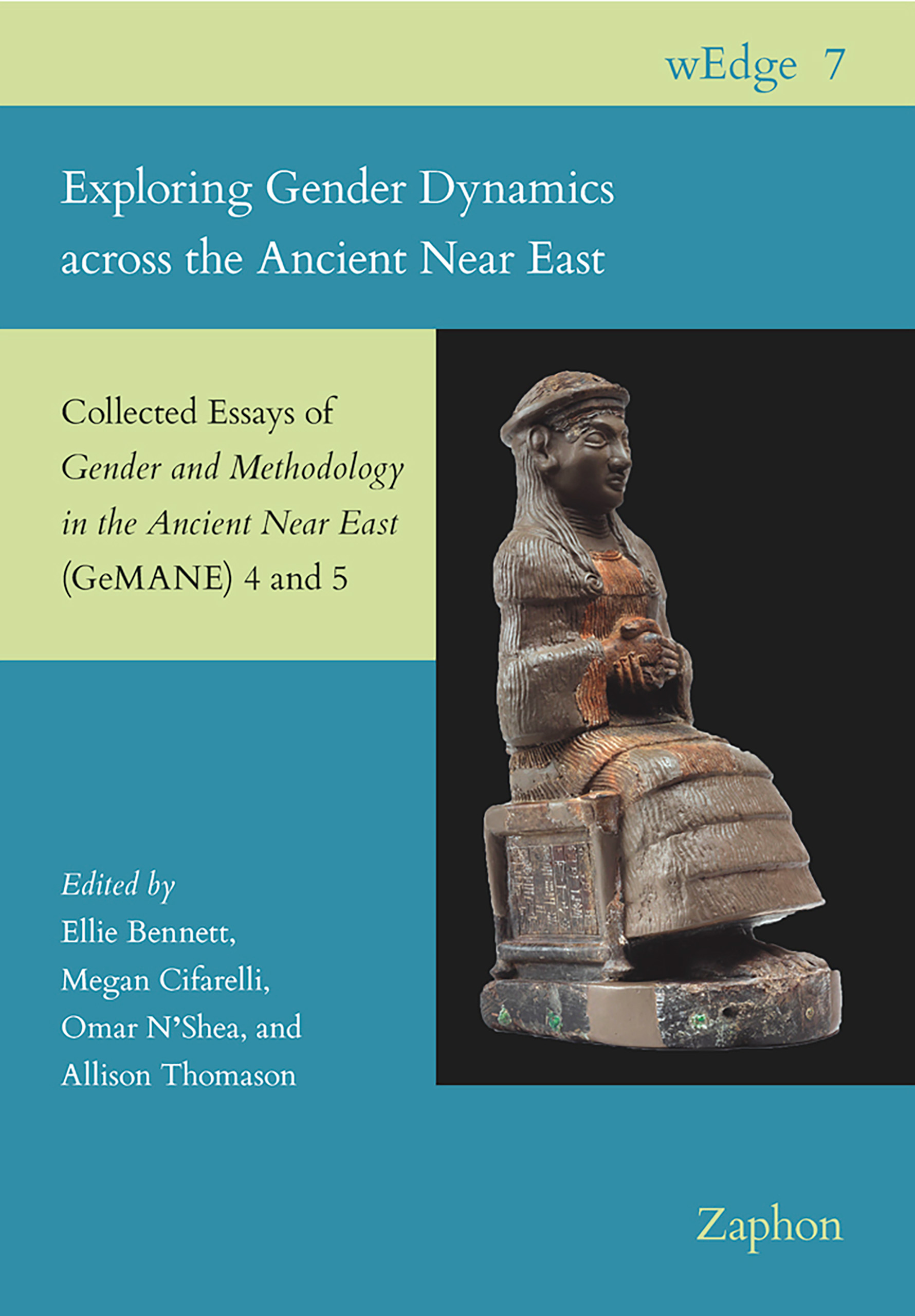 Exploring Gender Dynamics across the Ancient Near East
Collected Essays of Gender and Methodology in the Ancient Near East (GeMANE) 4 and 5
Volume 7


 Ḫattušaš utnē išḫameški
Hittite and Other Ancient Near Eastern Studies Presented to Piotr Taracha on the Occasion of His 65th Birthday


 Invisible Labour in Antiquity
Visualizing Obscure Work in the Ancient Mediterannean and West Asia
Volume 1
 Late Antique villae in the Balkans (3rd–7th c. AD): Current Research Questions and Perspectives
HAEMUS Companion to the Late Antique Balkans 1
Volume 4

 New Research on Old Collections in Southwest Asian Archaeology
Proceedings of the Workshop Held at the British Museum, London, 31 July – 2 August, 2023
 Old Aramaic Inscriptions and their Contexts
An Epigraphic, Archaeological, and Historical Synthesis
Volume 63


 Portraying the Individual in the Roman East
Local–Imperial Entanglements in Sculpture, Mosaics, and Paintings (First–Fourth Centuries AD)
Volume 18
 Pottery Traditions and Material Culture in Second Millennium BC Northern Mesopotamia
Contacts and New Horizons in the Land between the Tigris and the Zagros. Proceedings of a Workshop Held at the 12th ICAANE, University of Bologna, 7 April 2021
Volume 19
 Punning in Odd or Elegant Constructions in Jeremiah
The Convergence of Linguistics, Rhetoric, and Textuality in the Hebrew Text of Jeremiah

 Shame in the Worlds of the Hebrew Bible and Akkadian Texts
A Linguistic Study and Its Implications
Volume 33
 Small Worlds and Relational Agencies: Local Societies in Early Medieval Iberia
Pequeños mundos y Agencias relacionales: Sociedades locales altomedievales en la Península Ibérica
 Telling Contexts
Archaeological and Textual Studies in Honor of Elizabeth Bloch-Smith and Mark S. Smith
 The Body
Lived, Cultured, Adorned: Essays on Dress and the Body in the Bible and Ancient Near East in Honor of Nili S. Fox
 The Discourse of Rites
Shaping and Reshaping the (Counter-)Priestly Rituals Conducted Outside the Tabernacle
