
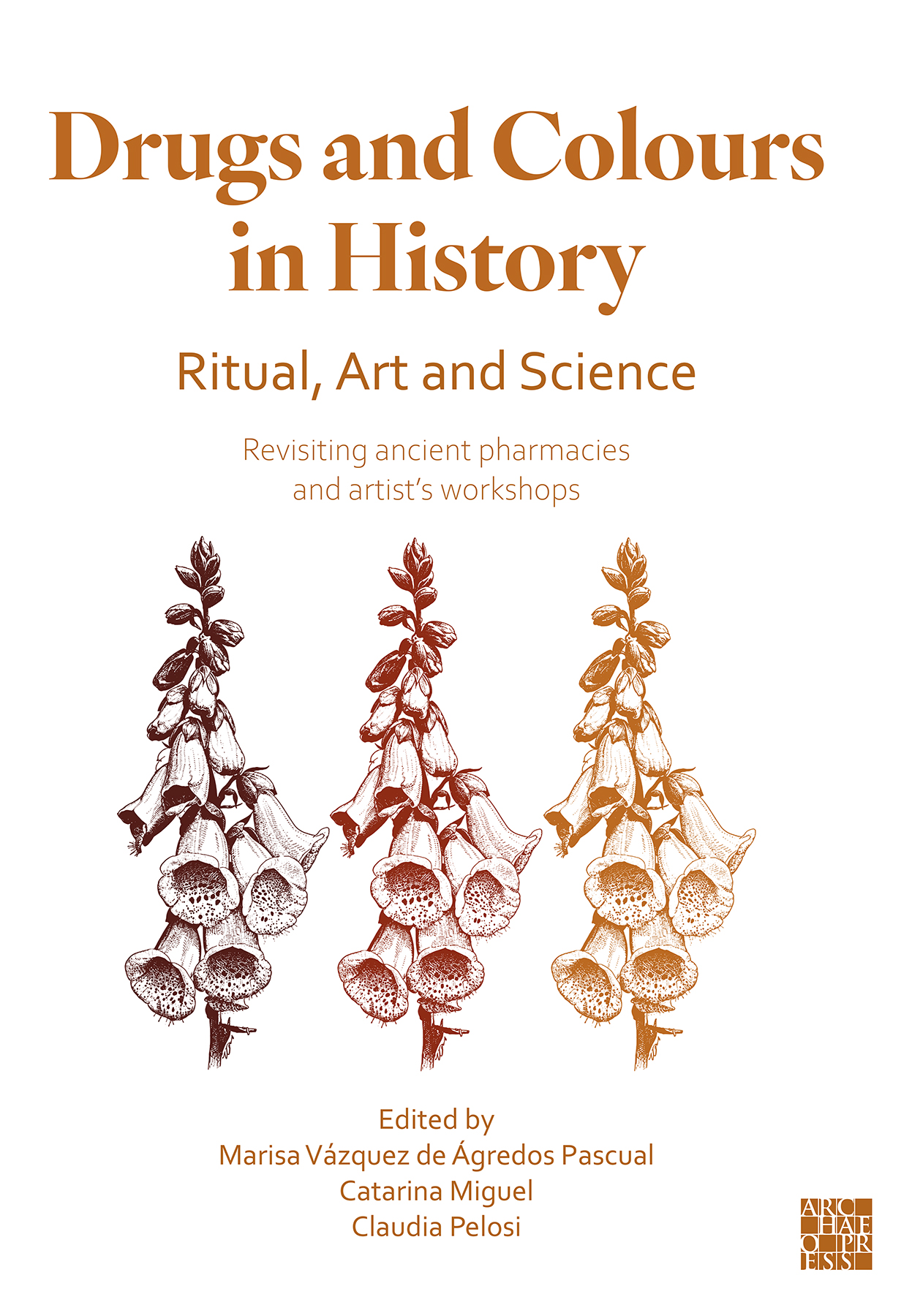
Drugs and Colours in History: Ritual, Art and Science
Revisiting Ancient Pharmacies and Artist’s Workshops
Hardback (Forthcoming)
(January 2027)
ISBN: 9781805834021
8.07 x 11.46 inches
Price: $98.00
This book explores the intertwined roles of pigments and medicines from Antiquity to the present. Examining their artistic, medicinal and ritual uses, it traces how colours, drugs and sacred practices were linked across cultures, highlighting enduring traditions through interdisciplinary and international research.
Pigments have been used for medicinal and ritual purposes since ancient times. For example, as described by Dioscorides in the 1st century, the priestesses of the temple of the goddess Artemis on the island of Lemnos were responsible for producing Terra Lemnia, which ancient Mediterranean societies distributed for three purposes: artistic, as a pigment; medicinal, for example, women used it to relieve menstrual pain; and ritual -its very context of origin, in the goddess’s sanctuary, justified this purpose-. Colours and drugs were sacred in the cultures of the past, which is why their production was linked to temples and sanctuaries, and later to convents and monasteries, which usually included an apothecary in their premises. Their respective materiality, based on compounds of iron, lead, mercury, arsenic, and copper, among many others, also endowed them with magical-religious properties associated with deities, planets, meanings and sacred rituals.
The book Drugs and Colours in History: Ritual, Art and Science. Revisiting ancient pharmacies and artists’ workshops explores these connections from Antiquity to the present day, where it is possible to trace survivals in this regard, especially in rural communities in Europe and other continents, as confirmed by the research being carried out in Argentina, Bosnia-Herzegovina, Bulgaria, Croatia, Spain, France, Hungary, Italy, Lithuania, Poland, Portugal, Romania and Switzerland by the European Route of Historic Pharmacies and Medicinal Gardens, a Cultural Route of the Council of Europe.
Similar Books


 Archaeological Excavations at Irmis Rka: An Investigation of a Multi-Layered Settlement in Southwest Georgia
Results from the 2020 Season: Early Bronze Age to Medieval Occupations


 Catuvellaunia and Rome: Economic and Political Relations during the Final Decades Pre-conquest
The Role of Grain from Southeastern Britain and Its Potential for Maintenance of the Roman Military along the Frontier on the Rhine
 Colour Concept “Secoli bui” a colori
Codici cromatici e architetture dipinte nell’età tardoantica e medievale

 Crossing Disciplines in the Study of Archaeology and Prehistoric Art: Insights from the Sahara and Mediterranean Africa
Proceedings of the XX UISPP World Congress (5–9 September 2023, Timișoara, Romania) Volume / Session 18
 Crossing Sacred Landscapes
Contacts and Continuities in the Desert Cults and Beliefs of Ancient Northern Arabia and the Arid Southern Levant
 Cuneiform Artefacts from Archaeological Contexts: New Research on Ancient Iraq
Proceedings of a Conference Held at the Bavarian Academy of Sciences and Humanities, July 4–5, 2024
Volume 2

 ENTANGLED AFRICA
Intra-African Relations Between Rain Forest and Mediterranean from Around 4,000 BCE to 1,500 CE


 Exploring Prehistoric Pottery in Japan
A Study of Organic Inclusions, Adhering Materials, and Impressions of Woven Items

 From Coast to Coast
Current Archaeological Research on Cultural Exchange along and across the Baltic Sea
Volume 19
 Frontiers of the Roman Empire: The Frontier of the Roman Province of Raetia
Grenzen des Römischen Reiches: Die Grenze der Römischen Provinz Raetien
 Gold, Silver and Glass: Power Networks, Cultural Identities, Technology Transfers and Agency across the Old World (7th Century BC – 1st Century AD)
Proceedings of a Conference Held at the British Museum, 16–18 June 2023
 Harvesting the Margins of the Viking World
Decentralizing Economies in Late Iron Age Fennoscandia
Volume 6
 Images of Anonymous Women
A Semiotic Approach to Image-Text Relations in Interpretation of Ancient Near Eastern Art and the Hebrew Bible
Volume 310

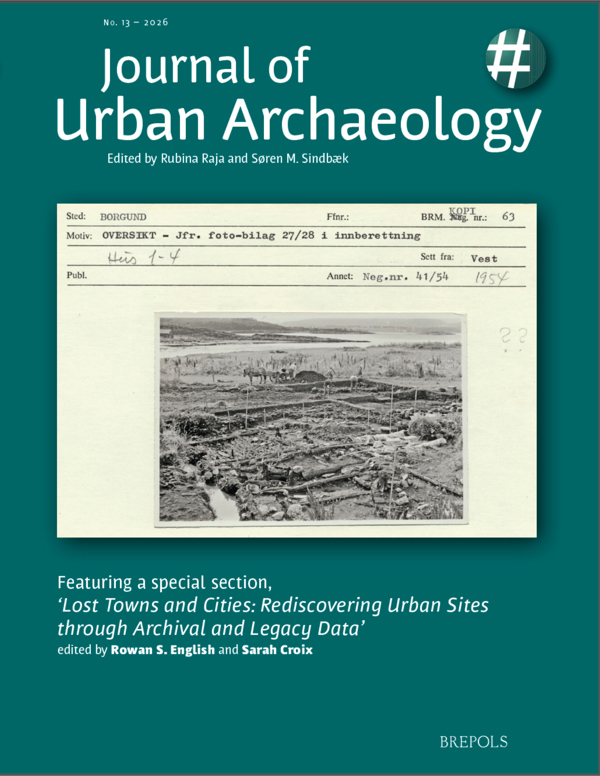 Journal of Urban Archaeology 13 (2026)
Featuring a special section, ‘Lost Towns and Cities: Rediscovering Urban Sites through Archival and Legacy Data’


 Making and Meaning in the Bronze and Iron Ages
Chronology, Landscapes and Societies across Europe. Proceedings from the METALAGES2024 Colloquium (Florence, 23 October 2024)

 Medieval Yeghegis, Armenia
History, Archaeology, Society. Local Multiplicities and Global Connections of a Rural Centre on the Silk Road(s)
 Mobility and Archaeogenetics in Central Asia
People – Goods – Ideas. 3rd International Conference on Central Asian Archaeology in Bern, 11th–13th January 2024
Volume 24


 Offa’s Dyke Journal: Volume 7 for 2025
A Journal for Linear Monuments, Frontiers and Borderlands Research


