
Die Orts- und Gewässernamen der neuassyrischen Zeit
Teil 2. Zentralassyrien und benachbarte Gebiete, Ägypten und die arabische Halbinsel
By (author) Ariel M. Bagg

Paperback (Published)
(September 2017)
ISBN: 9783954902620
6.69 x 9.49 inches
Price: $222.00
In stock
Historical geography is one of the most important disciplines which allow a reconstruction of the history of the Ancient Near East. There are principally the cuneiform sources which open the access to the numerous attested geographical names. The present volumes are the second part of the Neo-Assyrian toponyms for the series Répertoire Géographique des Textes Cunéiformes (RGTC 7). RGTC 7/2 comprises approx. 1500 toponyms from the Assyrian heartland and neighbouring areas (the Transtigridean region, the Middle Euphrates, the Northern Jezireh, the Habur-Basin, the Eastern Jezireh and Northern Mesopotamia), as well from Egypt and the Arabian peninsula. The first part was published by the author in 2007 and dealt with the Levant (RGTC 7/1). The third and last part (RGTC 7/3) is in preparation and will cover the Eastern regions of the Assyrian empire and Babylonia.<br/>
English summary: Historical geography is one of the most important disciplines which allow a reconstruction of the history of the Ancient Near East. There are principally the cuneiform sources which open the access to the numerous attested geographical names. The toponyms from these sources were collected and commented in the series Repertoire Geographique des Textes Cuneiformes (RGTC) published in the frame of the Tubinger Atlas des Vorderen Orients (TAVO). Fourteen volumes already published in this series have become, together with the corresponding TAVO-historical maps, an important research tool in the field of the historical geography of the Ancient Near East. The final volume of the series (RGTC 7) is about the extensive (approx. 3450) place and river names from the Neo-Assyrian texts (10th to 7th cent. BCE) and was conceived a tripartite work. The present two-volume set is the second part of the Neo-Assyrian toponyms for the above mentioned series (RGTC 7/2). It comprises approx. 1500 toponyms from the Assyrian heartland and neighbouring areas (the Transtigridean region, the Middle Euphrates, the Northern Jezireh, the Habur-Basin, the Eastern Jezireh and Northern Mesopotamia), as well from Egypt and the Arabian peninsula. The first part was published by the author in 2007 and dealt with the Levant (RGTC 7/1). The third and last part (RGTC 7/3) is in preparation and will cover the Eastern regions of the Assyrian empire and Babylonia.The arrangement of the book follows the earlier volumes of the series. The material comprises all the published, non-literary sources from the Neo-Assyrian period, namely royal inscriptions, letters, legal and administrative texts, treaties, royal grant and decrees, astrological reports, and historiographical texts. Following Kh. Nashef’s RGTC 5 (1982), all the texts after 934 BCE have been considered. The alphabetically arranged collection of place names is divided as usual in the categories “place names” and “watercourses”. The main criterion for the arrangement of the attestations are the different spellings. Within the same spelling the arrangement of the attestations follows chronological and typological criteria. The attestations are followed by a commentary concerning the identification of the place name with a discussion of the relevant secondary literature. As in the volumes RGTC 8 and RGTC 12/2, the toponyms are ordered according to their linguistic provenance. Comprehensive indices, among them a register of modern place names as well as a register of the mentioned Old-Aramaic, Biblical, Classical, and Phoenician toponyms, complete the book. Two enclosed maps show most of the identified places. German description: Die historische Geographie ist eine der wichtigsten Disziplinen, die eine Rekonstruktion der Geschichte des Alten Orients ermoglichen. Es sind uberwiegend die Keilschriftquellen, die den Zugang zu den zahlreichen Ortsnamen erschliessen. Eine grosse Anzahl einschlagiger Orts- und Gewassernamen ist als kommentierte Materialsammlung in der Reihe Repertoire Geographique des Textes Cuneiformes (RGTC) erfasst. Es liegen bisher 14 Bande bzw. Teilbande vor (1974-2007), die nach chronologischen und regionalen Kriterien gegliedert sind. Sie sind ebenso wie die Karten des TAVO ein wichtiges Hilfsmittel fur die Erforschung der Historischen Geographie des Alten Orients. Der abschliessende Band der Reihe (RGTC 7) ist den umfangreichen (ca. 3450) Orts- und Gewassernamen der neuassyrischen Texte (10.-7. Jh. v. Chr.) gewidmet und wurde als dreiteiliges Werk konzipiert. Der vorliegende Band (RGTC 7/2), bestehend aus zwei Heften, stellt den zweiten Teil dar und umfasst ca.1500 Toponyme aus den folgenden Regionen: das Kernland Assyriens, das Osttigrisgebiet, der Mittlere Euphrat, die nordwestliche Gazira, das ?abur-Gebiet und die ostliche Gazira und Nordmesopotamien (namlich das Gebiet an und um dem Oberen Tigris mit dem Murat-Su als nordliche und dem Euphrat als westliche Grenze). Ausserdem wurden die arabische Halbinsel und Agypten berucksichtigt. Im 2007 publizierten ersten Teil (RGTC 7/1) wurde die Levante behandelt. Der letzte Teil (RGTC 7/3), die in Vorbereitung ist, wird die ostlichen Gebiete und Babylonien umfassen.Die Darbietung des Materials schliesst sich an fruhere RGTC-Bande an. Es umfasst alle Texte der neuassyrischen Zeit, soweit sie nicht als “literarisch” einzustufen sind, d. h. Konigsinschriften, Briefe, Rechts- und Veraltungsurkunden, Vertrage, konigliche Erlasse, astrologische Berichte und historiographische Texte. Anschliessend an RGTC 5 (1982) von Kh. Nashef werden alle Texte von 934 v. Chr. bis zum Untergang des neuassyrischen Reich berucksichtigt. Orts- und Gewassernamen werden alphabetisch und unter Berucksichtigung der unterschiedlichen Keilschriftorthographie aufgefuhrt. Daruber hinaus erfolgt die Anordnung der Belege nach chronologischen und typologischen (Art der Quelle) Kriterien. Es folgen Angaben zur Lokalisierung unter Berucksichtigung der relevanten Sekundarliteratur. Wie in den Banden RGTC 8 und RGTC 12/2 werden die Ortsnamen nach ihrer sprachlichen Herkunft zugeordnet. Umfangreiche Register, darunter ein Verzeichnis der modernen Ortsnamen sowie der erwahnten aramaischen, biblischen, klassischen und phonizischen Toponyme schliessen den Band ab. Zwei beigefugte Karten veranschaulichen die meisten Lokalisierungsvorschlage.
- By (author) Ariel M. Bagg
Other Titles in this Series


 Städte und Stadtwachstum im Vorderen Orient
Vergleichende Fallstudie zur regionalen Differenzierung jüngerer städtischer Entwicklungsprozesse im orientalisch-islamischen Kulturkreis


 Répertoire Géographique des Textes Cunéiformes
Die Orts- und Gewässernamen der mittelbabylonischen und mittelassyrischen Zeit


 Das christlich-koptische Ägypten in arabischer Zeit (Teil 1: A–C)
Eine Sammlung christlicher Stätten in Ägypten in arabischer Zeit, unter Ausschluß von Alexandria, Kairo, des Apa-Mena-Klosters, der Sketis und der Sinai-Region


 Das Epipaläolithikum des Vorderen Orients
1: Das Epipaläolithikum und der Übergang zum Neolithikum in der Levante und in Ägypten. 2: Das Epipaläolithikum und der Übergang zum Neolithikum zwischen Taurus und Hindukusch. Zur Ökologie des Epipaläolithikums
 Interdisziplinäre Iran-Forschung
Beiträge aus Kulturgeographie, Ethnologie, Soziologie und Neuerer Geschichte


 Horasan zur Timuridenzeit nach dem Tarih-e Hafez-e Abru (verf. 817–823 h.) des Nurallah ’Abdallah b. Lutfallah al-Hvafi genannt Hafez-e Abru
2. Übersetzung und Ortsnamenkommentar


 Die Vegetation des Marharlu-Beckens bei Siras (Iran)
Unter besonderer Berücksichtigung der Vegetation im Bereich der Süß- und Salzwasserquellen am Seeufer
Similar Books





 Connecting the Dots: Counting, Writing, and the Beginnings of Civilization
The Secret Lives of Clay Tokens: A Memoir


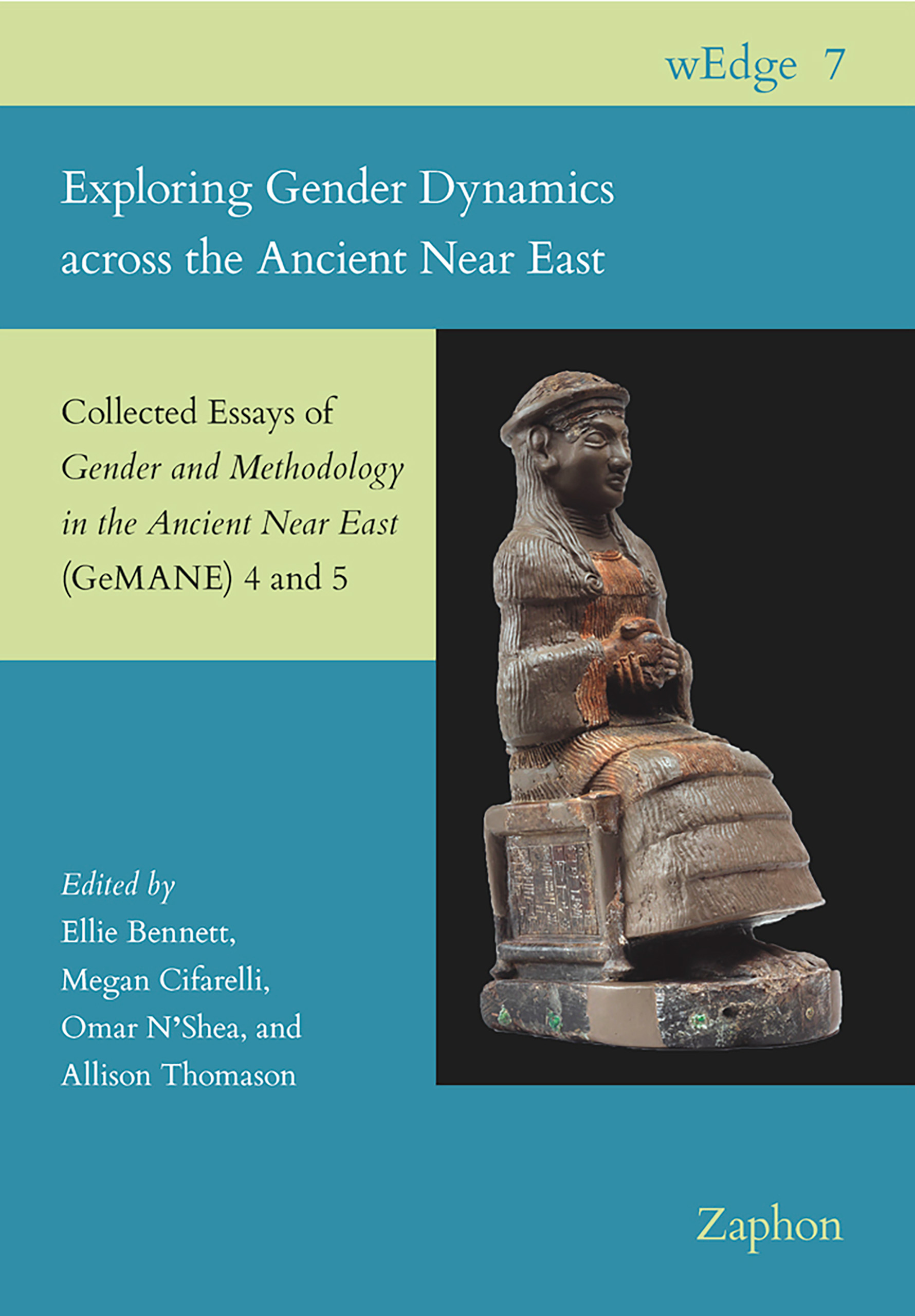 Exploring Gender Dynamics across the Ancient Near East
Collected Essays of Gender and Methodology in the Ancient Near East (GeMANE) 4 and 5
Volume 7


 Ḫattušaš utnē išḫameški
Hittite and Other Ancient Near Eastern Studies Presented to Piotr Taracha on the Occasion of His 65th Birthday




 New Research on Old Collections in Southwest Asian Archaeology
Proceedings of the Workshop Held at the British Museum, London, 31 July – 2 August, 2023
 Old Aramaic Inscriptions and their Contexts
An Epigraphic, Archaeological, and Historical Synthesis
Volume 63


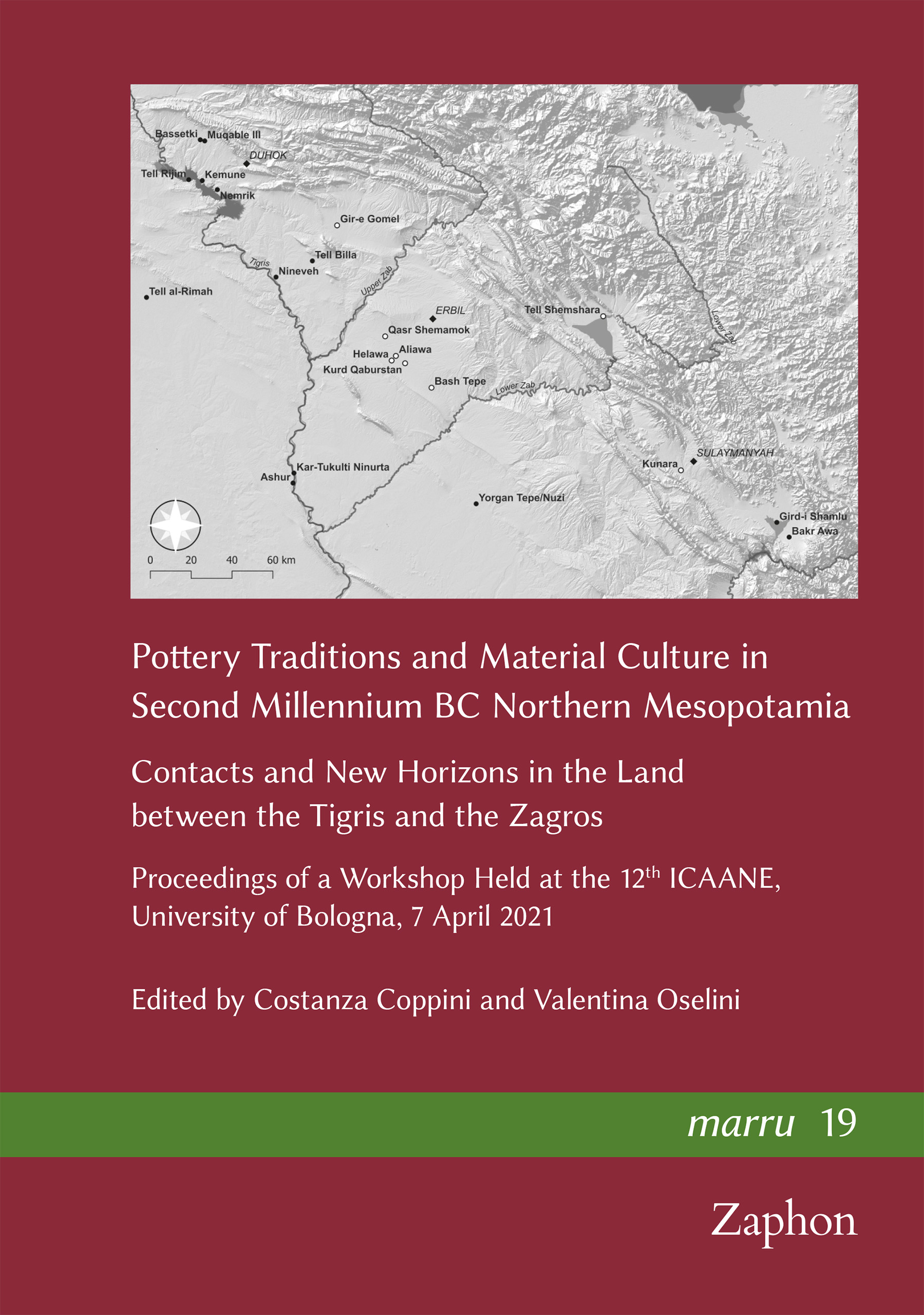 Pottery Traditions and Material Culture in Second Millennium BC Northern Mesopotamia
Contacts and New Horizons in the Land between the Tigris and the Zagros. Proceedings of a Workshop Held at the 12th ICAANE, University of Bologna, 7 April 2021
Volume 19
 Punning in Odd or Elegant Constructions in Jeremiah
The Convergence of Linguistics, Rhetoric, and Textuality in the Hebrew Text of Jeremiah
 Recycling and Regeneration of Spent Lithium-Ion Batteries
Technologies, Applications, and Sustainable Futures

 Shame in the Worlds of the Hebrew Bible and Akkadian Texts
A Linguistic Study and Its Implications
Volume 33
 Telling Contexts
Archaeological and Textual Studies in Honor of Elizabeth Bloch-Smith and Mark S. Smith

 The Body
Lived, Cultured, Adorned: Essays on Dress and the Body in the Bible and Ancient Near East in Honor of Nili S. Fox