
Nomad Tent Types in the Middle East
By (author) Peter Andrews

Paperback (Out of print)
(November 1996)
ISBN: 9783882268904
7.87 x 11.02 inches
Price: $198.00
On back order
This is the first book to attempt a comprehensice treatment of the wide variety of nomad tents still in use in the Middle East: it is both architectural and ethnographical. It draws primarily on the author’s own extensive fieldwork sind 1967, providing largely first-hand information on a fascinating but badly-neglected area of architecture. He began the task of recording these traditions with a sense of urgency, as they seemed threatened with imminent extinction. The survey was therefore made in sufficient detail to allow the tents to be reconstructed. Changes over the last thirty years have in fact led to reductions in the number of nomads, severe weakening of their economy, the intrusion of new materials, and the adoption of mechanised ransport; some, but not all, of the types studied have indeed disappeared. Information on areas not visited by the author has been contributed by ethnologist colleagues, who share his admiration for a closeness of fit between the rigorous constraints of nomadic life and a response arrived at through more than a millenium of experience and craftmanship.Throughout, the work emphasises the ethnological context in which these dwellings are used. Each type is first located as exactly as possible, named, and given a short historical background; its general characteristics are summarised, and it is considered in relation to other, comparable types. Its structure and covering are then described in full detail, together with the processes of manufacture, maintenance, operation, transport, and the procedures followed for pitching and striking. Variations in the plan and internal arrangements are discussed in relation to ownership and residence, and the principal moments in the life cycle of the inhabitants, at marriage, the inauguration of the household, the birth of a son, and inheritance. Local terms are given for the parts and processes. Camping patterns, migrations and camp planning are explained, and details of the climate of the areas concerned. Each tent is represented in measured drawings or sketches with photographs.The classification in the book relates to the map of nomadic tent types already published by the author (TAVO A IX 5, Reichert 1990), grouping the tents according to structural type and ethnic group; 56 types are described, together with some related hut types. These two volumes, on tents with rigid, self-supporting frames, are the first part of the work. The second part, also in two volumes, and now being prepared, will deal with the black tension-tents.The author, a qualified architect, took his doctorate at the School of Oriental and African Studies, University of London, in 1980. He has been working at the Institute for Ethnology, Cologne University, since 1981, and with the Central Asian Seminar, University of Bonn, since 1992. He held the Endowed Professorship for Islamic Art and Archaeology at the University of Bamberg in 1990-91.
- By (author) Peter Andrews
Other Titles in this Series


 The Capital Area of Northern Oman, Teil II
Basic features of the younger Caenozoic relief development on the seaside of Central Oman and Natural and real vegetation of the Capital Area
 Interdisziplinäre Iran-Forschung
Beiträge aus Kulturgeographie, Ethnologie, Soziologie und Neuerer Geschichte


 Horasan zur Timuridenzeit nach dem Tarih-e Hafez-e Abru (verf. 817–823 h.) des Nurallah ’Abdallah b. Lutfallah al-Hvafi genannt Hafez-e Abru
2. Übersetzung und Ortsnamenkommentar


 Die Vegetation des Marharlu-Beckens bei Siras (Iran)
Unter besonderer Berücksichtigung der Vegetation im Bereich der Süß- und Salzwasserquellen am Seeufer

 The Capital Area of Northern Oman, Teile I und II
I. Grundzüge der Reliefentwicklung / Basic Relief Development. II.: Basic Features of the younger Caenozoic relief development on the seaside of Central Oman and Natural and real vegetation of the Capital Area

 Untersuchungen zur historischen Topographie Nordmesopotamiens
nach keilschriftlichen Quellen des 1. Jahrtausends v. Chr.


 Materialien zu Evliya Celebi I.
Erläuterungen und Indices zur Karte B IX 6 »Kleinasien im 17. Jahrhundert nach Evliya Celebi«


 Die Orts- und Gewässernamen der neuassyrischen Zeit
Teil 3: Babylonien, Urartu und die östlichen Gebiete

Similar Books


 Connecting the Dots: Counting, Writing, and the Beginnings of Civilization
The Secret Lives of Clay Tokens: A Memoir

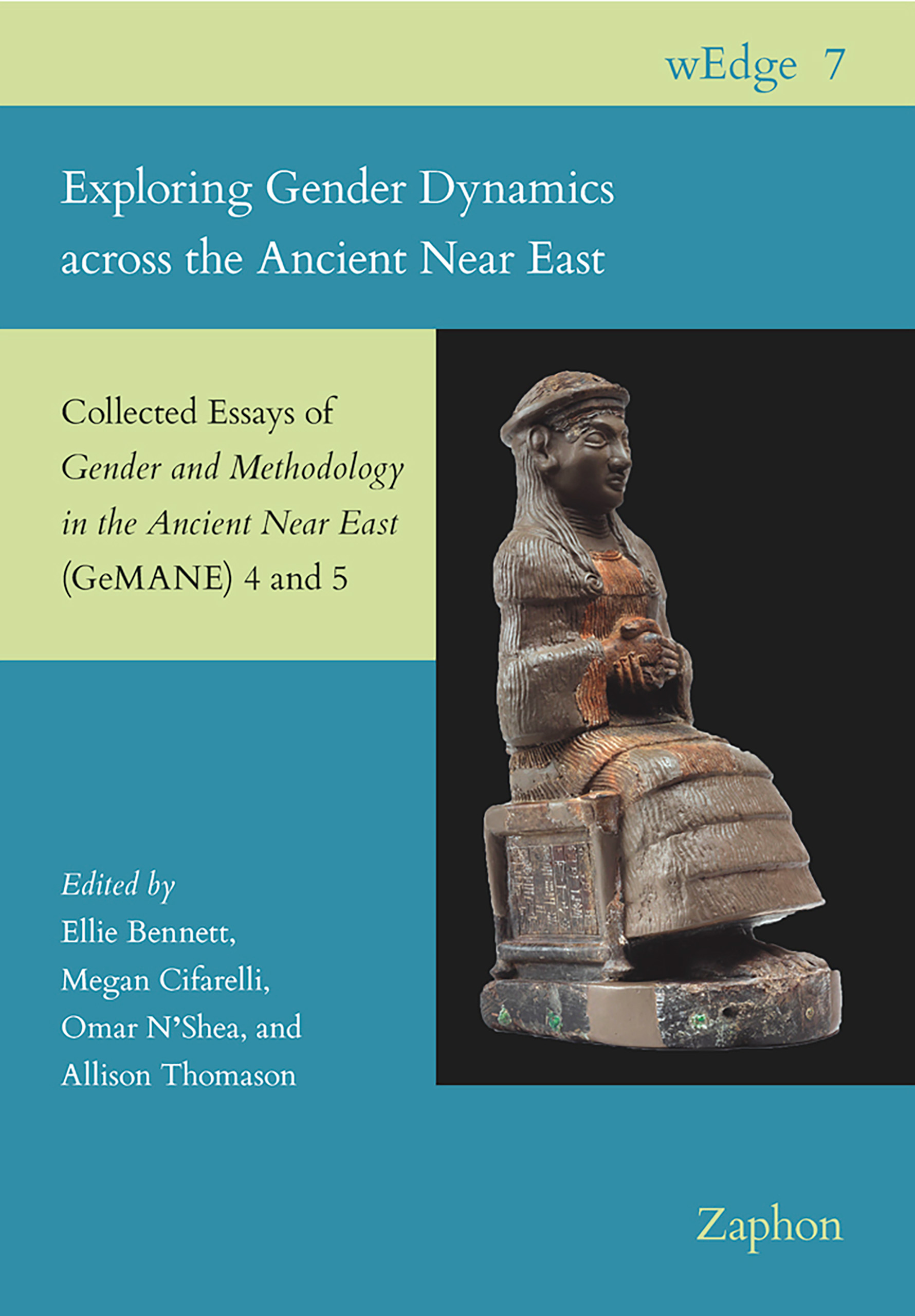 Exploring Gender Dynamics across the Ancient Near East
Collected Essays of Gender and Methodology in the Ancient Near East (GeMANE) 4 and 5
Volume 7


 Ḫattušaš utnē išḫameški
Hittite and Other Ancient Near Eastern Studies Presented to Piotr Taracha on the Occasion of His 65th Birthday

 New Research on Old Collections in Southwest Asian Archaeology
Proceedings of the Workshop Held at the British Museum, London, 31 July – 2 August, 2023
 Old Aramaic Inscriptions and their Contexts
An Epigraphic, Archaeological, and Historical Synthesis
Volume 63

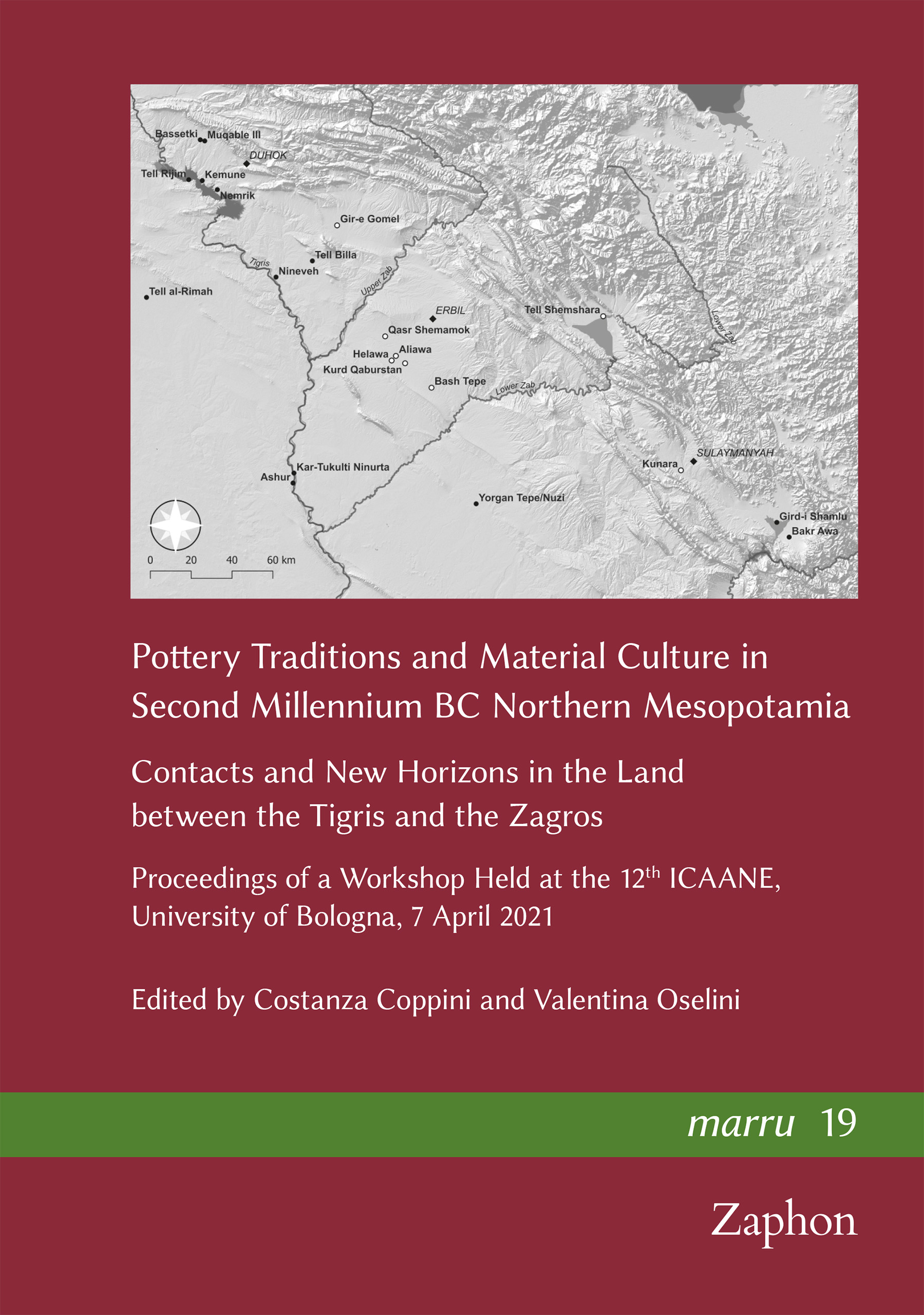 Pottery Traditions and Material Culture in Second Millennium BC Northern Mesopotamia
Contacts and New Horizons in the Land between the Tigris and the Zagros. Proceedings of a Workshop Held at the 12th ICAANE, University of Bologna, 7 April 2021
Volume 19
 Punning in Odd or Elegant Constructions in Jeremiah
The Convergence of Linguistics, Rhetoric, and Textuality in the Hebrew Text of Jeremiah
 Shame in the Worlds of the Hebrew Bible and Akkadian Texts
A Linguistic Study and Its Implications
Volume 33
 Telling Contexts
Archaeological and Textual Studies in Honor of Elizabeth Bloch-Smith and Mark S. Smith
 The Body
Lived, Cultured, Adorned: Essays on Dress and the Body in the Bible and Ancient Near East in Honor of Nili S. Fox
 The Discourse of Rites
Shaping and Reshaping the (Counter-)Priestly Rituals Conducted Outside the Tabernacle
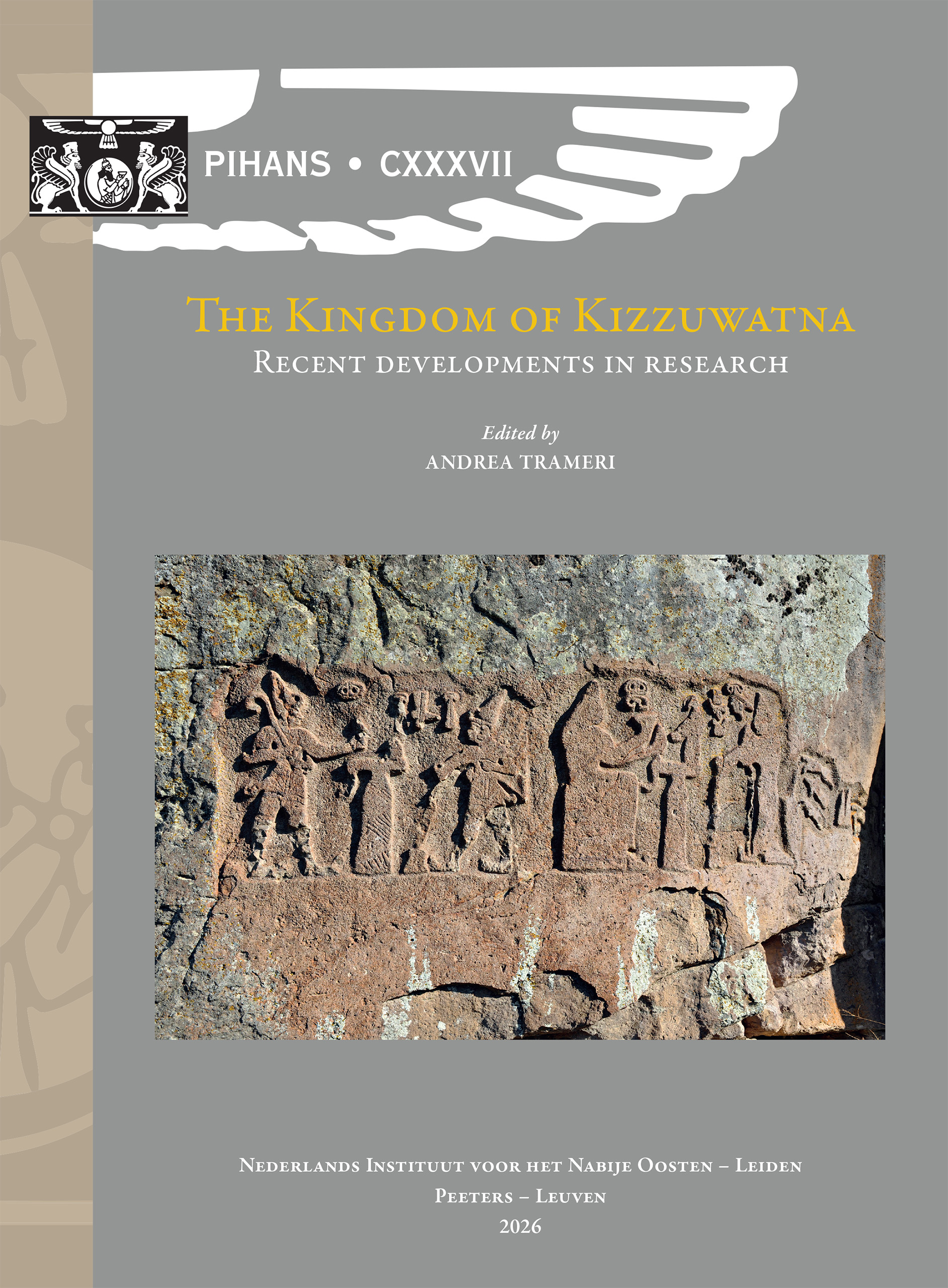 The Kingdom of Kizzuwatna: Recent Developments in Research
Proceedings of the Third NINO Postdoctoral Research Fellow Annual Conference, Leiden, 23rd-25th March 2023
Volume 137


 Die Entwicklung erdbebensicherer Bautechniken in der Frühen und Mittleren Eisenzeit in Ostanatolien
Volume 11
 Die JHWH-Religion und die Vorstellung göttlicher Gesetzgebung
Überschneidungen zwischen der Rechtsentwicklung und der Sphäre der Religion in der Geschichte des antiken Israel und Juda

 Kultur – Kontakt – Kultur
Beiträge anlässlich der 66. Rencontre Assyriologique Internationale in Frankfurt/Main und Mainz, 25.–29. Juli 2022
Volume 35
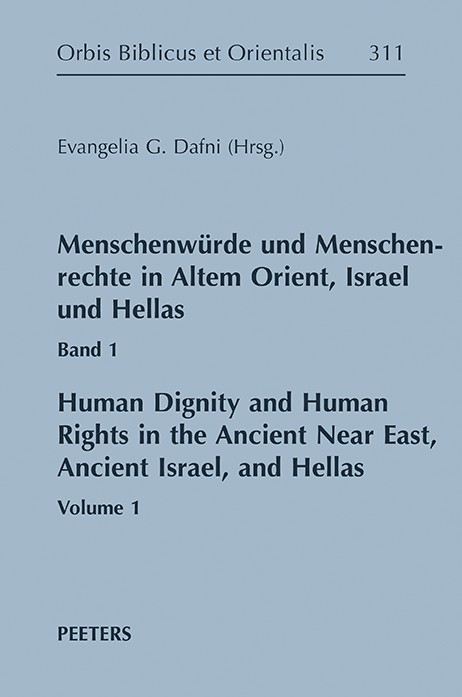 Menschenwürde und Menschenrechte im Altem Orient, Israel und Hellas. Band 1
Human Dignity and Human Rights in the Ancient Near East, Ancient Israel, and Hellas. Volume 1
Volume 311
 Ptolemaiou Procheiroi Kanones. Les «Tables Faciles» de Ptolemée. Volume 2a: Tables A3-A13
Édition critique, Transcription
 Sprachwissenschaftliche und kulturhistorische Reflexionen
Festschrift zu Ehren von Jörg Klinger
Volume 31

 Vom Mädchen zur Frau
Weihgaben als Indikatoren rituellen und kommunikativen Handelns von Frauen in griechischen Kulten
Volume 188
 Von der Symmachie zur Arché und zurück
Die Entwicklungsphasen des Ersten Attischen Seebundes (478/7–404 v. Chr.)
