Die Motetten des Philippe de Monte (1521–1603)
By (author) Michael Silies Series edited by Jürgen Heidrich Series edited by Hans Joachim Marx Series edited by Martin Staehelin Series edited by Ulrich Konrad

Hardback (Published)
(September 2009)
ISBN: 9783899717082
6.46 x 9.69 inches
Price: $188.00
In stock
Motetten im Zeitalter der Konfessionalisierung.
Until being appointed imperial bandmaster (kaiserlicher Hofkapellmeister) at the court of Maximilian II in the spring of 1568, Philippe de Monte (1521-1603) primarily composed secular works. At that time, only one motet was available in print. Only when he began his employment at the imperial court did de Monte’s intensive and prolific preoccupation with the motet begin. This lasted beyond Maximilian’s death, and into the reign of his successor, Rudolf II. During his employment for both emperors, de Monte composed around 250 motets. This study offers for the first time a comprehensive survey of the sources, texts and functions as well as the musical form and structure of these works. What is particularly fascinating about this glimpse into the age of confessionalism, is the fact that de Monte composed almost all his motets during his employment for two emperors who could not have been more different with respect to character, political strategy, cultural interest and religious attitude. German text.
Dr. Michael Silies studierte Musikwissenschaft, Publizistik und Deutsche Philologie an den Universitäten Münster, Oxford und in Göttingen, wo er 2007 promoviert wurde.
- By (author) Michael Silies
- Series edited by Jürgen Heidrich
- Series edited by Hans Joachim Marx
- Series edited by Martin Staehelin
- Series edited by Ulrich Konrad
Other Titles in this Series
 Monumentale Erinnerung – ästhetische Erneuerung
Beethovenrezeption und die Ästhetik der Intermedialität in den Schriften der Neudeutschen Schule
 Handel and Maurice Greene’s Circle at the Apollo Academy
The Music and Intellectual Contexts of Oratorios, Odes and Masques

 »La musica è del Signor Hasse detto il Sassone…«
Johann Adolf Hasses ›Opere serie‹ der Jahre 1730 bis 1745. Quellen, Fassungen, Aufführungen. Teil I: Darstellung. Teil I Darstellung

 »La musica è del Signor Hasse detto il Sassone…«
Johann Adolf Hasses ›Opere serie‹ der Jahre 1730 bis 1745. Quellen, Fassungen, Aufführungen. Teil II: Werk-, Quellen- und Aufführungsverzeichnis. Teil II Werk-, Quellen und Aufführungsverz
 Brahms gewidmet
Ein Beitrag zu Systematik und Funktion der Widmung in der zweiten Hälfte des 19. Jahrhunderts
 Das Echte und Innerliche in der Kunst: Der Komponist, Dirigent und Pädagoge Woldemar Bargiel (1828–1897)
Ein Beitrag zur Musikgeschichte des ›unbekannten‹ 19. Jahrhunderts
 Musikgeschichte Wittenbergs im 16. Jahrhundert
Quellenkundliche und sozialgeschichtliche Untersuchungen

 Zwischen Hoffmann und Eichendorff – Der junge Johannes Brahms und die romantische Literatur
Eine interdisziplinäre Untersuchung zum Frühwerk
 Die Rezeption der Kirchenmusik Anton Bruckners
Genese, Tradition und Instrumentalisierung des Vergleichs mit Giovanni Pierluigi da Palestrina

 Die Musikhandschrift F. K. Mus. 76/II. Abt. der Fürst Thurn und Taxis Hofbibliothek Regensburg
Eine wenig beachtete Quelle zur Musik des frühprotestantischen Gottesdienstes

 Geistliche Vokalpolyphonie und Frühhumanismus in England
Kulturtransfer im 15. Jahrhundert am Beispiel des Komponisten John Dunstaple
 Don Giovanni unter Druck
Die Verbreitung der Mozart-Oper als instrumentale Kammermusik im deutschsprachigen Raum bis 1850
Similar Books





 John Dunstaple Reading Boethius
John Dunstaple’s Annotations to Boethius’s “De institutione musica” in the Manuscript Oxford, Corpus Christi College Library, MS 118
 Music and Colonialism in Fascist Italy
Identity, Propaganda, and Ethnographic Representation
Volume 13







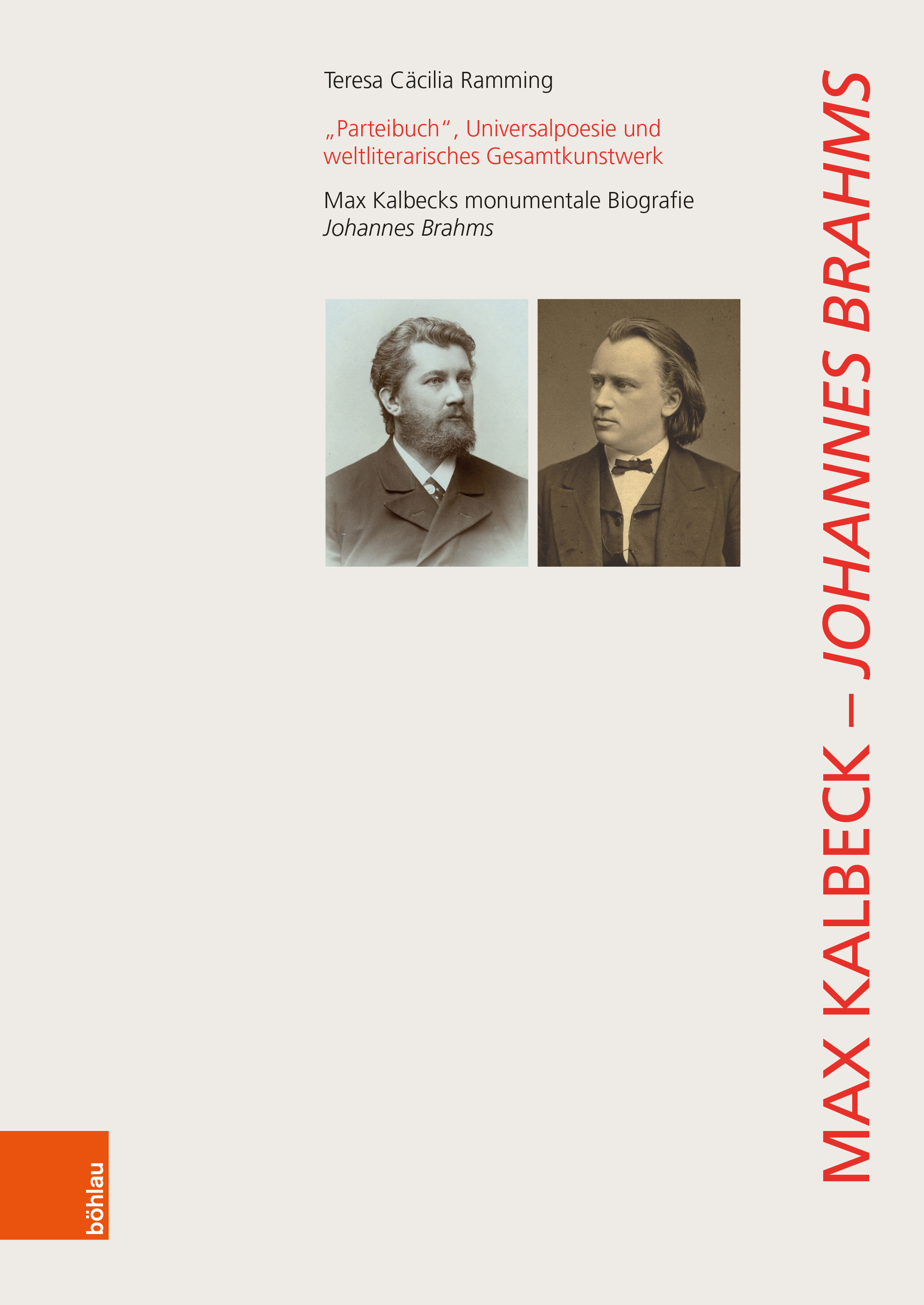 „Parteibuch“, Universalpoesie und weltliterarisches Gesamtkunstwerk
Max Kalbecks monumentale Biografie Johannes Brahms